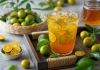

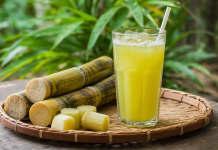




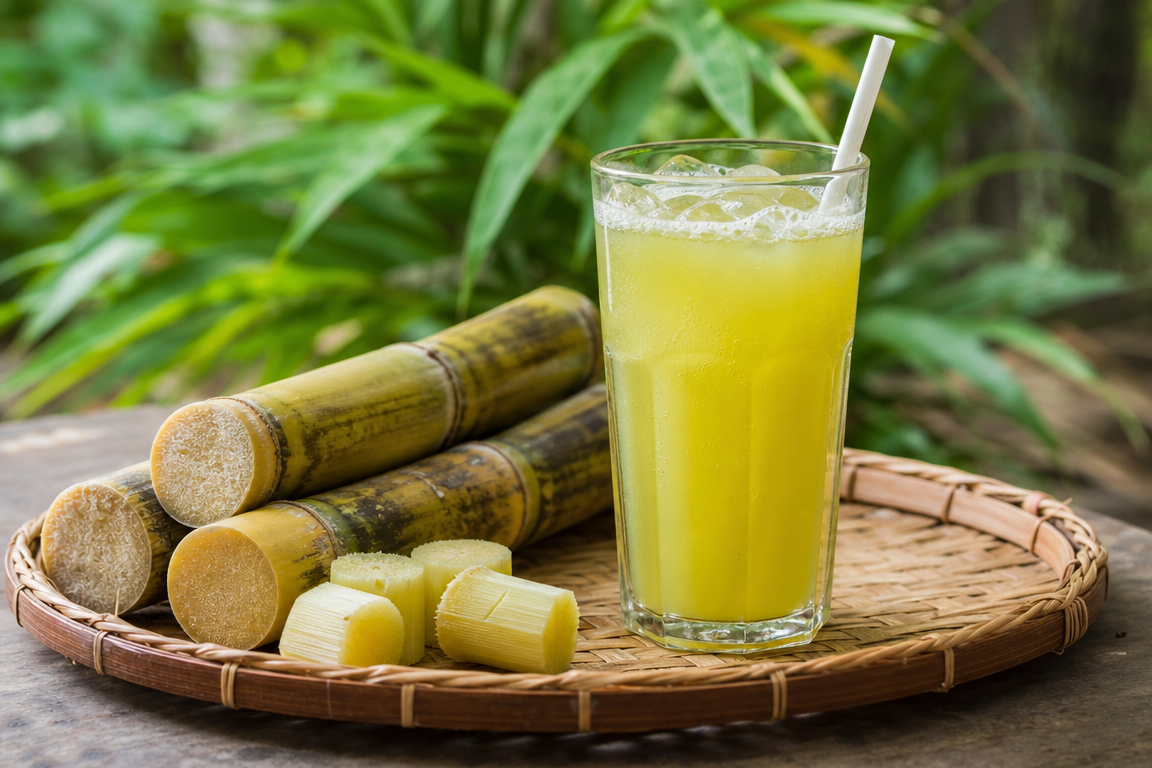
Vietnamese fresh sugarcane juice, called nước mía, starts with a simple idea: extract the juice from sugarcane and serve it fresh. This proposed home recipe keeps the ingredient list short, with ice for serving and an optional squeeze of lime to balance the sweetness.
The important consideration is equipment. Sugarcane is tough and fibrous, so this is not a recipe for an ordinary blender or a juicer that cannot handle cane. With a suitable sugarcane press or an extractor explicitly approved for sugarcane, the process is straightforward: clean and prepare the stalks, press them, strain if needed, and serve.
Recipe Overview
- Yield: 2 small servings; the amount of extracted juice will vary.
- Preparation time: About 20 minutes, including cleaning, trimming, pressing, and assembling the drinks.
- Cooking time: 0 minutes; no heating is required.
- Method: Mechanical extraction with a sugarcane-compatible press or extractor.
The quantities below are a practical starting point, not a fixed traditional formula. The juice yield depends on the stalks and the equipment, so use the amount collected rather than adding water to reach an exact serving volume.
Ingredients
- 3 pounds fresh sugarcane: Weight before peeling and trimming; choose stalk sections that fit your equipment’s requirements.
- 1 cup ice: For dividing between two glasses, or less to taste.
- 1–2 teaspoons fresh lime juice, optional: Start with a small amount and adjust after tasting.
- 2–4 tablespoons chilled drinking water, optional: Use only if you prefer a lighter drink.
No additional sweetener is included in this recipe. Taste the extracted juice before deciding whether it needs lime or water; both are optional adjustments rather than required ingredients.
Equipment You Will Need
Use a sugarcane press or an extractor whose manufacturer specifically permits sugarcane. You will also need a sturdy cutting board, an appropriate knife or peeling tool, a clean collection jug, two glasses, and a fine-mesh strainer if the collected juice contains loose fibers.
Do not assume that a machine labeled “cold press” or “slow juicer” can process sugarcane. Check the instructions for your exact model. If you do not have suitable equipment, the practical alternative is to start with ready-extracted, unsweetened sugarcane juice and follow the tasting and serving steps below.
How to Make Fresh Sugarcane Juice
- Clean the equipment and cane, about 3 minutes. Wash your hands and clean the food-contact parts of the press according to its instructions. Rinse and scrub the outside of the sugarcane under running water to remove visible dirt. Set a clean jug beneath the juice outlet.
- Trim and prepare the stalks, about 7 minutes. On a stable cutting board, remove the ends and prepare the outer rind as required by your machine. Peel the cane if the manufacturer calls for peeled stalks, then cut it into the permitted lengths and thicknesses. The exact preparation depends on the equipment, so follow its guidance rather than forcing oversized pieces through.
- Press the cane, about 6 minutes. Feed the prepared pieces through the press using only the method and feeding tools specified by the manufacturer. Keep fingers away from rollers and openings. Collect the juice in the jug, stopping the machine before making any adjustments or clearing a blockage.
- Strain and adjust, about 2 minutes. If the juice contains noticeable fibers, pour it through a clean fine-mesh strainer. Taste it plain. If desired, stir in 1 teaspoon lime juice, then add up to 1 additional teaspoon to taste. For a less concentrated drink, stir in 2–4 tablespoons chilled drinking water.
- Serve, about 2 minutes. Divide the ice between two glasses and pour the juice over it. Use less ice if the extracted amount is small or if you want less dilution. Serve promptly.
Tips for a Better Result
Let the equipment determine the preparation
Some machines require more peeling or smaller pieces than others. Preparing the cane correctly matters more than following a universal cutting size. Never push the machine beyond its stated capacity, and do not substitute a standard blender for a cane-compatible extractor.
Adjust after extraction
Wait until you have tasted the juice before adding anything. A little lime may provide enough contrast without water. If the flavor feels too concentrated, add water a tablespoon at a time rather than diluting the entire batch heavily at once.
Control dilution with the ice
Ice is part of the proposed serving method, but it is not a fixed requirement. For a slower-drinking serving, chill the glasses first and use fewer cubes. For an immediately cold drink, divide the full cup of ice between the glasses and pour the juice over it just before serving.
Keep handling clean
This recipe has no heating step. Use clean equipment, drinking-quality water, and ice made from drinking-quality water. Fresh extraction does not make juice sterile, and washing the cane does not replace cleaning the press.
Serving Suggestions and Variations
Serve nước mía in small glasses so the amount of ice and lime can be adjusted individually. Taste a little of the juice before pouring it over ice to understand how much dilution you prefer.
- Plain sugarcane juice: Omit the lime and water, then serve with as much or as little ice as you like.
- Lime-accented juice: Use the optional lime juice, starting with 1 teaspoon for the whole batch. Keep the addition modest so sugarcane remains the main flavor.
- Lighter juice: Add the optional chilled water gradually, stopping as soon as the drink reaches your preferred strength.
- Minimal-ice serving: Use chilled glasses and only a few cubes, especially when the extracted yield is small.
These are serving options for this proposed recipe, not claims about a required Vietnamese preparation.
Storage
Prepare only what you plan to drink when possible. If serving is delayed, transfer the juice to a clean, covered container and refrigerate promptly. Keep ice separate until serving so it does not melt into the stored juice. For this small-batch recipe, plan to drink it the same day rather than making a large batch for extended storage.
Frequently Asked Questions
Can I make sugarcane juice in a regular blender?
Not with this method. Sugarcane is highly fibrous, and an ordinary blender is not a substitute for equipment designed to extract its juice. Use a cane-compatible machine or start with ready-extracted juice.
Do I have to peel the sugarcane?
Follow the instructions for your press or extractor. Some equipment requires peeled cane. Thoroughly clean the outside before trimming, and do not assume that every machine accepts the same stalk preparation.
How much juice will 3 pounds of sugarcane produce?
There is no guaranteed volume for this recipe. The stalks, the amount removed during preparation, and the extractor all affect the yield. Treat two small servings as a planning estimate and adjust the ice to the juice you collect.
Is lime juice necessary?
No. Lime is optional and is included only as a flavor adjustment. Taste the sugarcane juice on its own first, then add a small amount if you prefer a sharper contrast to its sweetness.