

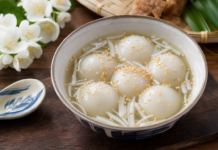
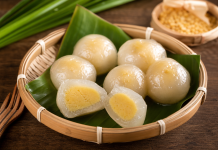




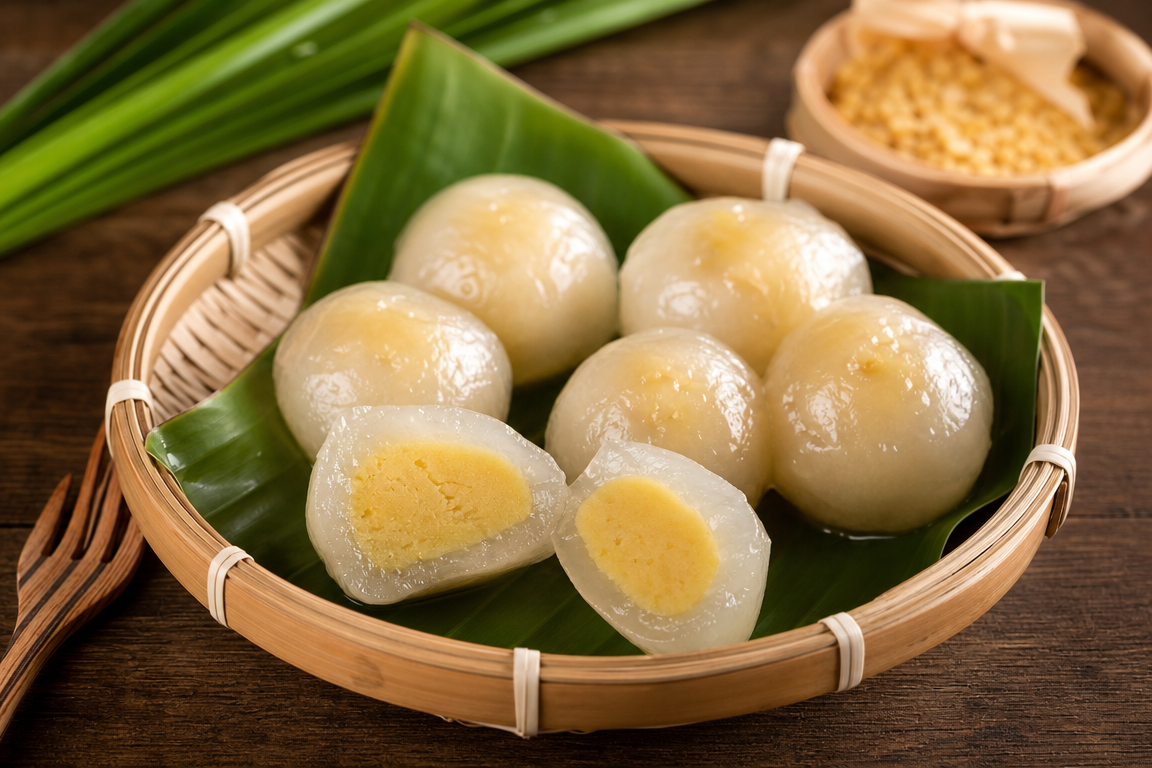
This Vietnamese sticky rice cake with mung bean, called bánh ít, pairs a soft, chewy rice-flour shell with a sweet mung bean center. The contrast is the main attraction: a smooth filling enclosed in dough that becomes tender and pleasantly stretchy when steamed.
The recipe below is a proposed home-kitchen version, not a claim of a historically authentic formula. It makes 12 small cakes and uses parchment squares for straightforward steaming. The key ingredients are glutinous rice flour and peeled split mung beans; adjusting the dough’s moisture and cooling the filling before shaping make the process easier.
Recipe Overview
- Yield: 12 small cakes
- Preparation: About 45 minutes, plus 2 hours for soaking
- Cooking: About 55 minutes
- Total: About 3 hours 40 minutes
- Equipment: Saucepan, mixing bowl, potato masher or sturdy spoon, steamer with a lid, and parchment paper
Ingredients
For the Mung Bean Filling
- 150 g dried peeled split mung beans
- Water for soaking, plus 500 ml fresh water for cooking
- 60 g granulated sugar
- 1 tablespoon neutral oil
- 1/4 teaspoon fine salt
For the Sticky Rice Dough
- 240 g glutinous rice flour, plus a little extra for adjustments
- 20 g granulated sugar
- 1/4 teaspoon fine salt
- 180–210 ml warm water, added gradually
- 1 tablespoon neutral oil
For Shaping and Steaming
- About 1 teaspoon neutral oil for your hands and parchment
- 12 parchment squares, approximately 3 inches wide
- Water for the steamer, as needed
Use flour labeled glutinous rice flour or sweet rice flour, not ordinary rice flour. The two behave differently, and ordinary rice flour will not produce the intended stretchy shell. Peeled split mung beans are the yellow beans without their green skins.
How to Make Sticky Rice Cake with Mung Bean
- Soak the mung beans. Rinse the beans, place them in a bowl, and cover generously with water. Soak for 2 hours, then drain and rinse again.
- Cook until soft. Put the drained beans in a saucepan with 500 ml fresh water. Bring to a boil, then reduce to a gentle simmer. Cook for about 25 minutes, or until the beans crush easily with a spoon. Add a little water if the pan becomes dry before they soften. Drain any excess liquid thoroughly.
- Make the filling. Mash the warm beans until mostly smooth. Return them to the saucepan with 60 g sugar, 1 tablespoon oil, and 1/4 teaspoon salt. Stir over low heat for about 5 minutes, until the mixture becomes a thick paste that holds a mound. Spread it on a plate to cool. Divide into 12 equal portions and roll into balls once cool enough to handle.
- Mix and rest the dough. Combine 240 g glutinous rice flour, 20 g sugar, and 1/4 teaspoon salt in a bowl. Add 180 ml warm water and 1 tablespoon oil. Mix, then knead gently until cohesive. Add more water a teaspoon at a time, using up to approximately 210 ml in total, until the dough feels soft and pliable rather than crumbly or wet. Cover and rest for 10 minutes.
- Prepare the steamer. Lightly oil the parchment squares. Add water to the steamer base, keeping its level below the steaming rack, and bring it to a steady simmer. Keep the dough covered while you work so its surface does not dry out.
- Fill and shape. Divide the dough into 12 equal pieces. Lightly oil your hands. Flatten one piece into a disk about 3 inches wide, leaving the center slightly thicker than the edges. Place a filling ball in the middle. Bring the dough up around it, pinch the edges closed, and gently roll into a smooth ball. Set seam-side down on a parchment square. Repeat with the remaining portions.
- Steam the cakes. Arrange the cakes in the steamer with space between them. Cover and steam over steadily simmering water for about 25 minutes. Cook in batches if necessary rather than crowding the rack. Check the water level between batches, and open the lid away from your face.
- Rest before serving. Remove the steamer from the heat and let the cakes stand for 5–10 minutes. The surface will be very sticky at first and easier to handle after this short rest. Serve warm, removing the parchment before eating.
Tips for a Soft Shell and Neat Filling
Adjust the Dough by Feel
Flour can absorb water differently, so treat the water measurement as a starting range. If the dough cracks when flattened, knead in a teaspoon of water. If it sticks heavily to your fingers and will not hold its shape, work in a teaspoon of glutinous rice flour at a time. Keep unused portions covered.
Keep the Filling Firm
A wet filling is difficult to enclose and can weaken the seam. Cook off excess moisture before cooling it. If the mixture spreads instead of holding a ball, return it to low heat briefly, stirring constantly, then let it cool again.
Seal Without Trapping Air
Bring the dough close against the filling as you close it. Large air pockets and thin patches can lead to splitting. If a small tear appears, patch it with a tiny piece of dough and smooth the join with lightly oiled fingers.
Serving Suggestions and Variations
Serve these cakes warm, when the shell is soft and the filling has cooled enough to eat comfortably. Keep them on their individual parchment squares until serving to limit sticking.
- Less-sweet filling: Reduce the filling sugar from 60 g to 40 g. The texture may be slightly different, so cook the paste until it still holds its shape.
- More textured filling: Mash the beans less thoroughly, leaving small pieces while keeping the mixture cohesive enough to portion.
- Smaller cakes: Divide both dough and filling into 16 portions. Begin checking after 18–20 minutes of steaming; the dough should be cooked through with no dry, floury center.
Refrigerate cooled leftovers in a covered container for up to 3 days. The shell will firm up when cold. Re-steam for approximately 5–10 minutes, or until hot throughout and softened again.
Frequently Asked Questions
Can I use regular rice flour?
Not as a direct substitute in this recipe. Glutinous rice flour provides the chewy, flexible texture needed to wrap the filling. Regular rice flour would require a different dough formula.
Why does the dough crack while I shape it?
It may be too dry or have dried out while uncovered. Knead in a little water, cover it, and let it rest briefly before trying again. Avoid stretching the wrapper too thin.
Can I prepare the filling ahead?
Yes. Make it up to a day ahead, cool it, and refrigerate it in a covered container. Portion it before shaping, and keep the finished cakes’ steaming time guided by whether the dough is cooked through.
Why are the freshly steamed cakes so sticky?
The hot rice-flour shell is naturally sticky. Lightly oiled parchment, space between cakes, and a short rest after steaming make handling easier. Avoid stacking the cakes while they are warm.