
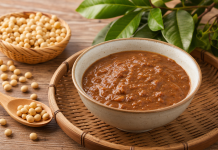
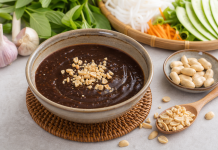
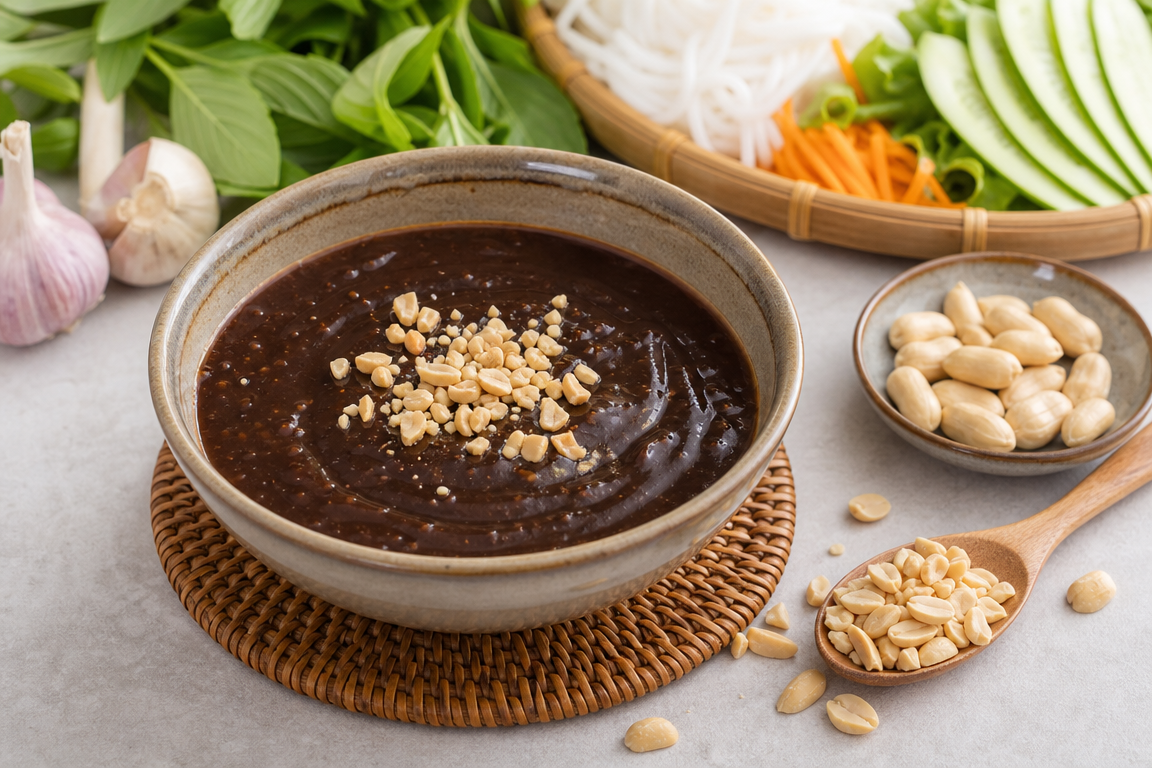
Peanut hoisin dip combines a sweet-savory sauce base with the rounded, nutty flavor of peanuts. Served alongside Vietnamese rolls, it adds richness and a coating texture that can be adjusted from thick and spoonable to loose enough for dipping.
The Vietnamese name supplied for this condiment is Tương đen đậu phộng. This guide focuses on the peanut-and-hoisin combination: how to balance it, serve it with rolls, and make a straightforward proposed version without treating one formula as a fixed traditional recipe.
What Is Peanut Hoisin Dip?
For this preparation, hoisin sauce provides the sweet-savory foundation, while peanut butter supplies peanut flavor and body. Water loosens the mixture so it clings to a roll without becoming a heavy paste. Chopped peanuts can add a contrasting crunch.
The finished dip depends heavily on the ingredients selected. A sweeter hoisin produces a sweeter sauce, while salted peanut butter can increase the overall saltiness. Smooth peanut butter makes a more uniform dip; crunchy peanut butter leaves small pieces throughout.
Understanding the names
Hoisin sauce and peanut hoisin dip are not interchangeable names for the same finished condiment. In this recipe, hoisin is an ingredient; the dip is the mixture made by combining it with peanuts or peanut butter and adjusting the consistency. Likewise, “peanut sauce” is a broader description that does not, by itself, tell you whether a sauce contains hoisin.
When following a recipe or choosing a prepared product, check the ingredients rather than relying on the name alone.
Flavor and Texture
The central balance is between hoisin’s sweetness and savory seasoning and the richness of peanut butter. The goal is a sauce that complements the roll rather than covering every other flavor. A small amount of lime juice can make a rich mixture taste brighter, while chili can add heat if desired.
Consistency matters just as much as seasoning. A dip that is too stiff can pull at a delicate wrapper when you dip. One that is too thin runs off before reaching the plate. Aim for a mixture that falls slowly from a spoon and leaves a light, even coating.
A Proposed Peanut Hoisin Dip Recipe
The following is a suggested starting formula, not a claim of a historically authentic or personally tested recipe. Hoisin and peanut butter vary by brand, so make the final adjustments after tasting.
Ingredients
- 1/4 cup hoisin sauce
- 2 tablespoons smooth peanut butter, preferably unsweetened
- 3 tablespoons warm water, plus more as needed
- 1 teaspoon lime juice, optional, with more to taste
- Chili sauce or finely chopped chili, optional, to taste
- 1 tablespoon chopped roasted peanuts, optional, for topping
Method
- Put the hoisin sauce and peanut butter in a bowl. Stir until combined.
- Add the warm water a tablespoon at a time, stirring thoroughly after each addition. The mixture may initially tighten before becoming smoother as more water is incorporated.
- Check the texture with a spoon. Add additional water in small amounts until the dip coats the spoon but still flows.
- Taste a little with a piece of the roll you plan to serve. Add the optional lime juice if the mixture needs a sharper balance, or chili if you want heat.
- Transfer to a serving bowl and add the optional chopped peanuts just before serving.
If the peanut butter is difficult to blend, warm the mixture gently in a small saucepan over low heat while stirring. Avoid prolonged cooking, which can evaporate water and make the dip thicker than intended.
Serving It with Vietnamese Rolls
Use peanut hoisin dip as an accompaniment to Vietnamese rolls rather than as a mandatory component. For fresh rice-paper rolls, a moderately loose consistency makes dipping easier. With fried rolls, try a smaller amount first to judge how the rich sauce works with the crisp wrapper and filling.
Taste the combination, not just the sauce on its own. A strongly seasoned filling may need a thinner, less concentrated dip. A mild vegetable filling may work better with a slightly thicker coating. Keep chopped peanuts small enough that they do not make dipping awkward.
Substitutions and Adjustments
If you do not have peanut butter
Finely grind roasted peanuts and stir them into the hoisin-water mixture. This will produce a grainier dip and may require more stirring and water. Start with a small amount and adjust gradually rather than assuming ground peanuts will behave exactly like smooth peanut butter.
If the dip is too sweet or salty
First dilute a small portion with water and taste it with a roll. If that improves the balance, adjust the rest. Unsweetened peanut butter can reduce the relative sweetness of the mixture, though it also makes it thicker. Lime juice can add contrast, but it does not remove sugar or salt.
If peanuts are not suitable
A tolerated seed butter may provide body, but it changes the flavor and the result is no longer a peanut dip. For allergy-related substitutions, check every ingredient label, including the hoisin, and avoid cross-contact through utensils or serving dishes. Do not assume hoisin is free of soy, wheat, or other allergens; formulations differ.
Preparation and Storage
The dip can be mixed before serving and kept covered in the refrigerator. Use clean utensils, refrigerate promptly, and follow any relevant storage directions on the ingredient labels. An exact refrigerated shelf life cannot be established from this proposed formula alone.
After chilling, stir thoroughly and add a little water if needed. Store the chopped-peanut topping separately to preserve its crunch. Keep an untouched portion separate from the communal dipping bowl rather than returning used dipping sauce to storage.
Frequently Asked Questions
Can I use crunchy peanut butter?
Yes. Expect a chunkier texture, and add water gradually until the sauce is easy to dip into.
Does peanut hoisin dip need to be spicy?
No. Chili is optional in this proposed recipe. Leaving it out keeps the focus on the sweet-savory hoisin and peanut flavors.
Should it be served warm or cold?
Either can work. Temperature affects thickness, so check the consistency at the temperature at which you intend to serve it.
Can plain hoisin replace the finished dip?
It can serve as a different dipping option, but it will not provide the same peanut flavor or texture. Hoisin alone may also taste more concentrated than the diluted mixture.