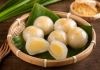

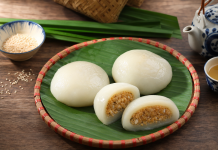
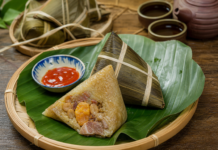
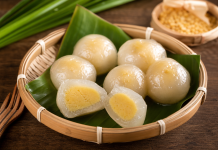
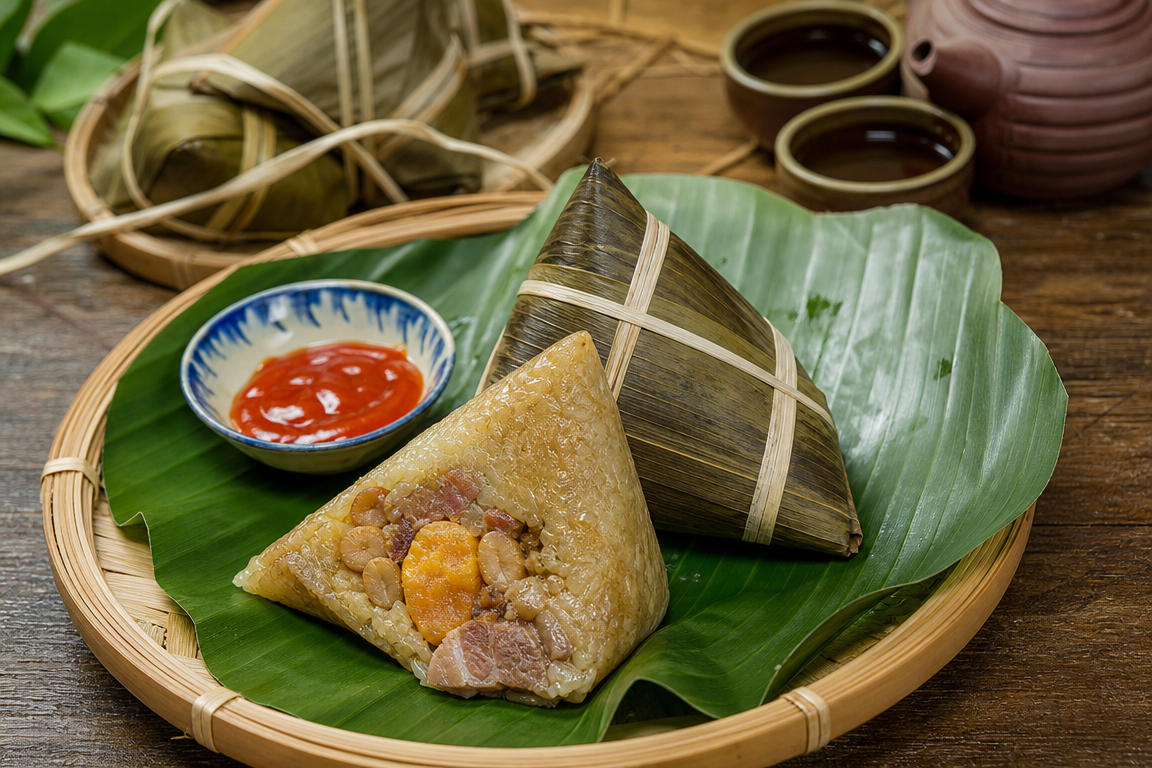
This pyramid rice dumpling recipe offers a sweet version of bánh ú, with sticky rice wrapped around a lightly sweetened mung bean filling. Banana leaves hold the dumplings in their pointed shape while they simmer, creating individual parcels that can be unwrapped at the table.
The quantities and method below are a proposed home-cooking recipe, not a claim of a historically authentic formula. The filling is intentionally simple, allowing you to adjust its sweetness without changing the basic wrapping and cooking process. Plan ahead for soaking, and leave enough time to shape the parcels without rushing.
Recipe Overview
- Yield: 8 medium dumplings
- Active preparation: About 1 hour
- Cooking: About 2 hours 30 minutes
- Soaking: 6 hours, with the mung beans soaking during the final 2 hours
- Total time: About 9 hours 30 minutes, including soaking
You will need a large pot, a saucepan, a colander, kitchen scissors, and food-safe kitchen twine. Choose a pot deep enough to keep the wrapped dumplings submerged during cooking.
Ingredients
For the Rice
- 400 g white glutinous rice, also sold as sweet rice
- 1/2 teaspoon fine salt
- Water for soaking and boiling
For the Sweet Mung Bean Filling
- 120 g dried split, hulled mung beans
- 60 g granulated sugar
- 1 tablespoon neutral oil
- 1/4 teaspoon fine salt
- Water for soaking and cooking
For Wrapping
- 16 banana leaf rectangles, approximately 10 by 12 inches each, plus a few spare pieces for patching
- 8 lengths of food-safe kitchen twine, approximately 30 inches each
Use glutinous rice rather than ordinary long-grain rice; the grains need to cling together around the filling. For the beans, choose the small yellow split variety without skins. Frozen banana leaves are suitable once fully thawed.
How to Make Pyramid Rice Dumplings
- Soak the rice and beans. Rinse the rice several times, then cover it generously with cool water and soak for 6 hours in the refrigerator. In a separate bowl, rinse the mung beans and soak them for the final 2 hours. Drain both thoroughly before continuing.
- Cook the mung beans. Put the drained beans in a saucepan and add fresh water to cover by about 1 inch. Bring to a boil, then reduce to a gentle simmer. Cook for approximately 20–25 minutes, until the beans crush easily with a spoon. Add a little hot water if the pan begins to dry before the beans soften.
- Finish the filling. Drain any excess water and mash the beans. Stir in the sugar, oil, and 1/4 teaspoon salt. Cook over low heat for 3–5 minutes, stirring, until the mixture forms a thick paste that holds a mound. Let it cool enough to handle, then divide into 8 portions.
- Prepare the leaves and rice. Wash the banana leaves carefully. Briefly dip them in hot water until flexible, then drain, pat dry, and trim away any stiff central ribs. Mix the drained rice with 1/2 teaspoon salt and divide it into 8 portions. Keep spare leaf pieces nearby to cover small splits.
- Form a leaf pocket. Stack 2 leaf rectangles with their centers overlapping and their grain directions crossing where possible. Cup the middle of the layered leaves in one hand. Bring the sides together, overlapping them to form a pointed cone with no opening at the bottom. Check that both layers cover the point.
- Fill and close each dumpling. Spoon half of one rice portion into the cone, spreading it up the sides slightly. Add one portion of filling, then cover with the remaining rice. Leave a little space for expansion. Fold the open leaf edges inward over the rice, shaping a triangular base and a pointed top. Fold any long ends flat against the parcel. Tie securely in two directions with twine, without squeezing the rice tightly. Repeat with the remaining ingredients.
- Simmer the dumplings. Place the parcels in a large pot and cover with water by at least 1 inch. If they float, use a heatproof plate that fits inside the pot to keep them submerged. Bring to a boil, reduce to a steady gentle simmer, and cook for about 2 hours. Check regularly and add boiling water as needed to maintain the water level.
- Check and rest. Carefully remove one dumpling and let it cool enough to unwrap. The rice should be tender throughout, with no hard or chalky center. If needed, cook the remaining parcels for another 15–30 minutes and check again. Drain the finished dumplings and rest for 15–20 minutes before unwrapping.
Tips for Better Wrapping and Texture
Make the Filling Thick, Not Wet
Loose filling can spread into the rice and make wrapping difficult. After adding the sugar, continue stirring over low heat until a spoon drawn through the mixture leaves a visible trail. Cool the filling before portioning; it should be soft but easy to mound.
Keep the Leaves Flexible
Dry or brittle leaves can split at the folds. Brief hot-water dipping makes them easier to bend. If a leaf tears, place an extra piece over the damaged area before adding rice. Two layers provide more support than one, especially around the pointed end.
Allow Room for the Rice
Do not pack the cone firmly or pull the string so tight that it cuts into the leaves. The rice needs room to expand. A secure parcel should hold its shape while still having a little give when gently pressed.
Serving and Storage
Serve bánh ú warm after the resting period, when the rice is tender but less likely to stick heavily to the leaves. Cut away the twine, unfold the wrapper carefully, and transfer the dumpling to a plate. The banana leaves are a wrapper, not part of the edible serving.
The sweet bean center makes these suitable as a small dessert or snack. For a sweeter finish, offer a little sugar separately rather than adding more liquid to the filling.
Refrigerate leftovers within 2 hours of cooking and use within 3 days. Keep them covered to limit drying. Reheat by steaming until hot throughout; the time will depend on their size and starting temperature.
Suitable Variations
- Less sweet filling: Reduce the sugar to 40 g. Keep the other filling ingredients unchanged.
- Coconut filling: Stir 2 tablespoons of unsweetened finely shredded coconut into the cooked bean paste. If the mixture becomes crumbly, add water a teaspoon at a time, keeping it thick enough to shape.
- Smaller parcels: Divide the ingredients into 12 portions and use smaller leaf pieces. Begin checking tenderness after 90 minutes rather than assuming they need the full cooking time.
Frequently Asked Questions
Can I use regular rice instead of glutinous rice?
Regular rice will not give the same cohesive, sticky texture. For this proposed recipe, use white glutinous rice labeled sweet rice or sticky rice.
Do I need to cook the rice before wrapping?
No. The rice is soaked and drained, then wrapped uncooked. It cooks inside the leaves during the long simmer. The mung bean filling, however, is cooked before assembly.
Why is the rice still firm after two hours?
A tightly packed parcel, insufficient soaking, or a water level that dropped too low can affect cooking. Keep the remaining dumplings submerged and continue simmering in 15–30-minute increments until the rice is tender.
Can I make the filling ahead?
Yes. Prepare it up to a day ahead, cool it promptly, and refrigerate in a covered container. Portion it before wrapping, and keep the assembled uncooked dumplings chilled if you are not cooking them immediately.