
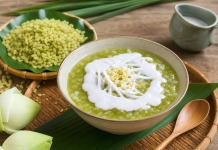
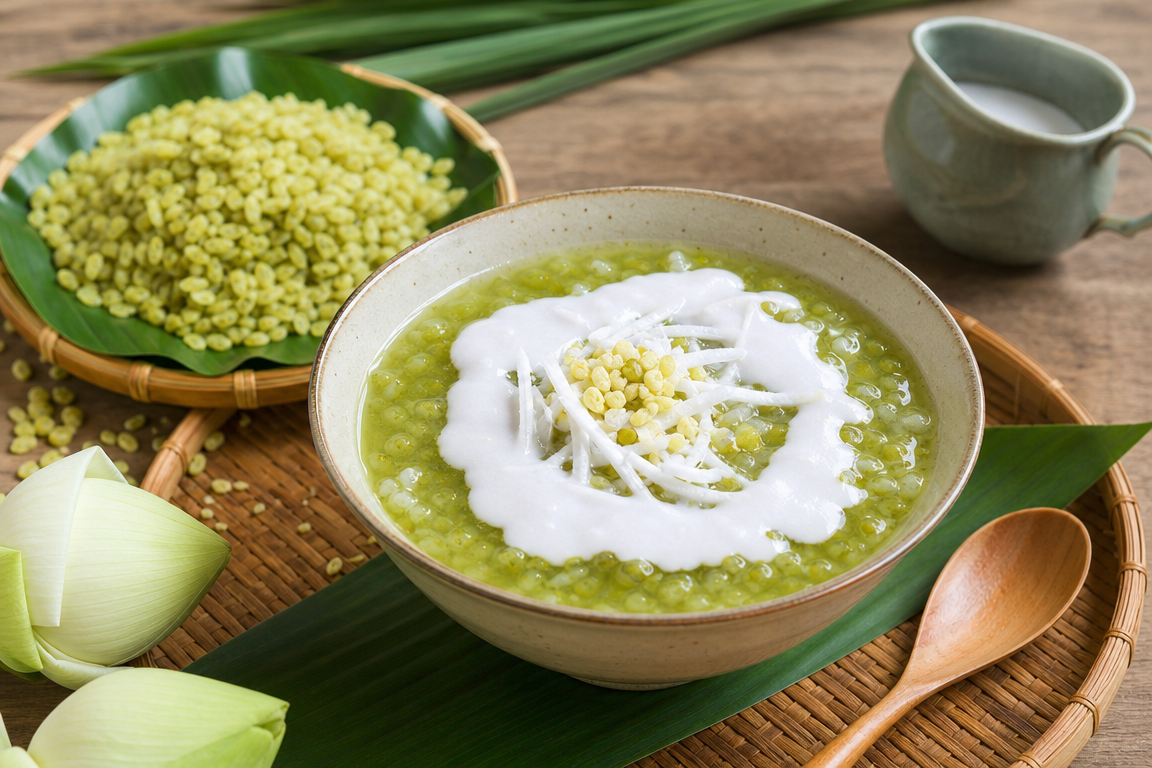
Chè cốm is a Vietnamese green rice flake dessert. This proposed recipe pairs the flakes with a lightly sweetened, gently thickened liquid and a separate coconut milk topping. The aim is a soft, spoonable dessert in which the rice flakes remain noticeable rather than disappearing into a heavy pudding.
This green rice flake dessert recipe uses a short ingredient list and a simple stovetop method. Because packaged flakes can differ in thickness and dryness, use their texture—not just the clock—to judge when they are ready. The quantities below are a suggested home-cooking formula, not a claim of a historically authentic preparation.
Recipe Overview
- Yield: 4 modest servings
- Preparation time: 10 minutes; no soaking included or required for the proposed method
- Cooking time: About 15 minutes
- Texture: Lightly thickened, with tender rice flakes
- Serving temperature: Warm or chilled; cooling time is additional
The cooking estimate allows about 5 minutes to heat the sweetened water, 3 minutes to cook the starch slurry, 2 minutes to soften the flakes, and 5 minutes to warm the coconut topping. Package directions that require longer cooking will change that estimate.
Ingredients
For the green rice flake dessert
- 100 g green rice flakes, labeled cốm
- 900 ml water, divided into 840 ml for the saucepan and 60 ml for the slurry
- 75 g granulated sugar, about 6 tablespoons
- 16 g tapioca starch, about 2 level tablespoons
- 1/8 teaspoon fine salt
For the coconut topping
- 200 ml unsweetened coconut milk
- 1/8 teaspoon fine salt
Use green rice flakes rather than a product chosen only for its green color. Check the package for any preparation instructions before starting. This method assumes flakes that soften with brief cooking; if your package specifies soaking or a different cooking method, follow those directions and allow additional time as needed.
How to Make Green Rice Flake Dessert
- Prepare the ingredients, about 10 minutes. Measure the flakes, sugar, starch, water, coconut milk, and salt. Spread the flakes on a plate and check for any unwanted material. In a small bowl, stir the tapioca starch into 60 ml cool water until smooth. Keep a spoon nearby so you can stir the slurry again just before adding it.
- Heat the sweetened water, about 5 minutes. Put the remaining 840 ml water, the sugar, and 1/8 teaspoon salt in a medium saucepan. Heat over medium-high heat, stirring occasionally, until the sugar dissolves and the liquid reaches a gentle simmer. Reduce the heat if it begins to boil vigorously.
- Thicken the liquid, about 3 minutes. Stir the starch slurry again, since starch settles as it stands. Pour it slowly into the simmering liquid while stirring continuously. Maintain a gentle simmer and stir for about 3 minutes, until the mixture looks more translucent and lightly coats the spoon. It should still flow easily.
- Add the rice flakes, about 2 minutes. Stir in the green rice flakes and lower the heat. Cook gently for about 2 minutes, folding the mixture occasionally so the flakes do not collect on the bottom. Check a small, cooled spoonful: the flakes should be tender, without a firm, dry center. If necessary, continue cooking briefly until they soften, then remove the saucepan from the heat.
- Warm the coconut topping, about 5 minutes. In a separate small saucepan, combine the coconut milk and remaining 1/8 teaspoon salt. Warm over low heat, stirring occasionally, until steaming. Avoid a hard boil. This topping is intentionally unthickened, so it remains easy to drizzle.
- Portion and serve. Divide the dessert among four bowls and spoon the warm coconut milk over each portion. For a chilled version, transfer the dessert and topping to separate shallow containers, refrigerate promptly, and assemble once cold. Cooling and chilling are not included in the cooking estimate.
Tips for a Soft, Spoonable Texture
Keep the starch slurry smooth
Mix tapioca starch with cool water, not hot liquid. Stir it immediately before pouring, then add it gradually while stirring the saucepan. Adding dry starch directly to the hot sugar water can leave lumps that are difficult to break apart.
Let the flakes guide the final cooking time
The suggested 2-minute cooking stage is a starting point, not a guarantee for every package. Taste a cooled sample before switching off the heat. Stop when the flakes are tender rather than continuing to boil until they lose their individual texture.
Adjust consistency after cooking
The dessert may become thicker as it stands. If it feels too dense, stir in hot water a tablespoon at a time until it flows comfortably from a spoon. Make small adjustments: thinning a little is easier than correcting a watery batch. Chilled portions may need a little water stirred in before serving.
Serving Suggestions
Serve in small bowls with enough coconut milk to create a contrasting creamy layer without covering the rice flakes completely. Keeping the topping separate until serving also lets each person control how much they add.
For a warm dessert, portion it shortly after cooking. For a chilled dessert, let both components cool safely in the refrigerator rather than leaving a large pot at room temperature for an extended period. Stir gently before portioning, since the texture can settle as it cools.
Suitable Variations
- Less sweet: Reduce the sugar to 50–60 g. Taste the liquid before adding the starch, remembering that the unsweetened coconut topping will soften the overall sweetness.
- More fluid: Reduce the tapioca starch to 12 g for a looser dessert. Keep the water quantity the same.
- Without coconut milk: Omit the topping and its 1/8 teaspoon salt. Serve the rice flake mixture on its own; it will taste lighter and less creamy.
- Coconut stirred through: Instead of layering the topping, add a spoonful to each bowl and stir gently. Avoid adding the entire topping to the saucepan unless everyone wants the same balance.
Frequently Asked Questions
Do I need to soak the green rice flakes?
Not for the brief-cooking flakes assumed in this proposed recipe. Check the package first, however. If it calls for soaking, follow that guidance and add the elapsed soaking period to your preparation time.
Can I use cornstarch instead of tapioca starch?
You can try the same weight of cornstarch as a practical substitution, mixed with the reserved cool water. Expect a different finish: cornstarch can produce a less translucent, less elastic texture. Simmer until the mixture is evenly thickened before adding the flakes.
Why is my dessert too thick?
Extra starch, evaporation, and the flakes absorbing liquid can all contribute. Stir in hot water gradually to loosen it. Next time, measure the starch by weight if possible and keep the simmer gentle to limit evaporation.
Can I make it ahead?
Yes, though the flakes may soften further and the liquid may thicken during storage. Refrigerate the dessert and coconut topping separately in covered containers and serve the next day for a practical make-ahead option. Loosen individual portions with a little water if needed.