
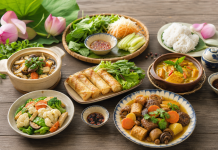
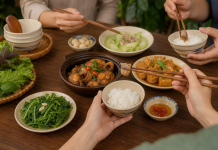
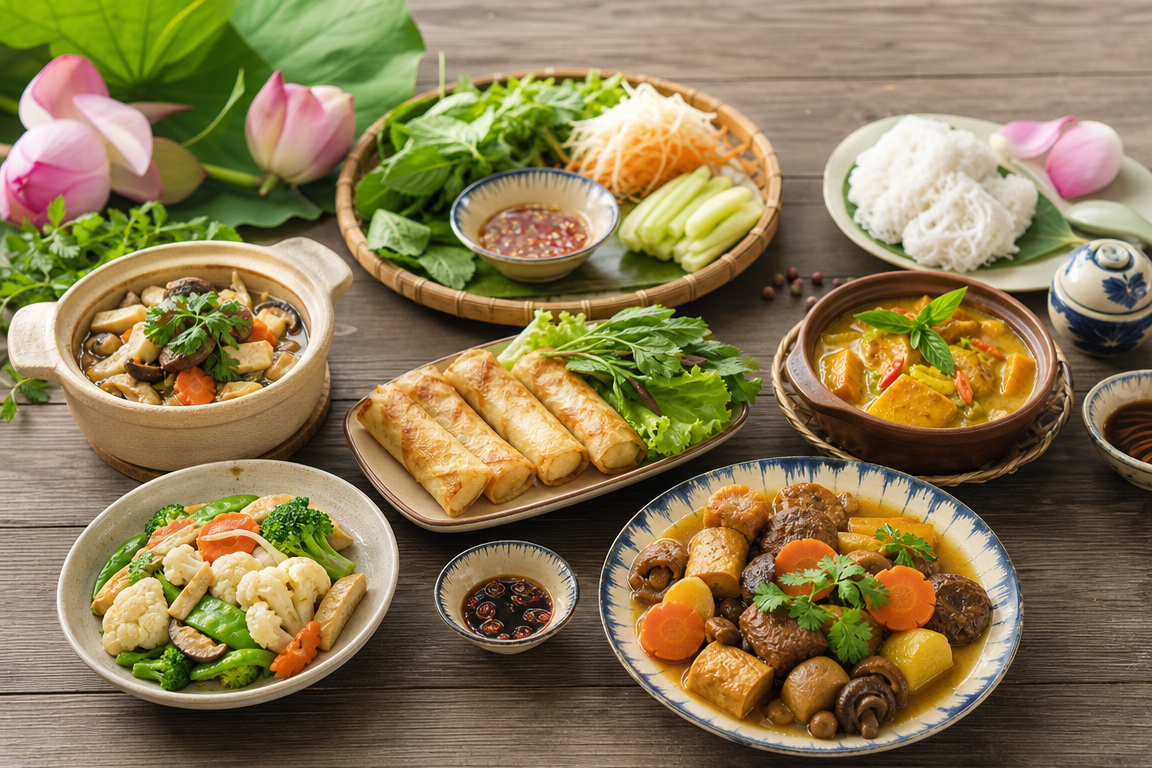
Vietnamese vegetarian food offers more than a plate of vegetables beside rice. Noodle soups, fresh rolls, filled baguettes, savory pancakes, and tofu dishes can all become satisfying meat-free meals. The most useful distinction is not simply whether a dish contains visible meat, but whether its broth, dressing, filling, and dipping sauce are vegetarian too.
This guide to famous Vietnamese vegetarian dishes focuses on recognizable dishes and practical vegetarian variations. The ingredient combinations below are suggestions, not fixed recipes or claims about a single authentic preparation. Restaurant versions and home recipes can differ, especially in their use of eggs, dairy, and animal-based seasonings.
What Does “Chay” Mean on a Vietnamese Menu?
The Vietnamese word chay identifies vegetarian food. It is a useful term to recognize alongside a dish name, but the label alone does not explain every ingredient. For a vegan meal, egg and dairy ingredients still need attention. For any vegetarian meal, broth and sauces deserve the same scrutiny as the main protein.
Fish sauce, shrimp paste, meat stock, and oyster-based sauces can be easy to overlook because they may disappear into a dressing or cooking liquid. A vegetable-filled dish is not necessarily vegetarian if its seasoning contains one of these ingredients. Mushroom-based seasonings, soy sauce, and vegetable broth are possible alternatives, but individual products should be checked rather than assumed suitable.
Vietnamese Vegetarian Dishes to Know
1. Phở Chay: Vegetarian Noodle Soup
A vegetarian interpretation of phở brings rice noodles, a fragrant broth, vegetables, and plant-based protein into one bowl. Tofu and mushrooms are useful choices: tofu gives the bowl substance, while mushrooms contribute a savory flavor and a contrasting texture.
For a proposed home version, build a vegetable broth with onion, ginger, and a restrained amount of warm spices such as star anise and cinnamon. Add mushrooms for depth, then season gradually so the broth remains balanced rather than overwhelmingly salty or sweet. Cook the noodles separately and assemble the bowl just before serving to keep them from becoming overly soft.
Fresh herbs and a squeeze of lime can sharpen the finished bowl. The key vegetarian check is the stock itself; removing sliced meat from a meat-based noodle soup does not make its broth vegetarian.
2. Bún Chay: A Vegetarian Rice-Noodle Bowl
For a noodle dish without a large volume of broth, a vegetarian rice-vermicelli bowl offers a different balance. A suggested combination is cooked and cooled noodles, lettuce, cucumber, fresh herbs, tofu, and a bright dressing. Crushed peanuts can add crunch when allergies are not a concern.
The appeal is in the contrast between soft noodles, crisp vegetables, and well-seasoned tofu. Pan-searing the tofu before adding it helps it retain a firmer surface, while keeping the vegetables raw preserves their freshness. Cut the toppings into manageable pieces so each bite can include several components.
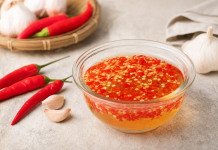
For a vegetarian dressing, combine a suitable soy-based seasoning with lime juice, a little sugar, water, and optional chile. Add it gradually: the noodles should be seasoned without leaving the bowl swimming in liquid. Any fish-sauce-based dressing would need a vegetarian replacement.
3. Gỏi Cuốn Chay: Fresh Vegetarian Rice-Paper Rolls
Fresh vegetarian rolls are a useful option when you want distinct ingredients rather than a mixed bowl. A proposed filling includes tofu, rice vermicelli, lettuce, cucumber, carrot, and herbs enclosed in softened rice paper.
Good assembly depends on moisture control. Drain the noodles, dry the vegetables, and let cooked tofu cool before rolling. Briefly moisten the rice paper and allow it to soften on the work surface; soaking it until completely limp can make it harder to handle. A modest amount of filling is easier to enclose than a tightly packed mound.
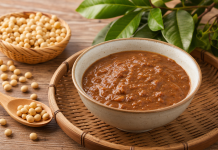
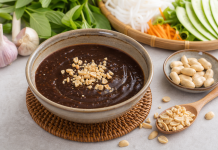
The dipping sauce changes the character of the dish. A peanut-based sauce makes the rolls richer, while a lighter soy-and-lime sauce emphasizes their fresh vegetables. Check prepared sauces for animal ingredients, and keep peanut allergies in mind when choosing a dip.
4. Bánh Mì Chay: A Vegetarian Filled Baguette
A vegetarian bánh mì can combine a crisp baguette with tofu or mushrooms, cucumber, herbs, and pickled vegetables. The filling works best when savory, fresh, and tangy elements remain distinct instead of blending into one soft layer.
For a suggested version, brown sliced tofu or mushrooms, drain any excess cooking liquid, and add them to the bread with carrot and daikon pickles. Cucumber brings a fresh crunch; cilantro and chile can be included according to preference. Assemble close to serving so wet fillings do not soften the bread too much.
Spreads require particular attention. Conventional mayonnaise contains egg, and pâté should not be assumed vegetarian. A clearly labeled plant-based spread or mushroom spread is an alternative, provided its other ingredients also fit the intended diet.
5. Bánh Xèo Chay: A Vegetarian Savory Pancake
A vegetarian version of bánh xèo can use a rice-flour-based batter with tofu, mushrooms, and bean sprouts as the filling. The goal is a thin, crisp pancake with enough filling to give it substance without making the center heavy or wet.
As a proposed cooking approach, prepare the filling first and cook moisture out of the mushrooms. Spread the batter thinly in a hot pan, add the filling, and allow the underside to firm and crisp before folding. An overloaded pancake is harder to fold and less likely to stay crisp.
Lettuce, herbs, and a vegetarian dipping sauce provide a fresh counterpoint. Recipes can differ, so do not assume a pancake is egg-free or that its accompanying sauce is free of fish sauce merely because the filling contains vegetables.
6. Đậu Hũ Sốt Cà Chua: Tofu in Tomato Sauce
Tofu in tomato sauce offers a straightforward rice-centered meal. For a vegetarian preparation, tofu can be simmered briefly in a sauce made from tomatoes, a little water, and suitable plant-based seasonings. Scallions can finish the dish if desired.
Firm tofu is easier to handle in the sauce than very delicate tofu. Browning it first is optional, but it creates a more defined exterior. Cook the tomatoes until they soften into a sauce, then add the tofu gently and allow it to absorb some seasoning without breaking apart.
The sauce should be flavorful enough to accompany plain rice without overwhelming the tomatoes. Fish sauce and animal-based stock are the main ingredients to exclude when adapting a nonvegetarian recipe.
7. Nấm Kho: A Vegetarian Braised Mushroom Dish
A plant-based mushroom braise makes another substantial companion to steamed rice. For a suggested version, simmer mushrooms in a modest amount of liquid seasoned with soy sauce, black pepper, and a little sugar. The aim is a savory coating rather than a large pot of thin broth.
Mushrooms release water as they cook, so begin with less added liquid than seems necessary. Reduce the sauce carefully and taste before adding more seasoning. Tofu can be included for a second texture, though it should be folded in gently to avoid crumbling.
The vegetarian status depends on the seasoning, not just the mushrooms. Check stock powders and bottled sauces for fish, shellfish, or meat ingredients.
How to Put Together a Balanced Vegetarian Meal
Think in terms of contrasting textures and serving styles. A noodle soup is already a complete centerpiece, while fresh rolls can accompany a rice meal without duplicating a rich cooked dish. Tofu in tomato sauce or braised mushrooms pairs well with plain rice and simply prepared greens.
- Choose a main format: soup, noodle bowl, sandwich, pancake, or rice with shared dishes.
- Include a substantial component: tofu, mushrooms, or a combination, rather than relying only on garnishes.
- Balance richness with freshness: herbs, cucumber, lettuce, and pickles can contrast with browned or braised ingredients.
- Check every sauce: vegetarian fillings do not compensate for an animal-based dressing or broth.
Frequently Asked Questions
Are Vietnamese vegetarian dishes always vegan?
No. A vegetarian preparation may still include egg or dairy. Mayonnaise, pancake batter, spreads, and packaged ingredients are worth checking when a meal needs to be fully plant-based.
Can fish sauce simply be left out?
It can be omitted, but the dish may need another source of salt and savory flavor. Depending on the preparation, a suitable soy sauce, mushroom seasoning, or vegetarian fish-sauce alternative may help. Substitute gradually because these products differ in strength and sweetness.
Which dishes are easiest to adapt at home?
Fresh rolls, rice-noodle bowls, and tofu in tomato sauce allow considerable flexibility in their fillings and seasoning. Vegetarian noodle soup requires more attention to the broth, while a crisp filled pancake requires closer control of heat, moisture, and batter thickness.
Does a vegetable dish automatically count as vegetarian?
No. Vegetables may be cooked in meat stock or seasoned with fish sauce, shrimp paste, or oyster-based sauce. A reliable vegetarian preparation accounts for those less-visible ingredients as carefully as the main filling.