

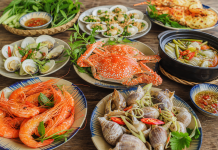
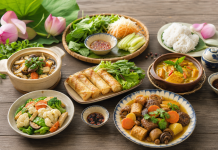
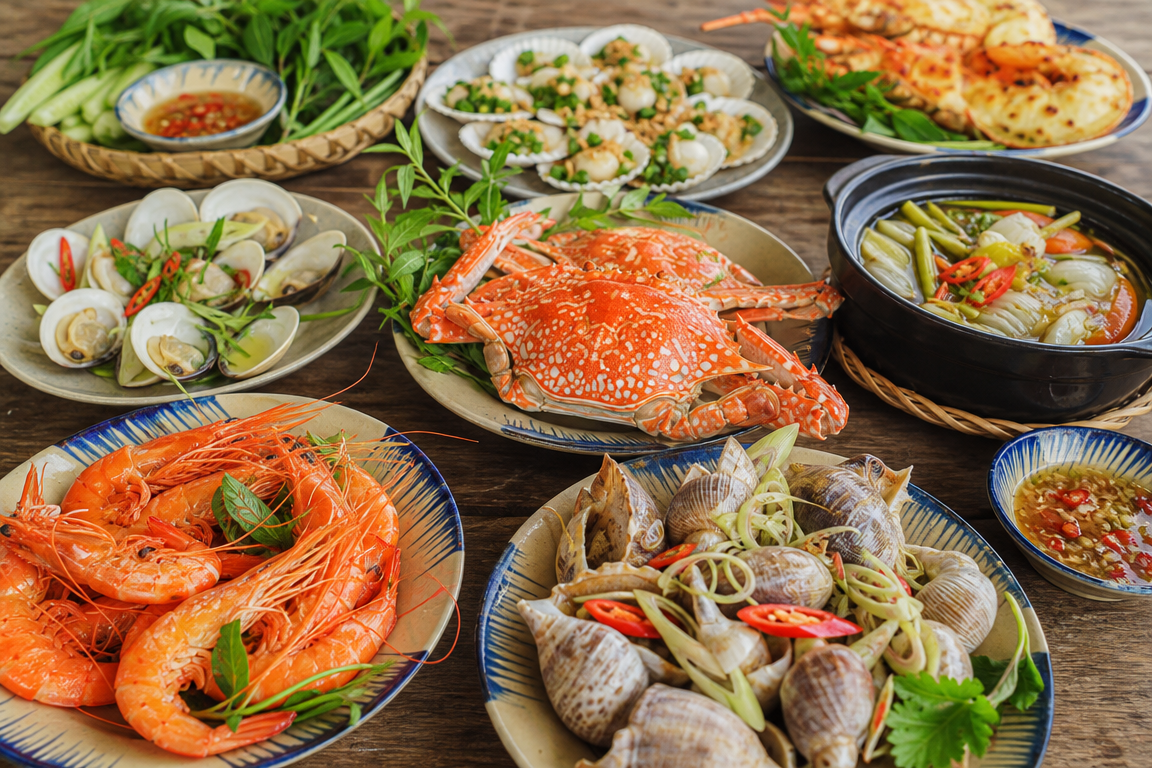
Vietnamese seafood dishes are easier to navigate when you look beyond the main ingredient and pay attention to the cooking method. Steamed shrimp, grilled squid, clams in an aromatic broth, and crab coated in tamarind sauce offer very different eating experiences, even though all belong on a seafood-focused table.
This guide approaches “famous” as a starting point for exploring familiar dish styles, not as a verified popularity ranking. The Vietnamese topic name, Các món hải sản nổi tiếng Việt Nam, covers a broad subject, so the most useful approach is to understand what each preparation offers: delicate flavor, smoky edges, a tangy sauce, or a broth worth enjoying alongside the seafood.
How to Read Vietnamese Seafood Dish Names
Many dish names pair an ingredient with a cooking method or a defining seasoning. Recognizing a few words makes it easier to distinguish a simple steamed preparation from something grilled or generously sauced.
- Tôm: shrimp or prawns.
- Mực: squid.
- Cua: crab.
- Nghêu: clams.
- Sò điệp: scallops.
- Hấp: steamed.
- Nướng: grilled or roasted.
- Rang me: cooked with a tamarind-based sauce.
These words identify the broad preparation, not a fixed recipe. A short menu name may leave out the aromatics, dipping sauce, garnish, or level of heat. Those details can change the character of the dish considerably.
Vietnamese Seafood Dishes to Understand
Tôm Hấp: Steamed Shrimp
Tôm hấp puts shrimp at the center of the plate without a heavy coating. Steaming gives the flesh a firm but tender texture when it is cooked carefully. Aromatics may be included, but the dish name alone does not tell you which ones.
This is a useful choice when you want a relatively straightforward preparation. Check whether the shrimp arrive shell-on, since that affects how much peeling is involved. A separate dipping sauce can add saltiness, acidity, or heat without covering every bite in the same seasoning.
When comparing dishes, think of steamed shrimp as a contrast to grilled or richly sauced seafood. Its simpler presentation makes differences in texture easier to notice.
Mực Nướng: Grilled Squid
Mực nướng offers a different balance: the springy texture of squid meets the browned surface created by grilling. The precise result depends on the cut, seasoning, and cooking time. Whole squid, opened bodies, and smaller pieces do not eat quite the same way.
The name does not guarantee a spicy marinade. If chili is a concern, the seasoning and accompanying sauce matter more than the word nướng. Squid can become tough when cooked too long, so tenderness is an important part of the eating experience rather than a detail to overlook.
For a shared meal, grilled squid provides a useful textural contrast to clams in broth or steamed shrimp. It brings browned flavor without necessarily adding another sauce-heavy dish.
Nghêu Hấp Sả: Clams Steamed with Lemongrass
Nghêu hấp sả identifies both the shellfish and an aromatic: clams steamed with lemongrass. The cooking liquid is part of the appeal, carrying the clam juices and the citrus-like fragrance of the lemongrass.
This preparation is better understood as shellfish served with broth than as a dry seafood plate. Depending on the version, other seasonings may make the liquid sharper, hotter, or more savory. The name itself does not establish those details.
At the table, allow space for empty shells and use a spoon for the broth if one is provided. Tough pieces of lemongrass are there to contribute aroma; they are not necessarily intended to be eaten.
Cua Rang Me: Crab with Tamarind Sauce
Cua rang me moves toward a bolder, more hands-on style of eating. Tamarind contributes tartness to a sauce that coats the crab. The balance of sourness, sweetness, salt, and heat depends on the preparation rather than on a single universal formula.
Crab served in its shell takes time to eat. The sauce may cover the exterior while the meat remains inside the body, legs, and claws. This makes the dish less convenient than peeled shrimp, but it also gives the meal a different pace.
If choosing several seafood dishes, crab with tamarind sauce can serve as the strongly flavored centerpiece. Pairing it with a simpler steamed preparation keeps the meal from becoming a succession of similarly rich sauces.
Sò Điệp Nướng Mỡ Hành: Scallops with Scallion Oil
Sò điệp nướng mỡ hành combines scallops with a scallion-and-fat topping. The scallop provides the tender center, while the topping adds richness and an onion-like aroma. Presentation and additional garnishes can vary.
The topping matters as much as the shellfish when judging the dish’s overall character. A generous amount can make each portion feel rich, even when the scallop itself is small. Any extra crunchy garnish also changes the texture.
Do not assume that every version contains the same ingredients. If peanuts, butter, or other additions are a concern, the full preparation needs clarification; the dish name is not a complete ingredient list.
Cá Hấp: Steamed Fish
Cá hấp means steamed fish, but it does not identify the species. For a specifically seafood-focused meal, the type of fish matters because the word cá can refer to freshwater fish as well as marine fish.
A steamed fish preparation emphasizes moist flesh and whatever aromatics or sauce accompany it. A whole fish also creates a different eating experience from a fillet: bones require attention, and portions need to be separated carefully.
When the fish is served with cooking juices, those juices can be an important part of the dish. Nevertheless, the name alone does not establish whether the result will be lightly seasoned, salty, spicy, or tangy.
Building a Balanced Seafood Meal
Variety comes from preparation as much as from the number of species on the table. Shrimp, crab, and squid all covered in strong sauces may offer less contrast than two seafood dishes cooked in different ways.
A practical combination is one gently cooked dish, one grilled dish, and one preparation with a distinctive sauce or broth. For example, steamed shrimp, grilled squid, and tamarind crab create clear differences in texture and intensity. This is a suggested pairing, not a prescribed Vietnamese menu.
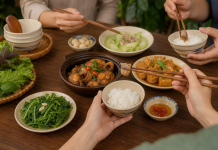
Plain rice can provide a neutral accompaniment to assertive sauces. A vegetable dish can add another texture without competing with the seafood. Consider portioning and effort, too: a table full of shell-on crab, shrimp, and clams requires more peeling and shell handling than a meal with some ready-to-eat pieces.
Details That Matter Beyond the Dish Name
A concise menu description rarely answers every practical question. Before choosing, distinguish between the seafood itself, the cooking method, and the extras that arrive with it.
- Shells and bones: Whole crab, shell-on shrimp, clams, and whole fish require different kinds of handling.
- Heat: Chili may appear in a marinade, sauce, broth, or separate dip.
- Added ingredients: Toppings and sauces may contain ingredients not mentioned in the dish name.
- Serving style: A dish may be dry, coated in sauce, or served with enough liquid to enjoy as broth.
For anyone with a food allergy, a translated name is not enough to establish suitability. Sauces, garnishes, and shared cooking equipment can matter alongside the main seafood ingredient.
Frequently Asked Questions
Are Vietnamese seafood dishes always spicy?
No. A seafood name or cooking method does not automatically indicate chili heat. The marinade, broth, topping, and dipping sauce determine whether a particular preparation is spicy.
What is a useful starting point for someone new to these dishes?
Steamed shrimp offers a comparatively simple introduction, while grilled squid adds browned flavor and a firmer texture. Choosing one of each makes the differences between cooking methods easy to understand.
Does a Vietnamese dish name describe the complete recipe?
Usually, it describes only the main ingredient and a defining preparation or seasoning. It should not be treated as a full ingredient list or a guarantee that every version will taste the same.
Which dishes are easiest to share?
That depends on how they are portioned. Cut squid and individually served scallops can be straightforward to divide. Whole crab and whole fish require more attention, while shell-on dishes also need room for discarded shells.