



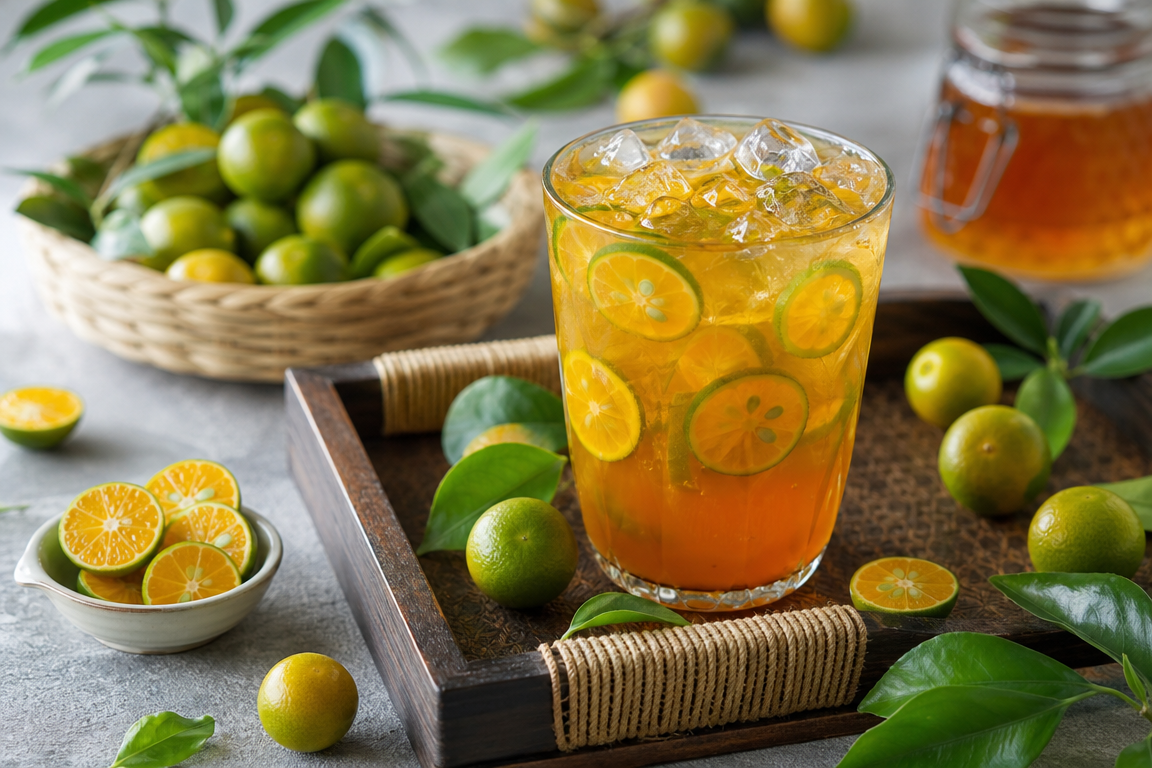
Vietnamese kumquat tea, or trà tắc, brings together brewed tea, bright citrus, and enough sweetness to soften the fruit’s tart edge. Served over ice, it makes a refreshing drink with a balance you can adjust to suit your tea and kumquats.
This kumquat tea recipe is a proposed home version, not a claim of a historically authentic formula. It uses black tea, fresh kumquats, sugar, and ice for a straightforward drink. The key is to start with a little citrus juice, taste, and build the flavor gradually rather than assuming every batch of fruit will have the same acidity.
Recipe Overview
- Yield: 2 servings
- Preparation: About 15 minutes, including tea steeping, preparing the kumquats, and assembling the drinks
- Cooking: About 5 minutes to heat the water
- Additional cooling: About 10 minutes, not included in the preparation or cooking estimates
- Equipment: Small saucepan or kettle, heatproof pitcher, fine-mesh strainer, knife, measuring spoons, and two glasses
The water-heating estimate will vary with your equipment. The brief cooling period helps prevent the hot tea from melting too much ice immediately.
Ingredients
These quantities make two moderately sweet glasses. Keep the final tablespoon of sugar separate until you have tasted the tea with the kumquat juice.
- 2 cups water
- 2 standard black tea bags
- 8 fresh kumquats, washed and dried
- 2–3 tablespoons granulated sugar, divided
- About 2 cups ice, divided between two glasses
Choosing the tea and fruit
Plain black tea provides a clear starting point without introducing another dominant flavor. Follow the package’s guidance if it calls for a shorter steep than the three minutes suggested here. A longer steep is not necessarily a better way to make stronger tea; it can also make the drink more astringent.
Choose kumquats that feel firm and have no obvious mold or soft, damaged spots. Their size and juice content can vary, so eight fruits are a practical starting quantity rather than a guarantee of a particular juice yield. Reserve two for thin slices and use the remaining six for juice.
How to Make Kumquat Tea
- Heat the water. Bring 2 cups of water to a boil in a small saucepan or kettle, allowing about 5 minutes. Remove the water from the heat.
- Brew the tea. Add the two tea bags to the hot water and steep for about 3 minutes, or follow the package directions. Remove the bags without squeezing them hard.
- Dissolve the sugar. Stir 2 tablespoons of sugar into the warm tea until fully dissolved. Let the sweetened tea cool for about 10 minutes. It does not need to become refrigerator-cold before assembly.
- Prepare the kumquats. Allow about 7 minutes for washing, cutting, and juicing. Cut six kumquats crosswise and gently squeeze their juice through a fine-mesh strainer into a small bowl. Remove any seeds caught in the juice. Thinly slice the remaining two kumquats and pick out their seeds.
- Balance the drink. Stir half the strained kumquat juice into the tea. Taste, then add the rest a little at a time until the citrus level suits you. If needed, stir in up to 1 additional tablespoon of sugar, making sure it dissolves. You do not have to use every drop of juice.
- Pour over ice. Divide about 2 cups of ice and the kumquat slices between two glasses. Pour in the tea, stir, and taste once more after the ice has begun to chill it. Allow about 5 minutes for sweetening, final adjustments, and assembly. Serve promptly.
Tips for Better Flavor
Adjust citrus before adding more sugar
If you add all the juice at once and the drink becomes too tart, you may need more sugar than you intended. Adding the juice in stages gives you better control. Taste a small spoonful of the mixed tea over an ice cube if you want a better sense of how it will taste chilled.
Keep the peel treatment gentle
The sliced fruit adds citrus aroma as well as a visual finish. Avoid aggressively crushing or grinding the slices into the tea, which can bring out more bitterness. For a cleaner-tasting glass, use the strained juice and leave out the slices entirely.
Account for melting ice
The tea should taste a little more concentrated before it goes over ice, since melting ice will dilute it. Still, avoid compensating with an excessively long steep. If the finished drink tastes too strong, a small splash of cold water is an easier adjustment than trying to correct an overly bitter brew with sugar.
Serving Suggestions
Serve kumquat tea in glasses with enough room to stir the ice and fruit slices. A spoon is useful for keeping the sweetness and citrus evenly distributed, especially if the drink sits for a few minutes.
It works as a stand-alone afternoon drink or alongside a savory meal when you want something cold and citrus-forward. Add ice just before serving rather than letting the finished glasses stand while you prepare the rest of the meal.
Suitable Variations
- Less sweet: Begin with 1 tablespoon of sugar instead of 2, then adjust after adding the juice. This is a variation on the base recipe, so expect a sharper drink.
- Green tea version: Replace the black tea bags with two green tea bags. Use the temperature and steeping time on their package rather than automatically pouring boiling water over them.
- Honey-sweetened version: Replace the initial 2 tablespoons of sugar with 1 tablespoon of honey, stirring it into the warm tea. Taste before adding more, since this changes both the sweetness and flavor.
- Without ice: Chill the mixed tea before serving and omit the ice. The drink will be more concentrated, so add cold water a tablespoon at a time if needed.
Frequently Asked Questions
Do I need to peel the kumquats?
No peeling is needed for this proposed recipe. Wash the fruit well, strain the squeezed juice, and remove the seeds from the garnish slices. If you prefer no peel in your glass, simply omit the sliced garnish.
Why does my kumquat tea taste bitter?
Possible causes include steeping the tea too long or heavily crushing the fruit and peel. Try a shorter steep within the tea package’s guidance, strain the juice, and handle the garnish gently. Extra sugar may soften bitterness, but it will not remove it.
Can I make it ahead?
You can brew and sweeten the tea ahead, then refrigerate it in a covered container once it has cooled enough for your container. For the freshest citrus flavor, prepare and add the kumquat juice closer to serving. Keep the ice separate until you pour the drinks.
Can I use bottled kumquat juice?
You can try it, but check whether it contains added sugar or other ingredients. Start with a small amount and reduce the recipe’s sugar if the juice is already sweetened. Bottled juice will not necessarily give the same flavor as the fresh fruit used here.