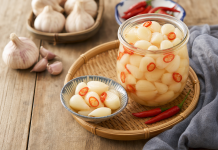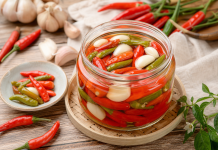

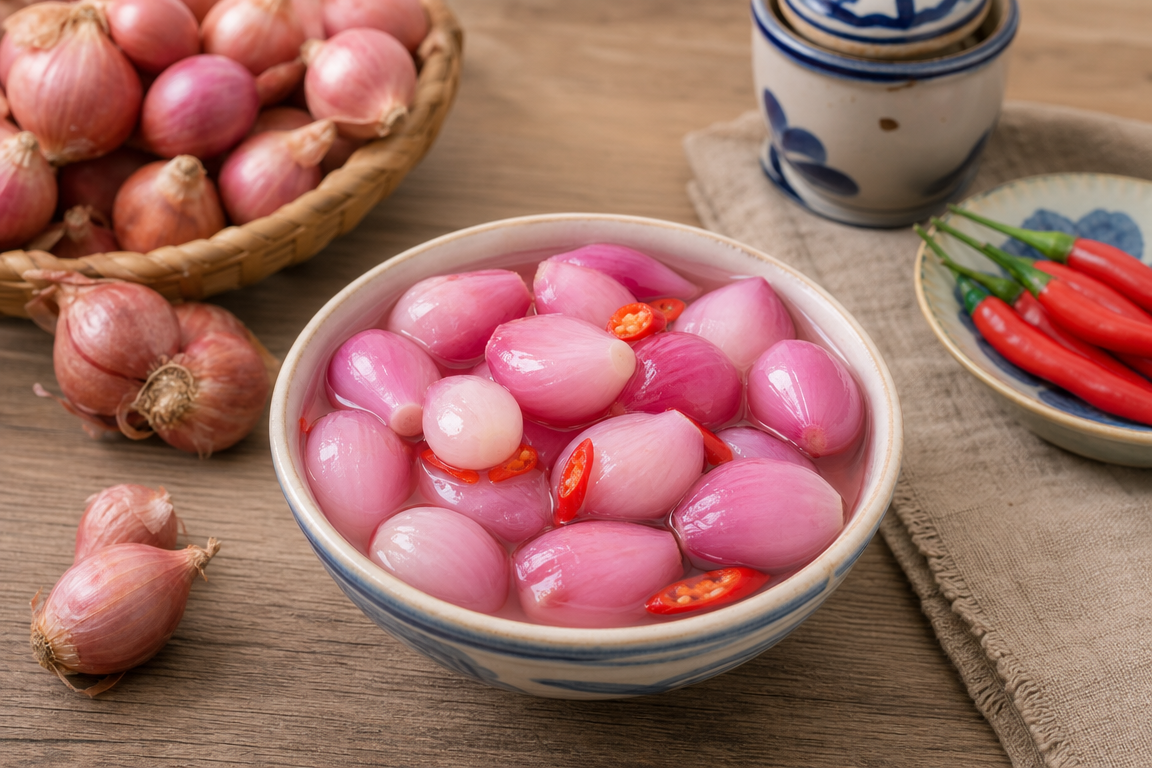
Vietnamese pickled shallots, or hành tím ngâm, are a sharp, crisp condiment made by pickling shallots. Their appeal is the contrast: a small bite can bring acidity, onion-like pungency, and a little sweetness alongside a richer or more savory dish.
The preparation below is a proposed refrigerator pickle, not a historically authentic formula or a shelf-stable preserving method. It offers a straightforward starting point, with room to adjust sweetness and slicing thickness to suit the meal.
What Are Pickled Shallots?
Shallots are small alliums with layered flesh and an onion-like flavor. Pickling changes their character: vinegar supplies acidity, while salt and optional sugar help balance the finished condiment. The shallots can remain distinctly pungent, particularly when left whole or cut into thick pieces.
The Vietnamese name hành tím ngâm identifies the ingredient and preparation. Hành tím refers to shallots; the complete name indicates a soaked or pickled preparation. Raw shallots and fried shallots are different ingredients and will not give a dish the same acidic contrast.
Flavor, Texture, and Appearance
Expect a vinegar-led tang with a lingering shallot bite. Sugar can soften the impression of acidity without removing it. Thin slices take on the brine more quickly and are easier to scatter over food; thicker pieces offer a firmer, more assertive bite.
Color depends on the shallots used. Purple-toned shallots may tint the brine and become pinker as they sit. Color alone is not a reliable way to judge whether a pickle is ready or safe to eat.
How to Use Them with Vietnamese Food
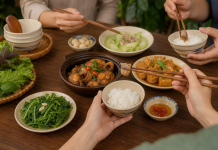
Think of pickled shallots as an accent rather than the main component. For Vietnamese meals, useful serving options include a small portion alongside rice and a savory main dish, a few slices with noodles, or a little chopped shallot added to a sandwich filling.
- With rice: Serve a small dish on the side so each bite can be adjusted.
- With grilled or roasted foods: Use the acidity to contrast with browned, rich flavors.
- With noodles: Add drained slices just before serving to preserve their distinct texture.
- In a dipping mixture: Stir in a small amount of finely chopped pickled shallot for texture, then taste before adding more vinegar or salt.
Drain the shallots before using them when extra liquid would make the food soggy. Start sparingly: both the shallots and their brine can noticeably change a dish’s saltiness and acidity.
A Proposed Refrigerator Pickle Recipe
This small-batch recipe uses vinegar rather than relying on fermentation. Keep the finished pickles refrigerated throughout storage.
Ingredients
- 250 grams shallots
- 150 milliliters unseasoned rice vinegar or white vinegar labeled 5% acidity
- 150 milliliters water
- 2 tablespoons granulated sugar
- 1 teaspoon fine salt
- Optional: a few thin slices of fresh chili
Seasoned rice vinegar already contains added seasoning and is not a direct substitute in these quantities. Using a different vinegar can also change the flavor substantially.
Method
- Prepare the container. Wash a food-safe jar and its lid thoroughly. Rinse well and use clean utensils throughout.
- Prepare the shallots. Peel them, trim the ends, and remove any damaged portions. Rinse and drain. Slice into even rings or lengthwise pieces for more consistent pickling.
- Make the brine. Combine the vinegar, water, sugar, and salt in a small saucepan. Warm gently, stirring until the sugar and salt dissolve. Remove from the heat and let cool.
- Combine. Put the shallots and optional chili in the jar. Add enough brine to cover the shallots, leaving some space below the lid. Do not dilute the brine with extra water to fill the jar.
- Refrigerate. Cover and refrigerate promptly. Begin checking the flavor after about 24 hours; thicker pieces may need longer to lose some of their raw sharpness.
For a sweeter next batch, increase the sugar slightly rather than reducing the vinegar. If the finished shallots taste too intense, use a smaller portion or drain them thoroughly before serving.
Storage and Handling
This recipe is not a tested canning process. A tightly closed lid does not make the jar safe for pantry storage. Keep it refrigerated at 40°F (4°C) or below, and do not leave it out to ferment.
Make a quantity you can finish within about a week rather than planning on extended storage. That is a conservative household-use recommendation, not a validated shelf life. Use a clean utensil each time, keep the shallots covered with brine, and do not top up an old batch with fresh shallots.
Discard the batch if you notice mold, unexpected bubbling, slime, or an unpleasant odor. The absence of these signs does not guarantee safety, so careful refrigeration and handling still matter.
Relevant Substitutes
Thinly sliced red onion is a practical substitute when shallots are unavailable. It gives a similar onion-like bite but changes the size, texture, and flavor. Small white onions can also be pickled, though larger pieces will need different preparation and more time to take on the brine.
Pickled garlic is not an equivalent replacement: its flavor is much more distinctly garlicky. Fried shallots provide crunch and savory flavor, but they do not replace the acidity of Vietnamese pickled shallots.
Frequently Asked Questions
Can the shallots be left whole?
Yes, but whole shallots take longer to absorb the brine and may retain a stronger raw center. For this proposed quick refrigerator recipe, evenly sliced pieces are the more predictable choice.
Are these fermented shallots?
Not in the recipe above. Vinegar supplies the acidity directly, and refrigeration is part of the method. Fermentation is a different process and should not be substituted casually.
Can the sugar be reduced?
Yes. Less sugar makes the pickle taste sharper. Sugar is used here for flavor balance; it does not make this recipe shelf-stable.
Can the leftover brine be reused?
Make fresh brine for a new batch. Liquid that has held shallots is no longer the same mixture as freshly prepared brine, and reusing it makes the result less predictable.