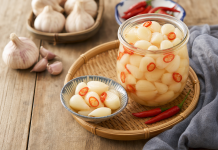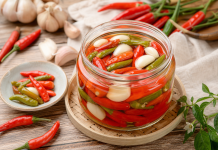


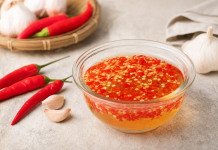
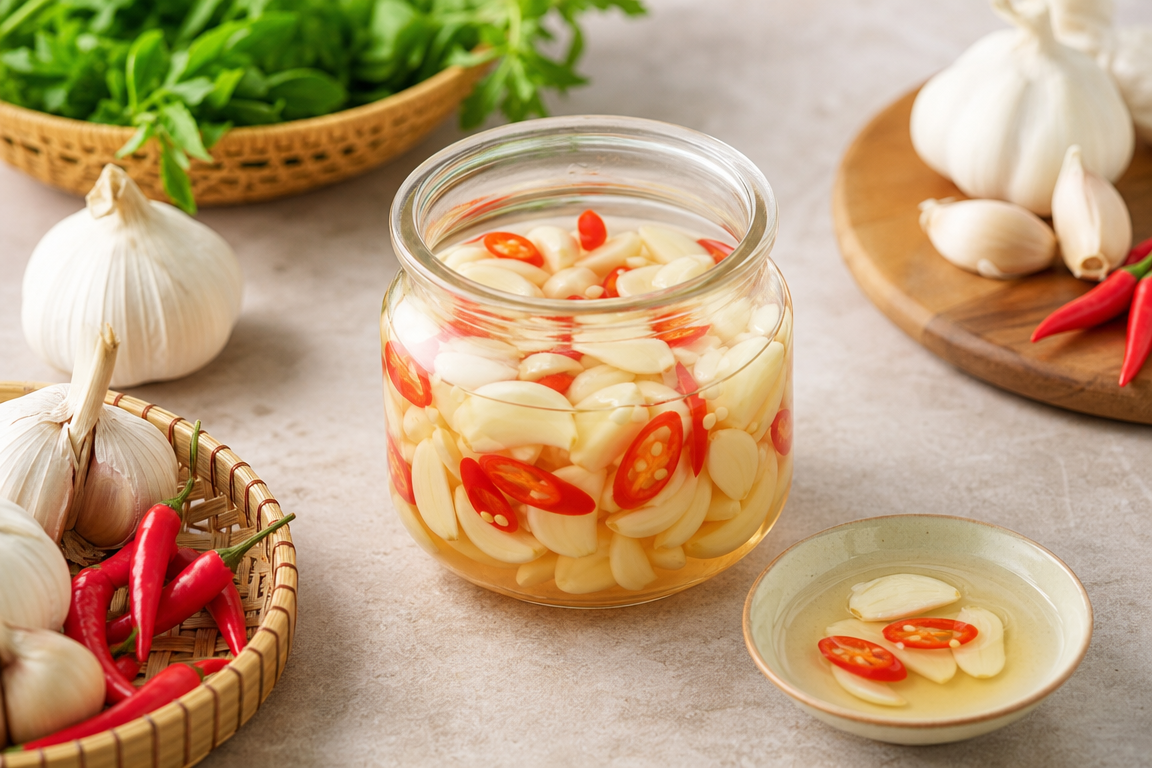
Garlic vinegar adds two distinct accents to a noodle dish: a sharp vinegar tang and the pungency of garlic. A small spoonful can brighten a rich broth or give a dipping sauce a more pronounced garlicky edge. Because both ingredients are assertive, it works best as an adjustable seasoning rather than something added generously at the start.
Called giấm tỏi in Vietnamese, garlic vinegar belongs to the sauces and condiments category. Its name describes the essential combination, but does not specify a single vinegar, garlic cut, or fixed ratio. The version below is a proposed refrigerated preparation, not a traditional formula or a shelf-stable preserve.
What Is Garlic Vinegar?
At its simplest, garlic vinegar is vinegar flavored with garlic. The liquid carries acidity and garlic aroma, while any garlic pieces contribute a more concentrated bite. Thin slices, chopped garlic, and lightly crushed cloves produce different textures and make it easier or harder to control how much garlic reaches each spoonful.
It is useful to distinguish the condiment from plain vinegar and from garlic preserved in other liquids. Plain vinegar supplies acidity without the added garlic character. Garlic in oil has a different flavor, texture, and storage considerations. A jar of pickled garlic may emphasize eating the cloves, whereas garlic vinegar can be used primarily for its seasoned liquid. These preparations should not be treated as interchangeable preservation methods.
Flavor and Characteristics
The main impression is sour, followed by garlic’s pungent aroma and bite. The exact balance depends on the vinegar and the amount and size of the garlic pieces. Finely chopped garlic spreads through a dish readily; slices are easier to see and portion separately from the liquid.
The vinegar matters, too. Plain distilled white vinegar gives a direct, sharp acidity. Unseasoned rice vinegar offers a different vinegar character and can be used when that flavor suits the dish. Seasoned rice vinegar may already contain sugar and salt, so it should not be substituted without considering the rest of the seasoning.
Garlic vinegar is not inherently sweet, salty, or hot with chile. Those qualities come from additional ingredients. Keeping a basic batch simple makes it easier to adjust individual bowls without changing several flavors at once.
Using Garlic Vinegar with Vietnamese Noodle Dishes
Season a bowl a little at a time
For a Vietnamese noodle soup, add a small amount to your own bowl after tasting the broth. Start with about half a teaspoon, stir, and taste again. Acidity can make a rich broth feel less heavy on the palate, but too much can dominate its existing seasoning. There is no need to add vinegar if the bowl already tastes balanced.
Choose whether you want only the liquid or some garlic pieces as well. The liquid is easier to distribute evenly. Including the pieces adds a more noticeable garlic bite, which may not suit every mouthful.
Adjust sauces for noodles
Garlic vinegar can also supply part of the acidic component in a sauce for noodles served without broth. Mix a little into a separate portion of sauce before dressing the entire bowl. This is especially helpful when the sauce already contains lime juice or another vinegar: add it as an adjustment rather than automatically layering one sour ingredient over another.
It can likewise be stirred into a dipping sauce served alongside noodles. Taste for sourness, saltiness, and sweetness separately. Adding more garlic vinegar will increase acidity and garlic flavor, but it will not correct every seasoning imbalance.
A Proposed Small-Batch Preparation
This simple version is intended for short-term refrigerated use. It is not a canning recipe, a fermentation method, or a formula for room-temperature storage.
Ingredients
- 1/2 cup commercially bottled vinegar labeled 5% acidity, such as distilled white vinegar
- 1 medium garlic clove, peeled and thinly sliced
Method
- Wash your hands and use a clean cutting board, knife, and small food-safe container with a lid.
- Check the garlic and discard any cloves showing mold or spoilage. Peel and slice one sound clove.
- Place the garlic in the container and pour in the vinegar. Do not dilute it with water.
- Cover and refrigerate immediately. The mixture can be used right away; include a few slices if you want a stronger garlic presence in the dish.
- Use a clean spoon each time you serve it.
Storage and handling
For this proposed recipe, keep the container refrigerated at 40°F (4°C) or below and use it within four days. Make a small quantity rather than repeatedly topping up an older batch. Discard leftovers after that period.
Do not assume that adding vinegar makes fresh garlic safe for indefinite storage. A homemade mixture’s acidity is not established simply by tasting it. For longer storage or shelf-stable preservation, a suitable tested preservation recipe is needed; this preparation does not provide one. Follow the label instructions for any commercially prepared product instead.
Relevant Substitutes
- Plain vinegar: The closest option when the dish needs acidity but not more garlic.
- Vinegar and fresh garlic added separately: Useful when seasoning a single serving. Add each sparingly so you can control sourness and garlic intensity independently.
- Lime juice: Supplies acidity with a citrus aroma, but does not reproduce the garlic flavor. Treat it as a different seasoning rather than an identical replacement.
- Liquid from pickled garlic: May work if its ingredients suit the dish. Check for added sugar, salt, or other seasonings before using it.
Frequently Asked Questions
Is giấm tỏi the same as plain vinegar?
No. Garlic is the distinguishing ingredient. Plain vinegar contributes sourness without the same garlic aroma or pieces.
Does garlic vinegar contain fish sauce?
The basic garlic-and-vinegar preparation does not require fish sauce. A separate sauce made with garlic vinegar may contain it, so check the recipe or product label when ingredients matter.
Can garlic vinegar replace all the lime in a noodle dish?
Not without changing the flavor. Both add acidity, but lime contributes citrus aroma and garlic vinegar contributes garlic. Start with a small amount and judge the balance of the particular bowl.
Can the homemade version stay on the table?
The proposed recipe above is a refrigerated condiment, not a shelf-stable table sauce. Serve only what you need and keep the main container refrigerated.