


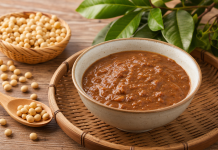
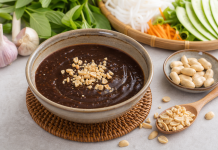
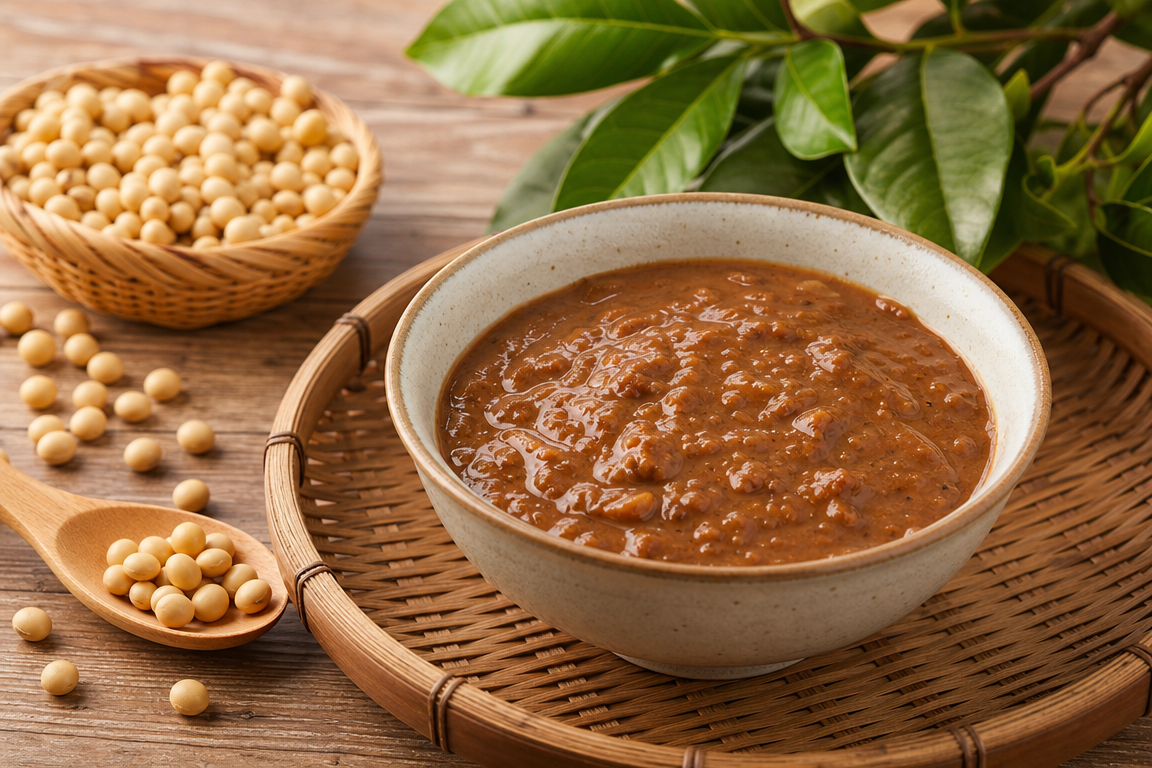
Tương bần is a fermented soybean sauce associated with Northern Vietnamese cooking. As a condiment, it can bring a savory, fermented dimension to food, but the name alone does not tell you exactly how salty, sweet, thick, or smooth a particular product will be. Those details matter when deciding whether to serve it as a dip or incorporate it into a dish.
The most useful approach is to understand what the sauce is, read the ingredients on the product you have, and season gradually. Tương bần should not automatically be treated as interchangeable with every other soybean-based sauce.
What Is Tương Bần?
Tương bần belongs to the broad category of fermented soybean condiments. Its Vietnamese name identifies a particular sauce, rather than a generic instruction to use any fermented soy product. Although soybeans and fermentation define the topic, they do not establish a universal ingredient list or production method.
For that reason, avoid assuming that every jar contains the same grain, sweetener, seasoning, or proportion of soybeans. A package label is the best starting point for understanding the specific product in your kitchen. It also provides information that the name cannot, including declared allergens and storage directions.
Similar Names Are Not Necessarily Equivalent
The word tương appears in the names of different Vietnamese sauces. For example, tương ớt refers to chili sauce; it is not another name for tương bần. When following a recipe or choosing a condiment, use the full name rather than relying on the shared word.
Likewise, bottled soy sauce and fermented soybean pastes may offer overlapping savory qualities, but they are not automatically direct replacements. Their concentration, consistency, and seasoning can change how they behave in a dip or cooked dish.
Flavor and Characteristics
Expect a fermented soybean character, with savoriness as an important part of the sauce’s role. Beyond that, let the individual product guide you. Saltiness, sweetness, aroma, texture, and concentration should be assessed rather than assumed.
Before adding it to a recipe, taste a small amount with a clean spoon. Consider three practical questions:
- How concentrated is it? A little may be enough to season a small bowl of food.
- How does it flow? Its consistency will affect whether you use it directly or loosen it for dipping.
- What needs balancing? Depending on the product and the dish, you may want dilution, acidity, heat, or a small amount of sweetness.
A fermented aroma alone does not establish whether a sauce is safe to eat. Storage history and the manufacturer’s guidance remain important.
Using Tương Bần in Vietnamese Cooking
The following are practical serving and cooking suggestions, not a claim that there is one traditional formula. Start with a small amount and adjust around the food you are serving.
As a Dipping Sauce
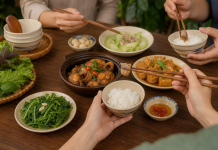
For a simple proposed dip, put a little tương bần in a small bowl and taste it alongside the food. If it is too concentrated, stir in drinking water a teaspoon at a time. Add a little lime juice or sliced chili only if those flavors suit the meal. If the result needs sweetness, add a small amount rather than assuming sugar is necessary.
This approach lets you adjust the sauce without changing the entire container. Prepare only what you expect to serve, and keep the unused sauce separate from the dipping bowl.
As a Seasoning for Cooked Food
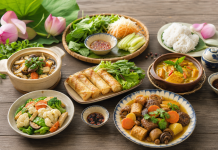
For a Vietnamese-style home meal, a small amount can be considered as a savory seasoning for tofu, vegetables, or a gently simmered dish. These are suggested applications rather than documented customary pairings. Add it gradually and taste before including additional salt, soy sauce, or another salty condiment.
When a dish will reduce during cooking, be especially restrained: evaporation concentrates the seasoning already in the pan. If you want to learn how a particular jar behaves, season a small portion of the dish first.
Preparation and Storage
Fermentation is not simply a matter of leaving cooked soybeans at room temperature. A safe home-fermentation process requires appropriate controls and reliable instructions. Without a validated method, it is more useful to work with a prepared sauce than to improvise a fermentation recipe.
For packaged tương bần, follow the label’s directions before and after opening. Do not assume that a fermented product is shelf-stable once opened. If storage instructions are missing or unclear, seek guidance from the manufacturer rather than inferring safety from the sauce’s smell or saltiness.
- Use clean utensils to remove sauce from the container.
- Close the container promptly after use.
- Do not return table-served dipping sauce to the original jar.
- Treat a dip diluted with water or mixed with fresh ingredients separately from the original product.
No single storage duration can be established from the name tương bần alone.
Relevant Substitutes
There is no guaranteed one-for-one substitute. Choose according to the sauce’s purpose in the dish.
For liquid seasoning: soy sauce may supply saltiness and savory flavor, but it will not necessarily reproduce the fermented soybean character or texture. Begin with less than the recipe’s stated amount and adjust.
For body and fermented flavor: another fermented soybean paste may be a workable adaptation. Thin it as needed and check its seasoning carefully. This changes the dish; it does not make the substitute equivalent to tương bần.
Frequently Asked Questions
Is tương bần the same as soy sauce?
No. Do not treat the names as interchangeable. Check the specific product’s ingredients and consistency before substituting one for the other.
Does it need to be cooked before serving?
Follow the product’s directions. If it is labeled ready to use, it can be used accordingly; the name alone does not establish preparation requirements.
Is it suitable for someone avoiding soy?
It is a soybean sauce, so it is not an appropriate soy-free substitute. Anyone managing a food allergy should also review the full label for additional ingredients and allergen information.
Can every jar be seasoned the same way?
No. Taste the product first, then adjust a separate serving. Adding sweetness, acidity, or water automatically can obscure the balance the sauce already has.