
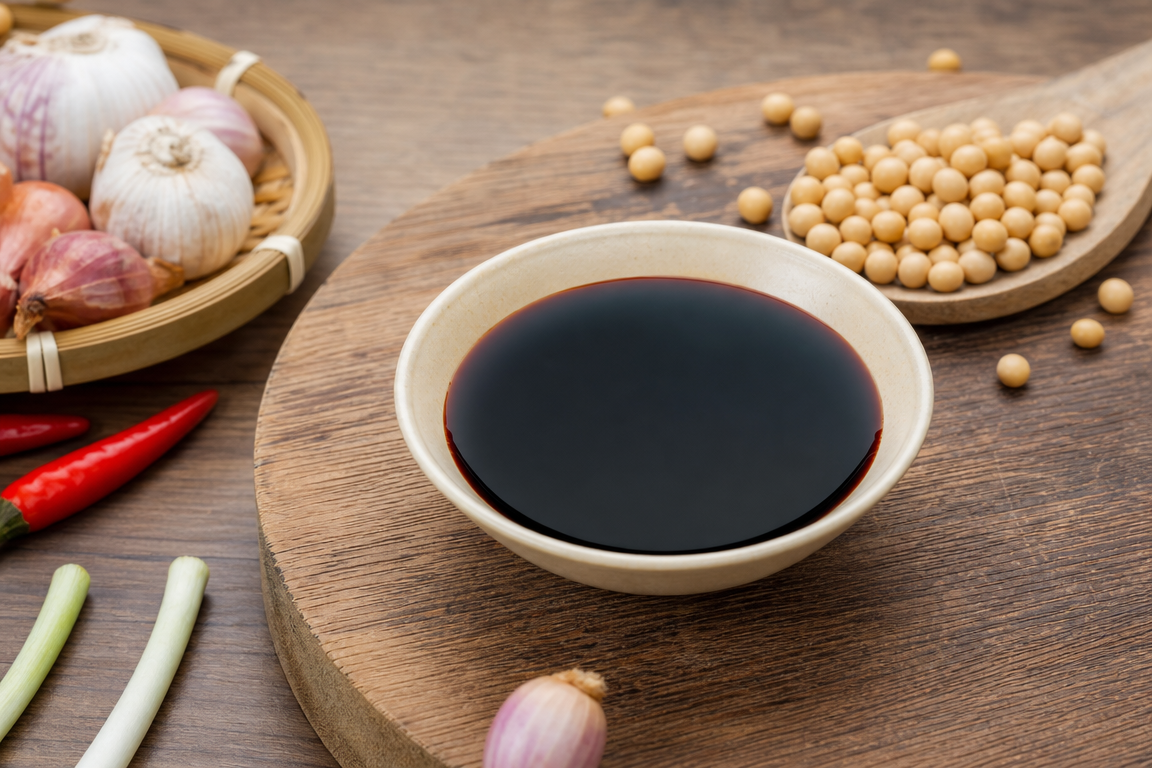
Black soy sauce, listed here by the Vietnamese name nước tương đen, needs a little clarification before it goes into a recipe. The name alone does not tell you exactly how sweet, salty, thick, or concentrated a particular bottle will be. Those differences matter when choosing a sauce for seasoning, dipping, or adding color.
The most useful approach is to identify the product by its full label, ingredient list, and consistency rather than assuming that every dark sauce is interchangeable. This guide explains the main distinctions and offers practical ways to use the sauce in Vietnamese-style cooking without treating one bottle as a universal standard.
What Is Black Soy Sauce?
“Black soy sauce” is not a precise enough English name to establish one fixed formula. A product described this way may be a dark soy sauce, but similarly dark condiments can have very different ingredients and uses. The Vietnamese name supplied for this ingredient, nước tương đen, should therefore be read alongside the actual product description.
Before cooking, check whether the bottle identifies itself as dark soy sauce, sweet soy sauce, or another type of sauce. If a recipe provides only the name, its instructions can offer clues: a small amount stirred into a cooking liquid serves a different purpose from a thick sauce spooned into a dipping dish.
Dark Soy Sauce, Regular Soy Sauce, and Hoisin
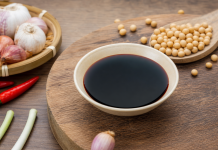
- Dark soy sauce: Typically chosen when both soy seasoning and deeper color are wanted. Sweetness, saltiness, and thickness vary by product.
- Regular or light soy sauce: Generally used primarily for seasoning. “Light” in this context does not necessarily mean reduced sodium.
- Sweet soy sauce: Contains a more prominent sweet component and may be substantially thicker than regular soy sauce. Check the label rather than assuming a one-for-one replacement.
- Hoisin sauce: A separate, usually thick and sweet-savory condiment. Its dark appearance does not make it equivalent to dark soy sauce.
In particular, do not automatically translate nước tương đen as hoisin or assume that a recipe calling for hoisin means dark soy sauce. When the intended product is unclear, that uncertainty is worth preserving rather than hiding behind a direct substitution.
Flavor and Characteristics
For a bottle identified as dark soy sauce, expect a savory soy-based seasoning with a strong visual effect on pale ingredients. Depending on its formulation, it may also contribute sweetness and a fuller consistency. Color alone cannot tell you how much salt or sugar it will add.
To understand a particular bottle, taste a small amount mixed with water or a spoonful of the food you are preparing. Tasting it diluted makes it easier to judge its role in a finished dish. Notice whether saltiness or sweetness leads, whether it pours freely or coats a spoon, and how much it changes the food’s color.
Using Black Soy Sauce in Vietnamese Cooking
The following are practical cooking suggestions, not claims that every Vietnamese dish uses this ingredient. First confirm which kind of sauce you have, then use it according to the flavor and texture you want.
Seasoning Stir-Fries and Noodles
If your bottle is dark soy sauce, add a small amount to a vegetable, mushroom, tofu, meat, or noodle stir-fry when deeper color is desirable. Mix it with other liquid seasonings before adding it to help distribute it evenly. Taste before adding more salt or another salty condiment.
A thick, sweet sauce behaves differently: it can make the finished dish sweeter and may catch on a hot pan more readily. Add a little water if needed and avoid leaving a sugary coating over high heat unattended.
Adding Color to Simmered Dishes
A small addition of dark soy sauce can deepen the appearance of a simmering cooking liquid. Add it gradually rather than using color as the only guide to quantity. The dish may become adequately seasoned before it reaches the shade you had in mind.
Making a Simple Dipping Sauce
For a proposed dipping sauce, begin with a small portion of the identified product and dilute it with water as needed. Add lime juice or rice vinegar for acidity, and chile or garlic if desired. Taste before adding sugar, especially if the bottled sauce is already sweet. This is an adjustable preparation, not a fixed traditional formula.
Substitutes: Match the Function
If a recipe needs dark soy sauce mainly for seasoning, regular soy sauce may work, although the color and balance will differ. Start with less and adjust to taste; equal volumes do not guarantee equal saltiness.
If the intended ingredient is a thick, sweet condiment, plain soy sauce will not reproduce its texture or sweetness. Likewise, hoisin can substantially change a dish that only needs soy seasoning. When possible, identify the intended sauce before choosing a substitute. No single replacement covers all products called black soy sauce.
Preparation and Storage
Bottled sauce generally needs no preparation beyond following any label directions, such as shaking or stirring. Use a clean spoon when portioning it, keep the cap closed, and avoid returning diluted sauce or used dipping sauce to the bottle.
Follow the manufacturer’s instructions for refrigeration and storage after opening. Because formulations and packaging differ, a universal storage period would be misleading. For a homemade diluted dipping sauce, prepare only what you need and refrigerate leftovers promptly in a clean, covered container.
Frequently Asked Questions
Is black soy sauce the same as dark soy sauce?
It may be, but the name alone is not conclusive. The full product label is a better guide than the word “black.”
Can I use it instead of regular soy sauce?
Sometimes, but expect possible changes in color, sweetness, and seasoning strength. Add it gradually rather than assuming a one-for-one exchange.
Is it suitable for a gluten-free diet?
Do not infer that from the name. Check the ingredient list, allergen statement, and any gluten-free labeling on the specific bottle.
Why does identifying the sauce matter so much?
A pourable seasoning and a thick, sweet dipping condiment can look similarly dark but produce very different results. Identifying the bottle first prevents unnecessary changes to the dish’s flavor and texture.