
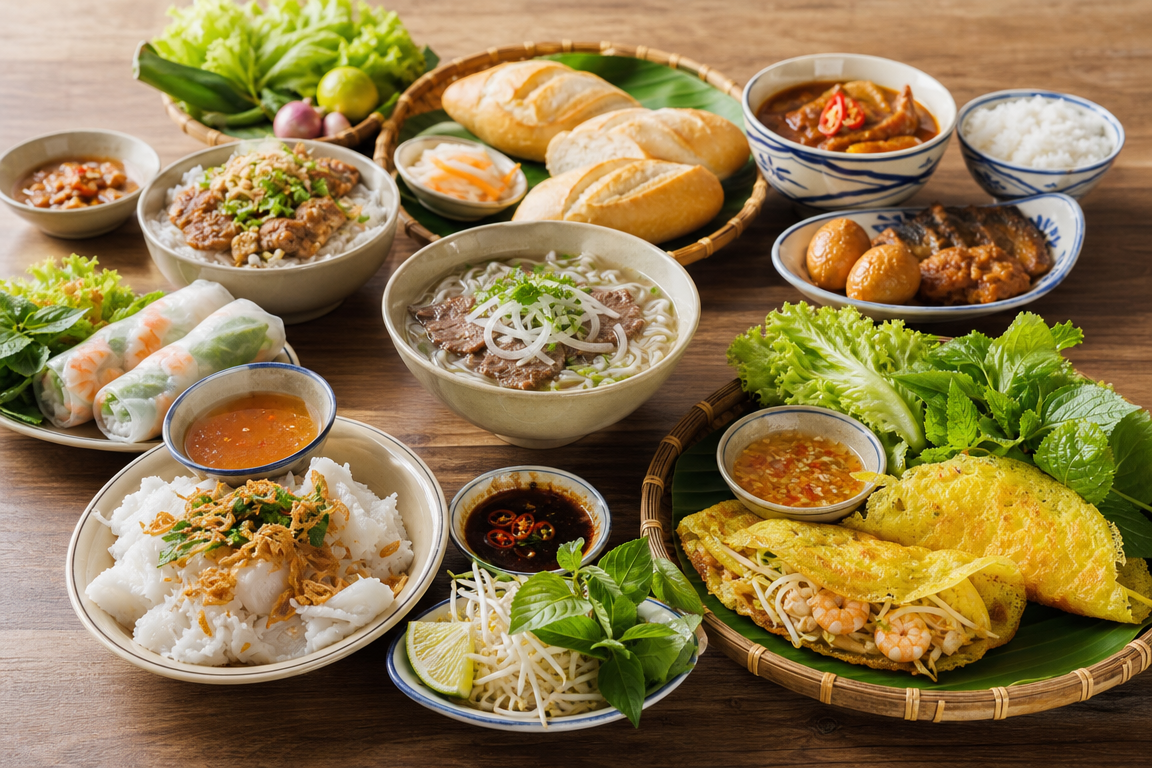
The Three Culinary Regions of Vietnam
Vietnam’s regional cuisine is easier to explore when geography serves as a starting point rather than a set of rules. A three-part framework—northern, central, and southern Vietnam—offers a manageable way to organize that exploration. The Vietnamese name for the topic, Ba vùng ẩm thực Việt Nam, means “the three culinary regions of Vietnam.”
The most useful question is not simply which region a dish belongs to. It is what a regional label helps explain about the food in front of you: its ingredients, preparation, seasoning, accompaniments, and place within a meal. This guide introduces a careful way to compare the three culinary regions of Vietnam without reducing any one of them to a single flavor.
Understanding the Three-Region Framework
For a clear introduction, organize the subject into northern Vietnam, central Vietnam, and southern Vietnam. Treat these geographic sections as a framework for asking better questions, not as a complete explanation of every dish.
A regional description becomes more useful when it identifies something specific. “A lightly seasoned broth served with a separate dipping sauce” tells you more about a meal than a broad label such as “mild food.” Likewise, “a sweet note in the sauce” is more precise than describing an entire cuisine as sweet.
Keep three levels of description separate:
- The region: the broad geographic category used to organize the discussion.
- The dish: the particular food being described, including its main ingredients and cooking method.
- The version: the preparation actually served, with its own seasoning, texture, and accompaniments.
This distinction lets you appreciate regional context while still paying attention to the food itself. A single bowl or plate should not have to represent a whole region.
Northern Vietnam: Begin with the Dish’s Structure
When exploring foods identified as northern Vietnamese, begin by describing their structure before assigning a flavor profile. Is the dish a soup, a dry noodle preparation, a rice-based meal, or a collection of components eaten together? Which element carries the seasoning: the broth, a sauce, the main ingredient, or something added at the table?
These questions create a useful baseline for later comparisons. If you compare two noodle dishes, for example, note whether their noodles, cooking methods, and serving formats are similar enough to make the comparison meaningful.
Then consider how the dish changes as you eat it. Taste a small portion before adding any optional condiments. If a separate sauce or garnish is provided, try a little with the next bite. Describe the difference directly rather than treating your preferred combination as the only correct version.
Central Vietnam: Look Closely at Individual Components
For the central section of a regional exploration, use the same baseline and examine the components more closely. Identify the main ingredient, starch, sauce, vegetables, and any finishing elements actually present. Avoid assuming an ingredient or seasoning belongs in a dish simply because of its regional label.
Texture offers another useful point of comparison. A preparation might combine soft and crisp elements, or contrast a smooth sauce with a firmer main ingredient. Record those details separately from heat, saltiness, sweetness, or acidity. A dish can be texturally complex without being strongly seasoned, and an assertive sauce does not describe every component beneath it.
If a dish is unfamiliar, a practical question is, “How are these parts meant to be eaten together?” Understanding whether to dip, mix, wrap, or alternate bites can make the meal easier to appreciate without requiring a sweeping claim about the region.
Southern Vietnam: Consider the Whole Serving
Apply the same careful approach to foods identified as southern Vietnamese, extending your attention to the complete serving. Look beyond the central bowl or plate to anything offered alongside it. A separate sauce, vegetables, or a small accompaniment may change the balance of a bite.
Distinguish what arrives already incorporated from what remains optional. This helps you describe both the kitchen’s preparation and your own adjustments. “The sauce supplied a sweet note” is a clearer observation than attributing sweetness to every part of the meal.
Finally, consider proportion. The balance between starch, main ingredient, sauce, and accompaniments can affect how a dish tastes as much as the presence of a particular seasoning. Keeping track of those proportions makes a later comparison with northern or central examples more informative.
How to Compare Regional Vietnamese Food Fairly
The strongest comparisons use similar reference points. Comparing a soup with a grilled dish may reveal two appealing preparations, but it tells you little about regional differences unless you account for the different cooking methods.
Compare Like with Like
When possible, choose dishes with a shared format: two soups, two noodle preparations, or two meals built around rice. If their regional descriptions come from a menu or recipe, keep that attribution clear rather than turning it into an unsupported origin claim.
Separate Flavor from Intensity
Instead of writing only “strong” or “light,” identify what you notice. Is the saltiness concentrated in a dipping sauce? Does acidity appear throughout the dish or only after a condiment is added? Is chile heat immediate or more noticeable after several bites? These observations are more useful than a single overall rating.
Use a Consistent Set of Notes
- Format: soup, dry preparation, rice plate, or another serving style.
- Main components: the ingredients you can confidently identify.
- Cooking method: only what is known from the description or preparation.
- Flavor balance: the tastes you notice and where they come from.
- Texture: contrasting or complementary qualities in each bite.
- Accompaniments: what is served separately and how it changes the dish.
Use this checklist consistently across all three regions. It prevents one region from being judged mainly by heat while another is judged mainly by sweetness or presentation.
Building a Thoughtful Regional Tasting
A regional tasting does not need to claim that three dishes summarize Vietnam. Its purpose can be narrower: to explore three clearly identified preparations and notice how they differ.
Select one example associated with each geographic section only when that association is explicitly provided by the menu, recipe, or other available description. Label the examples accordingly. If the regional connection is unclear, leave it unassigned rather than guessing.
Keep the tasting manageable. Start with small portions, try each preparation before making optional adjustments, and use the same descriptive questions throughout. Record what you actually ate rather than what you expected a regional dish to taste like. The result is a more useful account of the meal, even if it leaves some broader questions open.
Frequently Asked Questions
What are the three culinary regions of Vietnam?
The three-part framework used here organizes Vietnamese cuisine into northern, central, and southern Vietnam. It is a geographic introduction, not a complete classification of individual dishes.
Can one flavor describe an entire region?
For a useful food description, avoid relying on one flavor alone. Identify the dish, the version served, and the specific source of any sweetness, acidity, saltiness, or heat you notice.
How can a beginner explore regional differences?
Start with clearly labeled dishes, compare similar serving formats, and pay attention to ingredients, texture, sauces, and accompaniments. Keep observations about an individual meal separate from broader statements about a region.
Does a regional label prove where a dish originated?
Do not treat the label alone as proof of origin. A geographic association and a documented origin are different claims. Without supporting information, describe the association and leave the historical question open.