
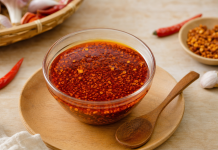
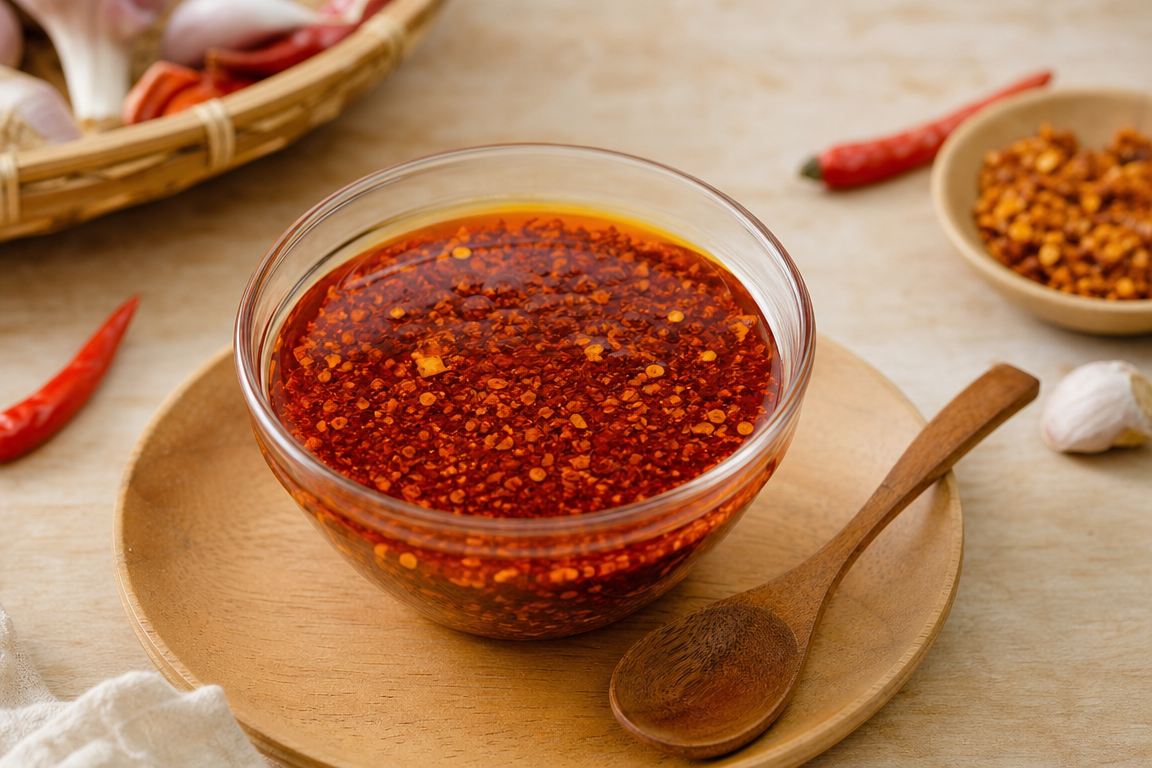
Chili oil, called dầu ớt in Vietnamese, is a condiment that brings chili heat into an oil-based seasoning. For Vietnamese noodle dishes, it offers a way to adjust a bowl at the table without changing the entire pot of broth or batch of sauce.
Its character depends on the chilies, oil, and any additional seasonings. One version may be smooth and lightly spicy; another may contain plenty of chili flakes and deliver a stronger roasted flavor. The name alone does not establish a fixed ingredient list or heat level.
What Is Chili Oil?
At its simplest, chili oil combines edible oil with chilies. The chilies may remain in the finished condiment as flakes or sediment, or they may be strained out. Some versions include other seasonings, so checking the ingredient list is more useful than assuming every jar tastes alike.
Oil carries chili flavor and distributes it across noodles and other ingredients. In broth, it generally floats in droplets rather than dissolving completely. A spoonful can therefore create concentrated pockets of heat until the bowl is stirred.
Flavor, aroma, and texture
Chili oil contributes more than spiciness. Depending on its ingredients and preparation, it can taste fruity, earthy, toasted, or slightly smoky. Those qualities are not guaranteed: an oil made with mild flakes will behave differently from one made with a hotter chili.
Texture matters, too. Clear oil adds heat without much texture, while an unstrained version leaves soft chili particles on the noodles. Extra solids do not automatically mean extra heat; the type and amount of chili still matter.
Using Chili Oil in Vietnamese Noodle Dishes
The following are serving suggestions rather than rules for a particular regional dish. Start with a small amount, stir thoroughly, and taste before adding more. For an individual bowl, a proposed starting point is 1/4 teaspoon, especially when the condiment’s heat level is unfamiliar.
Brothy noodle bowls
Add chili oil after the noodles and broth are assembled. Stir it through the bowl to spread the heat, or leave some on the surface for more variation from bite to bite. A small amount lets the broth remain prominent; too much can make the surface feel oily and obscure subtler flavors.
If the bowl already contains a seasoned chili condiment, taste it first. Chili oil adds oil as well as heat, so it is not always interchangeable with a spoonful of chili sauce.
Dry and dressed noodles
For noodles served without a large amount of broth, mix a little chili oil into the dressing before tossing. This helps distribute it more evenly than pouring it onto one spot. Alternatively, add it at the table when different diners prefer different heat levels.
A simple chili-and-oil mixture supplies neither much salt nor acidity. It can complement a dressing, but it does not replace the dressing’s other components. Commercial versions may already contain salt or additional seasonings.
A Proposed Small-Batch Chili Oil
This is a basic preparation suggestion, not a historically authentic formula or a personally tested recipe. It uses dried chili flakes and oil only, making it easier to control the seasoning separately when serving.
Ingredients
- 1/4 cup neutral-flavored cooking oil
- 1 tablespoon fully dried chili flakes, adjusted to preference
Method
- Place the oil and chili flakes in a small, completely dry saucepan.
- Warm over low heat, stirring gently. Watch closely as the chilies become fragrant; do not let the oil smoke or the flakes darken sharply.
- Remove from the heat if the flakes begin browning quickly. Allow the mixture to cool before transferring it to a clean, dry container.
- Leave the flakes in for a textured condiment, or strain the cooled oil through a fine-mesh strainer for a smoother result.
Chili flakes vary considerably in strength. Using less at first is easier than correcting an overly hot batch. Avoid heating to the point of scorching, which can give the oil a bitter taste.
Storage and Handling
For a purchased product, follow its label for storage and use after opening. Instructions can differ because ingredients and processing methods differ.
For the proposed homemade version, make a small quantity, refrigerate it in a clean, tightly covered container, and use it promptly. Use a clean, dry spoon rather than dipping utensils that have touched noodles or broth. Some oils may become cloudy or thicker when chilled.
Do not assume that covering fresh ingredients with oil makes them shelf-stable. Adding fresh garlic, fresh chilies, or herbs changes the food-safety considerations and requires appropriate preparation and storage guidance. Appearance and smell alone cannot establish whether an oil-based mixture is safe.
Similar Condiments and Substitutes
- Chili crisp: Generally emphasizes crunchy solids as well as flavored oil. It can add heat, but also changes texture and may add salt or other seasonings.
- Chili sauce: Usually has a different balance of water, acidity, sweetness, and seasoning. It can substitute for heat, but not for the same oily finish.
- Sa tế: This name may appear on more complex chili condiments. Do not assume a product labeled sa tế has the same ingredients as a simple dầu ớt; read the label.
- Dried chili flakes: A practical substitute when heat matters more than an oil-based texture. Add sparingly and allow time for the flakes to moisten.
Frequently Asked Questions
Is dầu ớt always very spicy?
No. Heat depends on the chilies and their concentration. Neither color nor the amount of visible sediment reliably establishes how hot a particular batch will taste.
Should chili oil be stirred before serving?
If it contains settled flakes, stirring redistributes them. Taking mostly oil from the top gives a smoother spoonful, while scooping from the bottom includes more solids.
Can chili oil replace fresh chilies?
It can supply heat, but it will not reproduce the fresh texture and flavor of sliced chilies. Choose according to whether the noodle dish needs an oily seasoning or a fresh chili accent.