

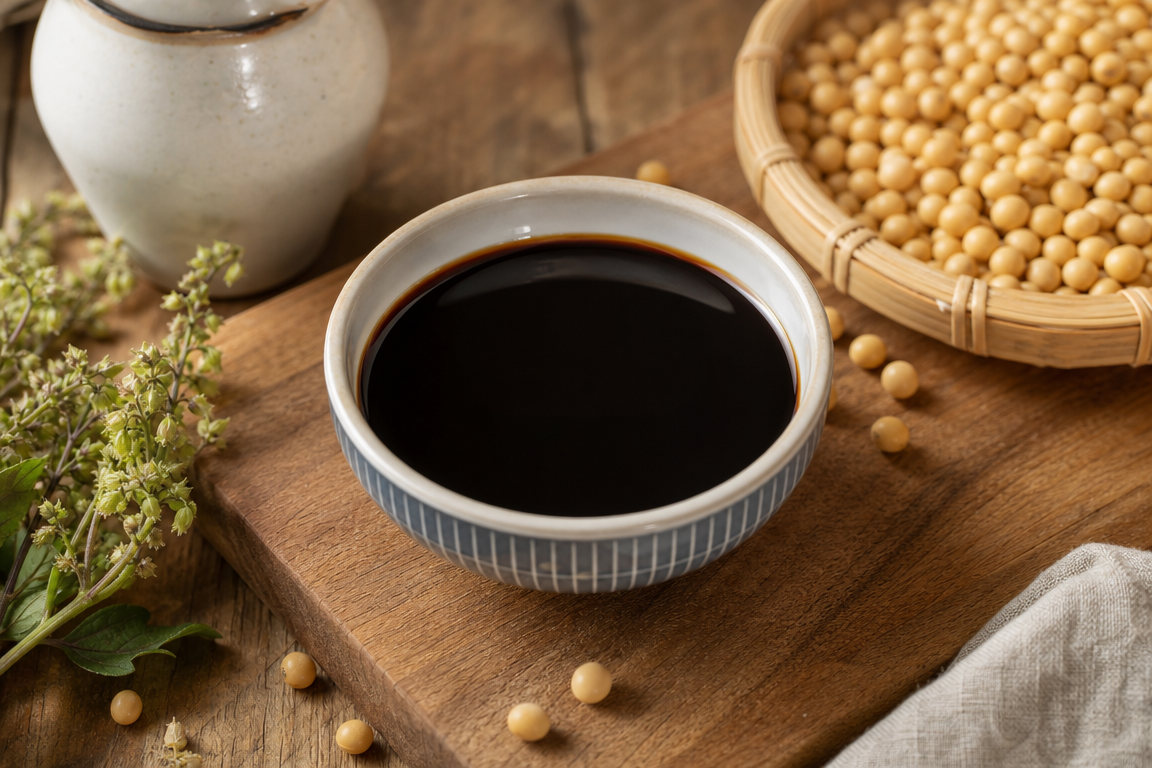
Sweet soy sauce brings sweetness and savory depth together in one condiment. Listed here by the Vietnamese name nước tương ngọt, it can serve as a dipping sauce, a seasoning, or a finishing drizzle. Its usefulness depends on balance: enough sweetness to round out the salty soy flavor, without making every dish taste sugary.
The name alone does not specify one fixed recipe, thickness, or level of sweetness. When choosing a bottle or making a small batch, consider how you plan to use it. A sauce for dipping may need thinning and acidity, while a glaze benefits from a more concentrated consistency.
What Is Sweet Soy Sauce?
Sweet soy sauce is a soy-based condiment with a noticeable sweet component. Depending on its formulation, it may be fluid enough to pour freely or thick enough to coat a spoon. Color is not a reliable guide to sweetness, so check the ingredients and taste a small amount before adding it to food.
For this ingredient, nước tương ngọt identifies the sweet version of a soy-based sauce. It should not be treated as a guarantee that every product carrying a similar description will taste or behave the same way. Sugar content, saltiness, and consistency can all affect how much you need.
Similar names, different results
- Regular soy sauce: Provides a savory, salty foundation but does not necessarily supply the sweetness needed for the same result.
- Dark soy sauce: The word “dark” does not automatically mean “sweet.” Read the label rather than substituting by color alone.
- Hoisin sauce: May offer sweetness and body, but its additional seasonings can change the flavor of a dish.
- Sweetened fish sauce: Has a different base flavor and is not an equivalent replacement for a soy-based condiment.
Flavor and Characteristics
The defining contrast is sweet against salty and savory. A thinner version spreads quickly through a dipping bowl or noodle mixture. A thicker version clings more readily to tofu, vegetables, or other ingredients, making it useful when you want a light coating rather than extra liquid.
Sweetness can become dominant when the sauce is reduced. Heat also makes sugary sauces more likely to scorch, especially in a dry pan. For that reason, use a modest amount at first and add it late in cooking when a brief coating is the goal.
Ways to Use It in Vietnamese Cooking
The following are practical serving ideas, not claims that sweet soy sauce is required in any particular Vietnamese dish. Let the other seasonings guide how much you add.
As a dipping sauce
Start with a small portion and thin it with water if it tastes too concentrated. A little lime juice or vinegar can provide contrast, while chopped chili or garlic can add another layer of flavor. This makes a flexible soy-based dip to serve alongside rolls, tofu, or vegetables.
With rice and noodles
Use a small drizzle over a rice bowl or toss a little through cooked noodles. Mix thoroughly before adding more: a concentrated sauce can create overly sweet or salty patches. If the dish already contains another salty seasoning, reduce that seasoning rather than simply adding the sweet sauce on top.
For a quick coating or glaze
Add a small splash near the end of cooking tofu, mushrooms, or vegetables. Toss just long enough to distribute it. If the pan looks dry, add a spoonful of water so the sauce loosens instead of sticking and burning.
A Simple Proposed Sweet Soy Sauce
This small-batch recipe is a suggested kitchen preparation, not a historically authentic or personally tested formula. It produces a lightly sweetened sauce; the final flavor depends on the soy sauce you use.
Ingredients
- 2 tablespoons regular soy sauce
- 1 tablespoon water
- 2 teaspoons sugar, plus more to taste
Method
- Combine the soy sauce, water, and sugar in a small saucepan.
- Warm gently over low heat, stirring until the sugar dissolves. Avoid a hard boil or prolonged reduction.
- Remove from the heat and let a spoonful cool before tasting.
- Add a little more sugar for sweetness or water to reduce the intensity. Warm again briefly if needed to dissolve added sugar.
- Let the sauce cool before transferring it to a clean, covered container.
This version is intended to remain pourable. For a dipping sauce, adjust an individual serving with acid or aromatics rather than changing the entire batch.
Storage and Handling
For bottled sweet soy sauce, follow the manufacturer’s storage instructions, including any directions to refrigerate after opening. Keep the cap and bottle opening clean, and use clean utensils when portioning it.
Refrigerate the homemade version in a clean, covered container. Because this proposed recipe has no validated storage period, make a small amount rather than assuming it will keep like a commercial product. Do not pour used dipping sauce back into the stored batch. Discard sauce showing mold or other signs of spoilage.
Substitutes
Regular soy sauce mixed with sugar is the most direct adjustable substitute for a simple sweet soy flavor. Dissolve the sugar before using it, and add water if the mixture is too intense. It may not match the thickness of a bottled sauce.
Hoisin can work when extra seasoning and body are welcome, but it is not a neutral swap. If using dark soy sauce, confirm its sweetness first and adjust cautiously. In either case, begin with less than the amount you intended to use and taste the finished mixture.
Frequently Asked Questions
Is sweet soy sauce the same as regular soy sauce?
No. The sweet version adds a distinct sweet element. Replacing it with regular soy sauce alone changes the balance and may make a dish taste saltier by comparison.
Does it need to be thick?
No. Thickness depends on the formulation and intended use. A pourable sauce can work well for dipping or mixing, while a thicker one is easier to use as a coating.
Can it replace fish sauce?
Not without changing the dish. The base flavors differ, and sweet soy sauce also introduces sweetness. Treat that swap as a deliberate variation rather than an equivalent substitution.
What if the sauce tastes too sweet?
Dilute a small portion with water, then add a little lime juice or vinegar if acidity suits the dish. Adding more salt alone can leave you with a sauce that is both too sweet and too salty.