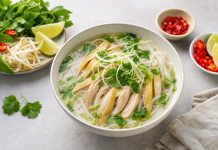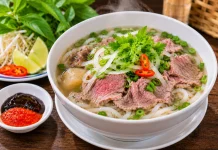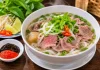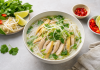

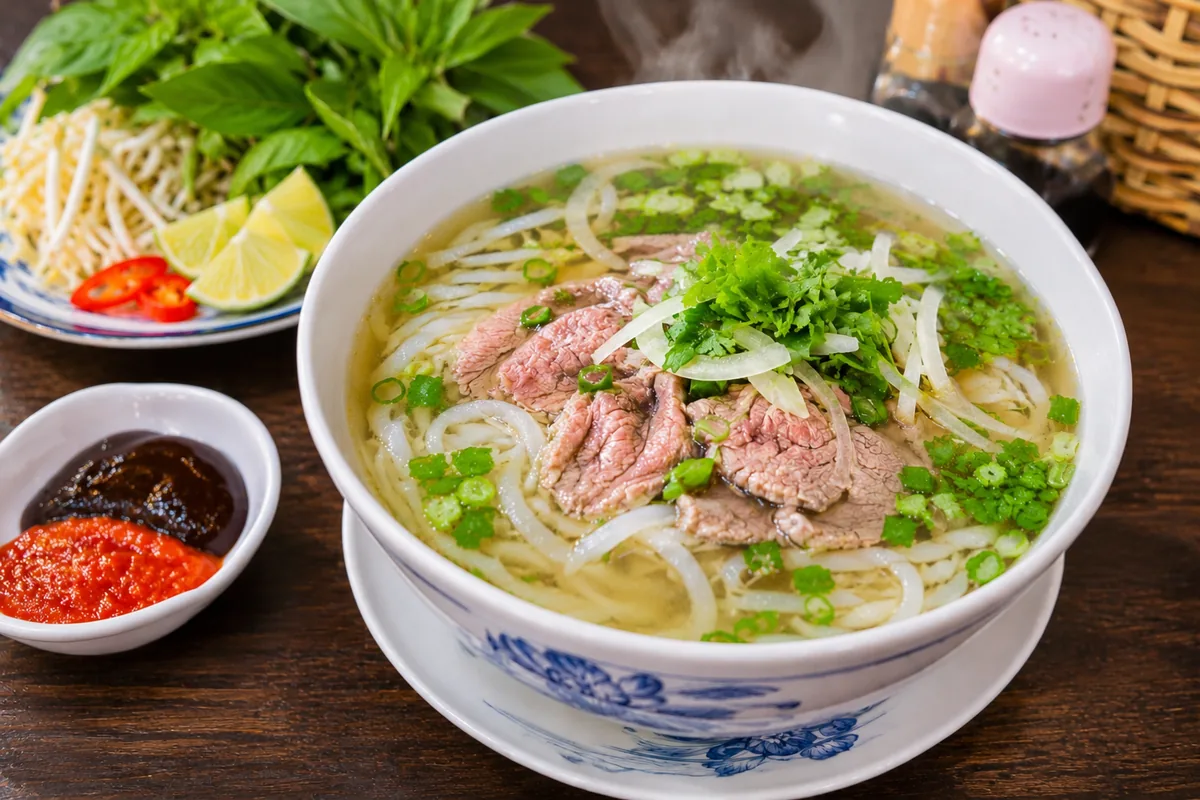
Hanoi beef pho, or phở bò Hà Nội, brings together fragrant beef broth, tender rice noodles, sliced beef, and fresh green herbs. The broth is the centerpiece: savory and aromatic, with ginger, onion, and warm spices supporting the beef rather than overwhelming it.
This home recipe uses beef bones for depth, brisket for tender cooked slices, and a little thinly sliced steak for a contrasting texture. It takes several hours, but most of that time is gentle simmering. Careful skimming, restrained seasoning, and assembling each bowl just before serving make the biggest difference.
What Is Hanoi Beef Pho?
Hanoi beef pho is a Vietnamese beef noodle soup made with flat rice noodles called bánh phở. In this version, charred onion and ginger add depth to a clear beef broth, while star anise, cinnamon, and cloves provide a measured background fragrance. Scallions, cilantro, and thinly sliced onion finish the bowls without hiding the broth.
The goal is balance: a broth that tastes distinctly of beef, noodles that remain supple rather than mushy, and meat that is easy to eat with chopsticks and a spoon.
Recipe at a Glance
- Yield: 6 generous bowls
- Prep time: 30 minutes
- Cook time: About 4 hours 30 minutes
- Total time: About 5 hours
Ingredients for Hanoi Beef Pho
For the Beef Broth
- 3⅓ pounds (1.5 kg) beef soup bones, preferably a mixture of knuckle and marrow bones
- 1⅓ pounds (600 g) beef brisket, in one piece
- 5 liters water, plus extra for blanching and topping up
- 2 medium yellow onions, about 12 ounces (350 g), peeled and halved
- 3½ ounces (100 g) fresh ginger, scrubbed and split lengthwise
- 3 whole star anise
- 1 cinnamon stick, about 3 inches (7.5 cm)
- 4 whole cloves
- 2 tablespoons fish sauce, plus more to taste
- 2 teaspoons fine sea salt, plus more to taste
- ½ ounce (15 g) rock sugar or 1 tablespoon granulated sugar
For the Bowls
- 1 pound (450 g) dried flat pho rice noodles, or 2 pounds (900 g) fresh pho noodles
- 7 ounces (200 g) beef sirloin or eye of round, sliced very thinly across the grain
- ½ small yellow onion, very thinly sliced
- 4 scallions, thinly sliced
- ½ cup chopped cilantro
- ½ teaspoon freshly ground black pepper, or to taste
- 2 limes, cut into wedges, for serving
- 1–2 fresh red chilies, thinly sliced, optional
How to Make Hanoi Beef Pho
- Blanch and clean the bones. Place the bones in a large stockpot and cover with cold water. Bring to a full boil and boil for 10 minutes. Drain, rinse the bones thoroughly, and wash the pot to remove the residue. This preliminary blanching helps produce a cleaner-looking broth.
- Char the aromatics and toast the spices. While the bones blanch, place the onion halves and ginger cut-side down in a dry skillet over medium-high heat. Cook for 8–10 minutes, turning as needed, until browned with some dark patches. Scrape away any loose, heavily burned pieces. Separately toast the star anise, cinnamon, and cloves over medium-low heat for 2–3 minutes, just until fragrant. Put the spices in a spice bag or a securely tied piece of cheesecloth.
- Start the broth. Return the cleaned bones to the pot. Add 5 liters of fresh water and bring slowly to a gentle simmer, skimming off foam. Add the brisket, charred onions, ginger, spice bag, and 2 teaspoons salt. Maintain a very gentle simmer, partially covered, for about 4 hours from this point. Skim occasionally and add a little hot water if the bones become exposed.
- Remove the brisket and spices at the right time. Check the brisket after 90 minutes; remove it when a skewer enters easily, usually within 1½–2 hours. Remove the spice bag after about 90 minutes as well. Briefly cool the brisket, then refrigerate promptly in a shallow covered container while the bones continue simmering. Once chilled, slice the brisket thinly across the grain.
- Strain and season. After the 4-hour simmer, lift out the bones and aromatics. Strain the broth through a fine-mesh sieve into a clean pot without pressing on the solids. Skim excess surface fat, leaving a little for flavor. Aim for 3½–4 liters of broth; add hot water if necessary. Stir in the sugar and 2 tablespoons fish sauce. Taste and adjust with additional salt or fish sauce. Keep the broth hot.
- Prepare the noodles and garnishes. Cook or blanch the noodles according to their package directions, keeping them slightly firm. Drain well and divide among six warmed bowls. Arrange the sliced onion, scallions, cilantro, lime wedges, and optional chilies nearby. Have the sliced brisket and thinly sliced steak ready.
- Heat the beef. Bring the strained broth to a steady simmer. Reheat the brisket slices in the broth until hot throughout, then divide them among the bowls. Cook the thinly sliced steak in small batches in the simmering broth, separating the slices so they cook evenly. Allow about 30–60 seconds for very thin slices, or longer as needed to cook them through, then distribute among the bowls.
- Assemble and serve immediately. Ladle approximately 2¼–2¾ cups of hot broth into each bowl. Add sliced onion, scallions, cilantro, and black pepper. Serve immediately with lime wedges and optional chilies so each person can adjust the acidity and heat.
Tips for Clear, Flavorful Pho Broth
- Keep the simmer gentle. Occasional small bubbles are enough. A rolling boil agitates fat and particles into the liquid, making the broth cloudier.
- Use spices sparingly. Toasting develops their aroma, but prolonged steeping can make them dominate. Removing the spice bag early keeps the beef flavor prominent.
- Season after straining. Evaporation changes the broth’s concentration. Make the final adjustment only after bringing it to the intended volume.
- Slice beef across the grain. Chilling the brisket makes neat slices easier. For the steak, a brief 20–30 minutes in the freezer can help firm it for thin slicing.
- Keep noodles separate until serving. Rice noodles absorb broth and soften as they sit. Prepare only what you plan to serve immediately.
Serving Suggestions and Variations
Serve pho piping hot in deep bowls, with chopsticks and a soup spoon. Taste the broth before adding lime or chili; a small squeeze or a few slices may be all it needs. Keeping garnishes modest lets the broth remain the focus.
For an all-cooked beef version, omit the steak and increase the brisket to 1¾ pounds (800 g), checking tenderness rather than relying only on the clock. For a lighter spice profile, reduce the star anise to two pods and the cloves to two. Fresh and dried pho noodles both work; their cooking times differ, so follow the package rather than using a fixed boiling time.
Frequently Asked Questions
Can I make the broth ahead?
Yes. Strain it, divide it into shallow containers, and refrigerate promptly, within 2 hours of cooking. Refrigerate the cooked beef separately. Use within 3–4 days, or freeze the broth for longer storage. Reheat the broth to a boil and heat the beef thoroughly before assembling fresh noodles and garnishes.
Why is my pho broth cloudy?
Vigorous boiling, insufficient skimming, or pressing the cooked solids through the strainer can cloud the broth. Cloudiness does not automatically mean the soup tastes bad, but blanching the bones and maintaining a gentle simmer help keep it clearer.
Can I skip the beef bones?
You can use unsalted beef stock for a quicker adaptation, though its flavor and body will depend on the stock. Simmer it with the charred aromatics, spices, and brisket until the meat is tender, and season only after tasting. It will not need the full 4-hour bone simmer.
Does pouring hot broth over raw beef always cook it safely?
No. The result depends on the broth temperature, slice thickness, and bowl temperature. This recipe cooks the thinly sliced beef directly in simmering broth before serving, rather than relying on heat retained in the bowl.