
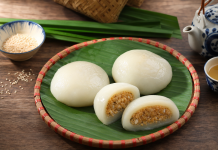
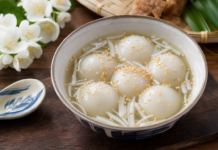
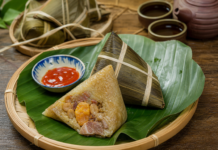
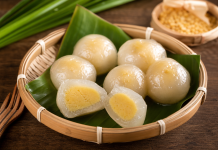

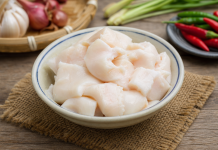
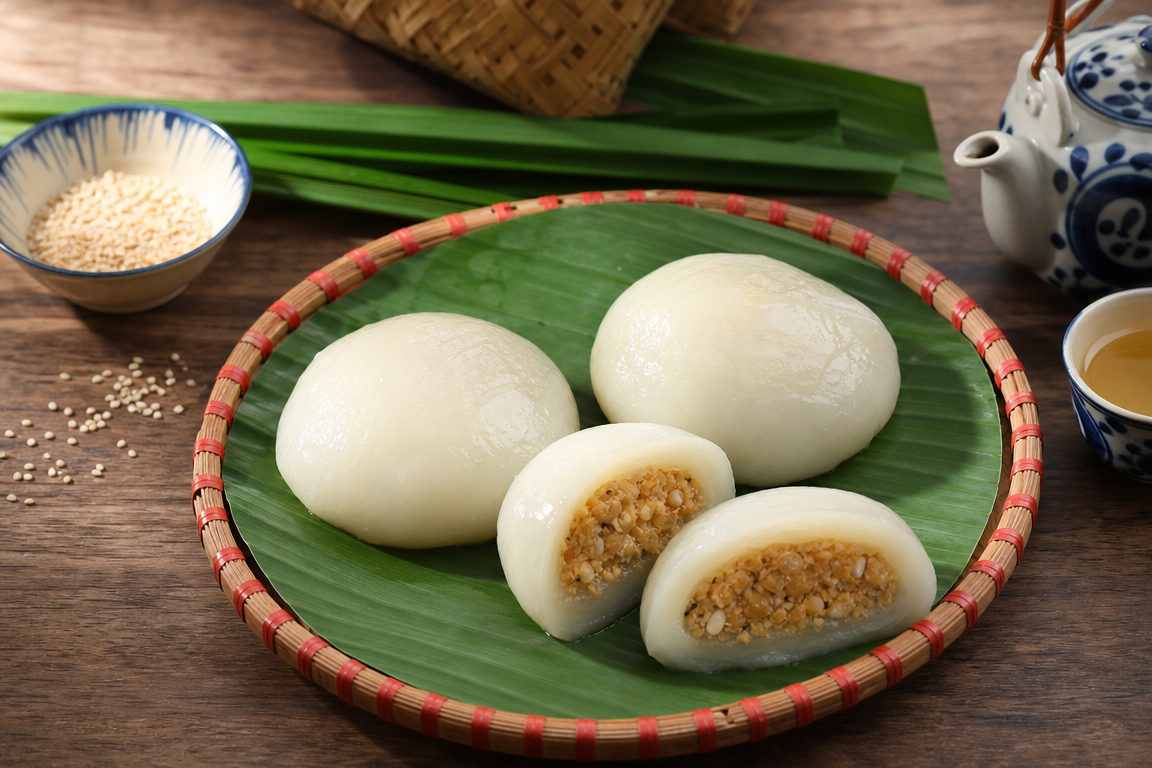
Bánh giầy, the Vietnamese pounded rice cake, is the focus of this simple, small-batch recipe. The goal is a soft, cohesive cake with a pleasantly chewy bite and a mild flavor that works with a light topping. These cakes are shaped into individual rounds and steamed rather than baked.
This proposed pounded rice cake recipe uses glutinous rice flour as a practical shortcut. It does not require pounding cooked rice, and it is not presented as a historically authentic formula. The method below is designed around mixing a pliable dough, shaping it while manageable, and steaming it until cooked through.
Recipe Overview
- Yield: 8 small cakes
- Preparation: 25 minutes, including mixing, kneading, shaping, and setting up the steamer
- Cooking: 20 minutes for one steaming batch
- Cooling: About 5 minutes after steaming, separate from preparation and cooking time
- Equipment: Mixing bowl, kitchen scale, steamer with a lid, and parchment paper
Use a steamer large enough to hold all eight cakes without crowding, or a two-tier steamer with enough room for steam to circulate. If you need to cook separate batches, allow 20 minutes of steaming for each batch.
Ingredients
- 300 grams glutinous rice flour, plus a little for your hands only if necessary
- 240 milliliters warm water, plus up to 30 milliliters more as needed
- 1/4 teaspoon fine salt
- 2 teaspoons neutral oil, divided between the dough and handling
- 2 tablespoons sugar, optional, for serving
- 1 tablespoon toasted sesame seeds, optional, for serving
Choose flour labeled glutinous rice flour or sweet rice flour, not regular rice flour. The two do not behave the same way in this dough. Warm water should be comfortable to touch; boiling water is not needed for this proposed method.
How to Make Pounded Rice Cakes
- Prepare the steamer and liners. Cut eight parchment squares slightly larger than your finished cakes. Add water to the steamer pot, keeping the water level below the basket. Set the basket aside while you make the dough. Lightly oil the parchment with a little of the oil reserved for handling.
- Mix the dough. Combine the glutinous rice flour and salt in a bowl. Add 1 teaspoon of the oil. Pour in the 240 milliliters of warm water gradually, stirring as you go. Squeeze the mixture together with your hands once it becomes too thick to stir.
- Adjust and knead. Knead for about 3 minutes, until the dough is smooth and pliable. If it crumbles or develops deep cracks when pressed, add the extra water 1 teaspoon at a time, kneading after each addition. Stop when the dough holds together easily without spreading into a sticky puddle. You may not need all the extra water.
- Divide and shape. Divide the dough into eight equal pieces. Lightly coat your hands with the remaining oil as needed. Roll each piece into a ball, then flatten it into a round about 2 1/2 inches wide and roughly 1/2 inch thick. Keep the thickness even, and place each cake on its own parchment square.
- Steam the cakes. Bring the steamer water to a steady boil. Arrange the cakes in the basket with space between them. Cover and steam for 20 minutes, maintaining enough heat to produce steady steam without letting the pot boil dry. Avoid opening the lid repeatedly.
- Check the centers. Carefully remove one cake and cut into its center. The interior should be cohesive and cooked through, without a dry, powdery core. If the center still appears raw, steam the cakes for a few additional minutes and check again. Additional cooking will extend the listed cooking time.
- Cool briefly and serve. Transfer the cakes, still on their parchment, to a plate. Let them cool for about 5 minutes before handling. Serve warm, plain or with a little sugar and toasted sesame seeds. Peel away the parchment gently rather than pulling the cake off quickly.
Tips for a Manageable Dough
Adjust the water gradually
Flour can absorb water differently from one package to another. Treat the listed amount as a starting point rather than adding every drop automatically. A useful check is to flatten a small piece: it should hold its shape with only minimal cracking around the edge. Deep cracks suggest that the dough needs a little more water.
Use oil sparingly when shaping
A thin coating of oil on your hands helps prevent sticking without adding much extra flour. Repeatedly dusting the dough with flour can make the outside dry and leave the final cakes less tender. If the dough feels excessively wet, knead in a small pinch of flour rather than coating the whole work surface.
Keep the cakes similar in size
Even thickness matters more than perfectly round edges. A cake with a thick center and thin rim may cook unevenly. Flatten each portion gently and check the center before putting it into the steamer.
Give the steam room to circulate
Do not cover the entire basket with a solid sheet of parchment. Individual squares leave openings for steam to move around the cakes. Lift the lid away from you when checking them, since escaping steam can burn.
Serving Suggestions and Simple Variations
For a lightly sweet serving, mix the optional sugar and toasted sesame seeds, then sprinkle a small amount over each warm cake. Keeping the topping separate lets each serving remain as mild or sweet as preferred.
For a plain version, omit both toppings and serve the cakes warm. The dough itself contains no added sugar, so this version emphasizes its chewy texture rather than sweetness.
For smaller portions, divide the dough into twelve pieces instead of eight and keep them close to the same thickness. Begin checking a sample after 15 minutes, then continue steaming if the center is not cooked through. This variation changes the yield and may change the cooking time.
Frequently Asked Questions
Does this recipe involve pounding rice?
No. This is a proposed glutinous-rice-flour shortcut for making bánh giầy-style cakes. It uses kneading and steaming rather than pounding cooked rice, so it should not be confused with a recipe built around that process.
Can I substitute regular rice flour?
Not as a direct replacement. Glutinous rice flour gives this dough its cohesive, chewy structure. Regular rice flour would require a different formula and would not produce the same result with these quantities.
Why are my cakes hard or cracked?
The dough may have been too dry, the cakes may have been dusted with too much flour, or the centers may not have finished cooking. Add water gradually during mixing, use lightly oiled hands for shaping, and check a cake’s center before removing the batch.
Can I make the cakes ahead?
They are best served soon after steaming for the intended soft texture. If making them ahead, let them cool, place them in a covered container, and refrigerate promptly. Reheat by steaming until hot throughout; check the center rather than relying on a fixed reheating time.