
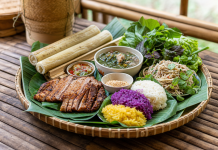
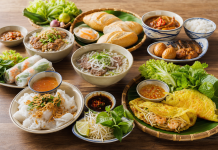
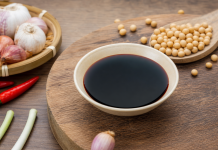
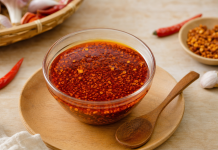
Vietnamese ethnic food traditions are best approached as a subject of community life, not simply as a list of dishes. A food’s name can identify what is being served, but understanding a tradition requires more context: who prepares it, when it is eaten, how it is shared, and what the people involved say it means.
The Vietnamese name for this subject, Tập quán ẩm thực các cộng đồng dân tộc Việt Nam, places the emphasis on food customs and ethnic communities. That distinction matters. A useful guide should make room for specific community perspectives without turning one meal, ingredient, or cooking method into a claim about everyone.
What Counts as a Food Tradition?
A recipe describes how to make something. A food tradition asks a broader set of questions about the place of food in people’s lives. Ingredients and cooking techniques are part of that picture, but so are occasions, responsibilities, serving practices, and the language used to describe a meal.
These are dimensions to investigate, not customs to assume. A dish might be described in connection with an ordinary household meal, a gathering, or a particular observance. Without that context, its ingredients alone cannot establish its cultural role.
For readers exploring Vietnamese food culture, the most useful shift is from asking only “What is this dish?” to asking “What is known about how this food is prepared, eaten, and understood in this particular setting?”
Keep Community, Region, and Household Distinct
An ethnic community, a geographic region, and a household are different units of description. An account of food in one location does not, by itself, establish a custom shared by every community there. Likewise, a household’s recipe does not automatically represent every member of an ethnic group.
Careful food writing keeps the scale of its claims close to the scale of its evidence. If an account describes one family’s preparation, it should remain a family example unless there is support for a broader statement.
Use Specific Labels Carefully
When a community name is known, it should be used accurately rather than replaced with a vague label. When it is not known, appearance, location, or ingredients should not be used to guess someone’s ethnic identity.
The same restraint applies to regional descriptions. A geographic label can help locate an account, but it should not stand in for an explanation of the people or practices involved.
Leave Room for Variation
Words such as “always,” “everyone,” and “the traditional way” require strong support. More precise wording identifies the setting: a particular household, an account from a named community, or a preparation described for a specific occasion. Precision makes cultural differences easier to understand without exaggerating them.
Read a Meal Beyond Its Ingredients
A practical way to explore Vietnamese ethnic food traditions is to examine several layers of a meal separately. This avoids treating a striking ingredient or unfamiliar technique as the whole story.
Ingredients and Their Roles
Start with what is actually identified. Record ingredient names accurately, and distinguish a main component from a seasoning, accompaniment, or garnish. If an ingredient’s identity is uncertain, preserve that uncertainty rather than choosing a familiar substitute and presenting it as equivalent.
Availability and cultural meaning are separate questions. The presence of an ingredient does not prove that it is sacred, ceremonial, distinctive to one community, or essential to every version of a dish.
Preparation and Practical Knowledge
Cooking descriptions are most useful when they explain actions clearly: how ingredients are prepared, what equipment is used, and what changes the cook is looking for. These details help readers understand the process without requiring an unsupported story about its origin.
A method should not be called ancient, unique, or unchanged simply because it looks unfamiliar. Describing what happens is often more informative than assigning it a grand historical label.
Serving and Eating
The finished food is only one part of the meal. Useful details can include how portions are arranged, which foods accompany one another, and whether a serving practice is explained by the people involved.
Observation and interpretation should stay separate. Seeing food arranged in a particular way does not establish a rule about hospitality, status, or belief. Those meanings need an explanation, not an assumption.
Distinguish Everyday Food from Occasion-Specific Food
One important question is whether a food belongs to an ordinary meal or to a particular occasion. That distinction should come from a clear account of its use, not from how elaborate, colorful, or unfamiliar the dish appears.
A description of a special gathering also needs boundaries. It should identify the occasion when known and explain whether the account concerns a household practice, a community event, or another setting. A single example cannot establish a universal celebration menu.
Where the occasion is unknown, a straightforward description is enough. There is no need to add symbolic meanings or ceremonial significance to make the food seem more interesting.
Understand the Limits of a Recipe
A recipe can make a cooking process accessible, but it cannot carry every aspect of a food custom. Written quantities do not necessarily explain who teaches the preparation, how decisions are made, or why a meal matters to those sharing it.
For that reason, a recipe inspired by a cultural topic should be distinguished from a documented community preparation. Proposed quantities, substitutions, and simplified methods should be labeled as adaptations rather than presented as a definitive traditional formula.
“Authentic” is also a label that needs care. Without a clear account of whose preparation is being described and in what context, the word offers little practical information. Naming the source and scope of a recipe is more useful than declaring one version the standard.
A Practical Framework for Reading Food Accounts
When reading about a dish or meal associated with a Vietnamese ethnic community, the following questions can help separate useful detail from broad claims:
- Who is represented? Look for a clearly identified community, household, cook, or contributor.
- What is described? Separate ingredient information, cooking instructions, serving practices, and cultural interpretation.
- Where does the account apply? Notice whether it concerns one setting or makes a wider claim.
- When is the food eaten? Check whether an everyday or occasion-specific role is actually established.
- Whose explanation is given? Distinguish a participant’s account from an outside interpretation.
- What remains unknown? Missing context should remain a gap, not become an invitation to invent a story.
This framework also makes comparisons more meaningful. Instead of ranking foods as more or less traditional, compare clearly described features while keeping each account’s limits visible.
Respectful Language Makes a Better Food Guide
Descriptions such as “exotic,” “primitive,” or “untouched” tell readers little about a meal and can turn people into scenery. Concrete language is more useful: describe an identified ingredient, a preparation step, a serving arrangement, or an explanation offered by someone involved.
Respectful writing does not require romanticizing food customs or treating them as beyond discussion. It requires accuracy about what is known, care about who is represented, and restraint about meanings that have not been established.
Frequently Asked Questions
Are Vietnamese ethnic food traditions the same as regional cuisine?
The terms describe different things. Regional cuisine organizes food geographically; an ethnic-community perspective focuses on the people associated with a practice. A useful account specifies which perspective it is using rather than treating the labels as interchangeable.
Can one dish represent an entire ethnic community?
A dish can introduce a discussion, but it cannot establish the full range of a community’s food customs. Its value as an example depends on clear information about who prepares it, where, and for what purpose.
How should an unfamiliar food custom be described?
Begin with what is known and observable. Use an established name when available, explain the preparation or serving context, and attribute cultural meanings to the people who explain them. If an important detail is uncertain, say so or leave it out.
The strongest introduction to Vietnamese ethnic food traditions is not the one with the most sweeping claims. It is the one that makes individual practices understandable while preserving the context that gives them meaning.