
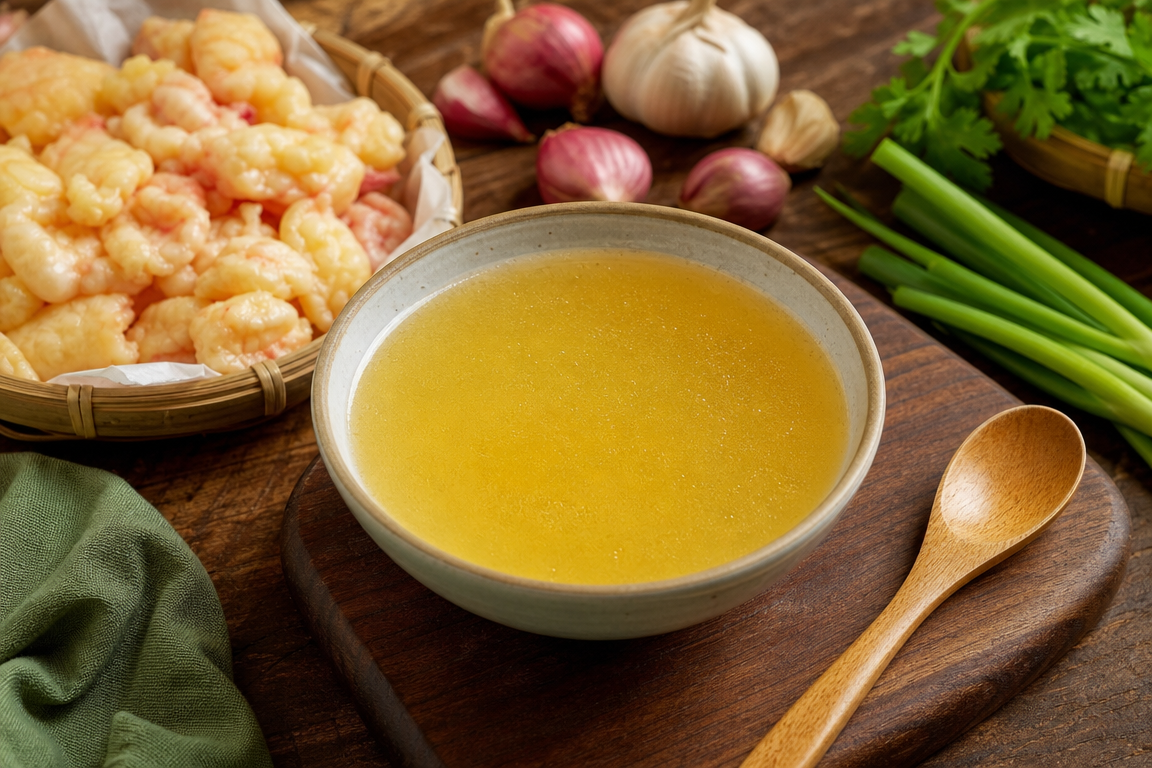
Rendered chicken fat, called mỡ gà in Vietnamese, is a cooking fat that adds poultry flavor and richness to rice. It can coat the grains, carry seasonings, or provide the fat needed to gently cook aromatics before the rice goes into the pot.
For Vietnamese rice dishes, chicken fat is best understood as an ingredient rather than a finished sauce. A small amount can change the flavor and mouthfeel of a bowl without requiring a complicated preparation. Its intensity depends on the chicken trimmings used, how gently they are rendered, and whether other ingredients are added.
What Is Mỡ Gà?
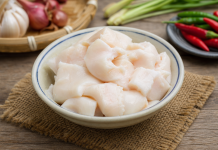
Mỡ gà means chicken fat. In this article, it refers specifically to rendered chicken fat: the liquid fat released when chicken fatty tissue and skin are heated, then strained to remove the solids.
Raw chicken fat, chicken skin, and rendered chicken fat are related but not interchangeable. Skin contains fat that can be rendered, but it also contains tissue that remains behind. The strained fat is the cooking ingredient; the browned skin pieces are separate solids.
Chicken fat is also different from chicken stock or broth. Stock supplies water and flavor, while rendered fat supplies fat and flavor. One cannot replace the other in equal amounts when cooking rice. Pan drippings are different again: they may contain chicken juices, salt, seasonings, and browned particles as well as fat.
Flavor, Color, and Texture
Chicken fat has a savory poultry character and a rich, coating texture. Gently rendered fat usually tastes milder than fat collected from a deeply browned roast. Prolonged browning can produce a stronger roasted flavor, while scorched solids can make the fat taste bitter.
Its color can range from pale to yellow, and it may become cloudy or firmer when chilled. Color alone does not establish freshness or quality. Added seasonings and the rendering process can also affect its appearance.
In rice, the most noticeable effect is often richness rather than a dramatic flavor change. Too much can leave the grains greasy, so a restrained amount is a useful starting point.
Using Chicken Fat in Vietnamese Rice Cooking
The following are practical ways to use chicken fat with Vietnamese rice dishes, not a claim that every dish or household follows the same method.
Coat Rice Before Cooking
Melt a little chicken fat in the cooking pot, add rinsed and well-drained rice, and stir gently to coat the grains before adding the cooking liquid. If the rice is still wet, use gentle heat to limit splattering. Keep the usual water or stock measurement for the rice and cooking method; the fat does not replace that liquid.
Cook Aromatics
Chicken fat can replace some or all of the oil used to soften chopped onion, shallot, garlic, or ginger before rice is added. These are optional flavor choices, not required components of mỡ gà. Use moderate heat and avoid scorching small pieces, particularly garlic.
Enrich Cooked Rice
A small amount of melted chicken fat can be folded into hot rice. Add it gradually, fluff gently, and stop when the grains have a light coating rather than an oily sheen. If the fat came from seasoned cooking juices, taste before adding more salt.
A Proposed Small-Batch Rendering Method
This is a suggested kitchen method, not a historically authentic or personally tested formula. The yield will vary with the proportion of skin and fatty tissue.
- About 1 pound chicken skin and fatty trimmings, with large pieces of meat removed
- 2 tablespoons water, added before heating
- Cut the skin and fat into small, roughly even pieces. Place them in a heavy saucepan with the water.
- Heat gently. The water helps limit sticking at the beginning and will evaporate as the fat releases.
- Continue cooking over low heat, stirring occasionally. Keep the process gentle rather than allowing the solids to darken rapidly.
- Once the fat has collected and the remaining pieces are golden, remove the pan from the heat. Do not leave hot fat unattended.
- Let it cool enough to handle safely, then strain through a fine-mesh strainer into a clean, dry, heat-safe container. Avoid pouring hot fat into cold glass.
Do not add water to hot rendered fat: it can splatter violently. For a versatile result, leave the batch unseasoned and season each rice dish separately.
Storage and Handling
Keep rendered chicken fat refrigerated in a clean, tightly covered container. Strain out food particles, use clean utensils, and avoid introducing water or crumbs. Refrigerate promptly after brief cooling rather than leaving the container on the counter for hours.
Freeze portions for longer storage. Small portions let you remove only what a recipe needs. Homemade batches vary in moisture and handling, so this method does not establish a fixed shelf life or make the fat shelf-stable. Discard fat with mold or an off smell; a normal appearance or smell does not guarantee safety.
Substitutes for Chicken Fat
- Neutral cooking oil: Replaces the cooking-fat function without adding poultry flavor.
- Butter: Adds richness but brings a distinct dairy flavor. Its milk solids can brown or burn.
- Other rendered animal fats: Can serve a similar cooking function, but change the flavor and may not suit the same dietary requirements.
For rice, a substitute can replace the fat used to coat grains or cook aromatics. Chicken broth is not a fat substitute, though it can supply poultry flavor as part of the measured cooking liquid.
Frequently Asked Questions
Is mỡ gà the same as chicken oil?
The terms may overlap, but “chicken oil” can also describe a seasoned product. Check the ingredients rather than assuming it is plain rendered fat.
Does chicken fat contain salt?
Fat rendered from unseasoned trimmings has no added salt. Fat collected from a seasoned roast or other prepared chicken may contain salt and additional flavors.
How much should go into rice?
As a proposed starting point, use 1–2 teaspoons per cup of uncooked rice, then adjust in later batches. Account for any other oil or butter in the recipe.
Can chicken fat replace the water used to cook rice?
No. Rice needs water-based liquid to hydrate and cook. Chicken fat is an addition to that liquid, not a replacement for it.