
Chinese influences on Vietnamese cuisine are best understood through a distinction: influence is not the same as equivalence. A cooking technique, ingredient, or dish format can provide a useful connection between cuisines without making the finished foods interchangeable. The more useful question is not simply whether something looks Chinese, but what a comparison actually reveals about its preparation and place at the table.
This guide offers a practical way to approach that question without assigning unsupported origins to individual dishes. It separates visible similarities from historical claims and explains how to discuss culinary connections while keeping Vietnamese food at the center.
What Does Culinary Influence Mean?
In food writing, influence can refer to several different things: a borrowed cooking method, an ingredient used in a new context, a related dish name, or a recognizable format adapted into another food culture. These are different kinds of connections, and they should not be treated as interchangeable evidence.
For example, identifying a similar wrapper shape is a narrower observation than claiming that an entire dish came from another cuisine. Likewise, noticing comparable cooking equipment does not establish when a technique arrived or who introduced it.
A clear discussion of Chinese influence therefore separates three questions:
- What is observable? Consider ingredients, texture, shape, cooking method, and serving arrangement.
- What is being interpreted? A resemblance may suggest a useful comparison without proving a direct relationship.
- What requires historical evidence? Claims about origins, migration, dates, and routes of transmission need more than appearance or taste.
Cooking Techniques: Compare the Process, Not Just the Label
Cooking methods offer a concrete starting point because they can be described without assigning a dish an origin. When considering a possible Chinese–Vietnamese connection, look at what happens to the food rather than relying on a broad label.
Steaming and Wrapped Preparations
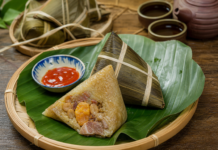
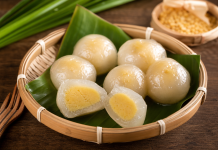
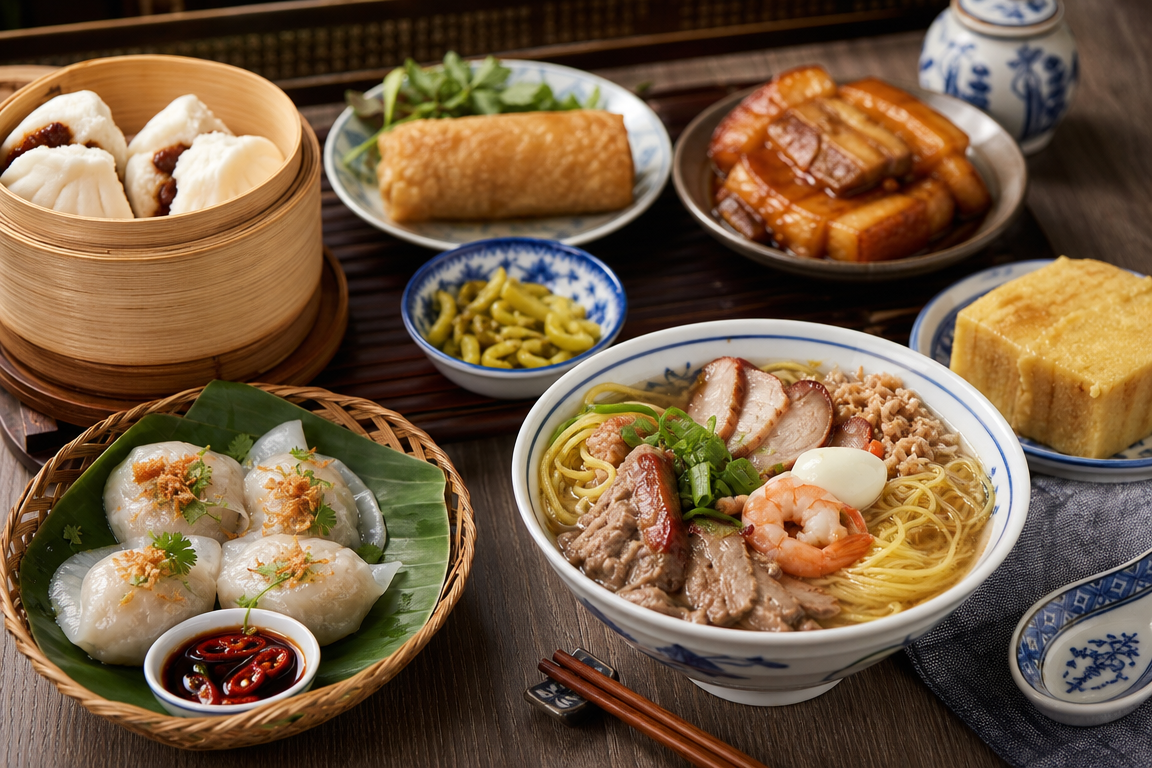
For a steamed preparation, useful details include whether the exterior is dough or another wrapper, how thick it is, how the filling is enclosed, and what texture develops during cooking. Two foods can share a folded shape while differing substantially in their wrappers and fillings.
The serving context matters, too. Is the item presented by itself, accompanied by a sauce, or included in a larger meal? These questions help describe the finished food more precisely than calling it a version of something else.
Stir-Frying and Browning
When comparing stir-fried dishes, pay attention to ingredient size, cooking sequence, sauce consistency, and the texture of the finished components. A shared pan-cooking method does not necessarily produce the same result.
Descriptions such as lightly coated, deeply browned, tender, or crisp communicate observable qualities. By contrast, saying a preparation is Chinese-derived makes a historical claim that the cooking method alone cannot establish.
Braising and Simmering
For braised or simmered foods, compare the cooking liquid, the degree of reduction, and whether the liquid becomes a sauce or remains a broth. These details make a comparison useful even when the relationship between two dishes is uncertain.
Ingredients: A Shared Component Is Not a Complete Explanation
Ingredient comparisons become more informative when they focus on function. Rather than treating an ingredient as proof of influence, ask what it contributes to the particular preparation.
A seasoning might supply saltiness, sweetness, aroma, color, or texture. Its role can also change depending on when it enters the dish: during cooking, as a finishing addition, or in a separate dipping sauce.
- Look at proportion. A dominant ingredient shapes a dish differently from a small seasoning addition.
- Look at timing. Cooking an ingredient into a sauce is different from serving it alongside the food.
- Look at the whole dish. A single shared component cannot explain every flavor, texture, or accompaniment.
This approach avoids reducing Vietnamese food to a checklist of ingredients associated with another cuisine. It keeps attention on how the complete preparation works.
Noodles, Wrappers, and Dish Formats
Noodles and wrapped foods are useful subjects for comparison because their physical characteristics are easy to describe. They are also easy to oversimplify. A familiar-looking format can conceal important differences.
Describe Noodles Precisely
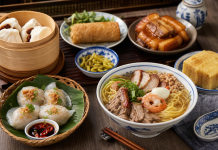
For a noodle dish, consider the stated ingredient base, width, thickness, texture, and preparation. Then distinguish the noodles themselves from the broth, sauce, toppings, and accompaniments.
If the ingredient base is unknown, do not infer it solely from color or shape. A precise description can acknowledge what is visible without supplying an unconfirmed explanation.
Separate the Wrapper from the Filling
With wrapped foods, compare the wrapper and filling independently. Shape, dough structure, filling texture, and cooking method each contribute something different to the result.
This makes it possible to identify a limited resemblance without overstating it. “Similar folding” is a more specific observation than “the same dish,” and it leaves room for differences that matter to the food being described.
Names Can Suggest Questions, Not Settle Origins
A similar-sounding name may invite a linguistic comparison, but sound alone is not enough to establish a borrowing or a dish’s history. Even a documented relationship between words would not, by itself, explain every aspect of a recipe.
Keep language and preparation as separate lines of inquiry. One question concerns the name; another concerns ingredients and technique. A third concerns how the dish is served and understood. Combining all three into a single origin story can make a confident narrative out of incomplete information.
When discussing a Vietnamese food, retain its Vietnamese name where it is known. An English comparison can clarify a shape or method, but it should not replace the food’s identity.
Regional Context Requires Specific Evidence
A discussion of Chinese influences on Vietnamese cuisine should not automatically become a set of claims about northern, central, or southern Vietnam. Assigning a stronger influence to one region requires evidence about particular foods, communities, or practices.
Broad geographic labels are not substitutes for that evidence. If the only information available describes a particular preparation, keep the description at that level rather than presenting it as representative of an entire region.
The same restraint applies to household and community traditions. Without specific information, it is better to describe a food’s observable features than to invent a customary occasion or a story about who traditionally prepares it.
How to Make a Useful Comparison
The strongest comparisons are narrow enough to be meaningful. Instead of classifying a whole Vietnamese dish as Chinese, identify the particular feature under discussion and explain the limit of the comparison.
For instance, a careful description might note a similar cooking method while leaving the historical relationship unresolved. It might compare wrapper texture while recognizing that the filling and serving arrangement need separate consideration.
This is not a reason to avoid discussing influence. It is a way to make the discussion more accurate: distinguish resemblance from evidence, and distinguish a shared element from the identity of the finished dish.
Frequently Asked Questions
Does Chinese influence make a Vietnamese dish less Vietnamese?
No. Influence and culinary identity are not mutually exclusive. Describing a possible connection does not require treating a Vietnamese preparation as merely a copy of another food.
Can appearance prove that two dishes have a shared origin?
No. Appearance can support a visual comparison, but an origin claim requires additional evidence. Similar shapes, ingredients, or cooking methods do not establish a historical relationship on their own.
What is the most useful starting point for understanding influence?
Start with a specific feature: a technique, ingredient function, noodle structure, wrapper, or serving arrangement. Describe it accurately, then separate what can be observed from what would require historical or linguistic support.
Understanding culinary influence is ultimately an exercise in precision. A thoughtful comparison can recognize connections while preserving the details that make a Vietnamese food worth describing on its own terms.