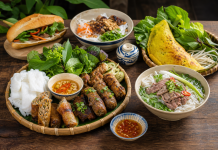

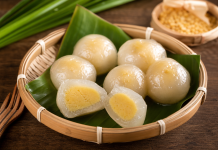
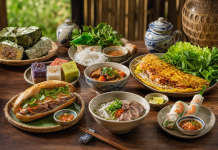
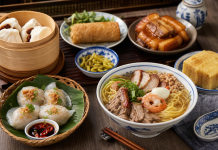
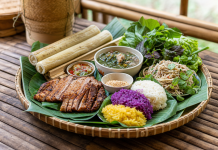
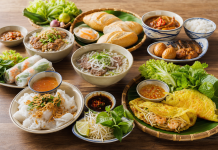
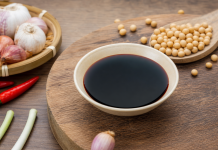
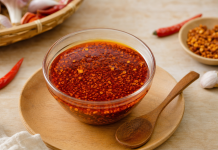
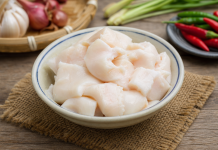
The evolution of Vietnamese cuisine is best understood as a question of continuity as well as change. A dish can keep its name while its ingredients, preparation, or place at the table changes. Another can take on a new presentation without losing the qualities that make it recognizable to the people who cook and eat it.
The Vietnamese name for this topic, Sự phát triển của ẩm thực Việt Nam, describes a broad subject. Rather than treating it as a straight line from old to new, this guide considers the different layers of culinary change: recipes, ingredients, regional identity, cooking routines, and the meaning of a meal. A precise historical timeline would require evidence for particular places, dishes, and periods; these layers offer a useful way to understand evolution without inventing that history.
Evolution Does Not Mean Replacing the Past
Words such as “traditional” and “modern” can make food culture sound more divided than it needs to be. They suggest two separate worlds: one preserving recipes and another changing them. In practice, preservation and adaptation are not opposites. A cook can protect a familiar flavor while changing the equipment, preparation time, or quantity.
This distinction matters when discussing Vietnamese cuisine. A different cooking method does not, by itself, tell us whether a dish has lost its cultural meaning. Equally, keeping an old name does not prove that every ingredient and technique has remained unchanged.
A more useful description identifies what has changed and what has stayed recognizable. That might mean distinguishing the structure of a dish from its garnish, or the purpose of a shared meal from the exact dishes served.
Ingredients: What Changes, and Why It Matters
Ingredients provide one way to examine culinary evolution. Availability, storage, household preferences, and the needs of a particular kitchen can all influence a recipe. These are possible mechanisms of change, not proof that a particular Vietnamese dish developed for any one of those reasons.
Substitution Is Not Always Reinvention
Replacing an ingredient can have a small effect or a fundamental one. A substitution that changes only appearance is different from one that changes the main aroma, texture, or cooking behavior. Describing both simply as “a modern version” hides an important distinction.
For a Vietnamese recipe, the useful questions are concrete: Does the replacement behave similarly during cooking? Does it change the balance of the finished dish? Is it presented as a practical alternative or as a different preparation? Those details explain more than a broad claim that the cuisine has become more modern.
Balance Is More Specific Than a Label
Food writing sometimes uses sweeping descriptions of an entire cuisine’s flavor. An account of change is more useful when it stays close to an individual dish. Sweetness, saltiness, acidity, aroma, and texture can be discussed as separate elements rather than compressed into a single national formula.
A change in one element does not necessarily transform the whole dish. Its significance depends on the recipe and the role that ingredient plays.
Cooking Techniques and Kitchen Routines
Culinary change can happen in the work behind a meal, even when the finished food looks familiar. Equipment, batch size, preparation schedules, and storage practices are distinct parts of a recipe’s working life.
Consider a hypothetical Vietnamese home recipe adapted for a larger kitchen. The quantities might increase, some components might be prepared separately, and the final assembly might happen closer to serving. That would be a change in workflow. Whether it also changes flavor or texture would depend on the specific preparation.
This is why “made differently” and “tastes different” should not be treated as interchangeable statements. Understanding evolution requires attention to both process and result.
Regional Cuisine Requires More Than Broad Labels
Regional identity is an important subject within Vietnamese food culture, but it needs careful description. A place name should not become a shortcut for explaining every recipe associated with it. Nor should one dish be used to define all the cooking of a region.
Several levels of identity can be relevant to a recipe:
- Place: the location associated with the preparation.
- Household: the preferences and methods of the people making it.
- Setting: whether the food is prepared for home dining, sale, or a particular gathering.
- Version: the specific ingredients and techniques being described.
These categories help keep regional discussion precise. A household variation is not automatically a regional rule, and a restaurant adaptation is not automatically evidence of a wider historical shift.
They also leave room for difference without turning it into a contest. Two preparations can be meaningfully different without either one representing the whole of Vietnamese cuisine.
The Meal Matters as Much as the Recipe
A cuisine is more than a collection of ingredient lists. To understand change, it is also useful to consider how food reaches the table: what is served together, how portions are arranged, and how much finishing or seasoning happens during the meal.
Imagine a dish moving from a shared serving arrangement to an individual portion. Even if its components remain the same, the eating experience could change. The diner might have a different degree of choice over proportions, accompaniments, or the sequence of bites.
This hypothetical example shows why presentation is not always superficial. Some changes affect appearance alone; others influence how people participate in a meal. An account of Vietnamese culinary evolution should distinguish between the two rather than treating every new serving style as either progress or loss.
Adaptation Across Different Settings
Home cooking, restaurant cooking, and recipes written for readers have different practical demands. A written recipe needs explicit quantities and instructions. A household method may rely on judgment that is difficult to express in measurements. A commercial kitchen needs a workable system for repeated service.
If a Vietnamese preparation is translated from one setting to another, some adaptation may be necessary. The important question is what the adaptation is intended to accomplish. Greater consistency, easier preparation, or a different portion size are separate goals, with different possible effects.
The same care applies when discussing food prepared outside Vietnam. A changed ingredient list alone cannot establish why a recipe changed. Ingredient access, a cook’s preference, or the intended audience are possible explanations, but a specific explanation needs evidence.
What Makes an Account of Culinary Evolution Useful?
A strong explanation connects a particular change to a clearly identified preparation, place, or period. It does not rely on a familiar-sounding origin story or assume that the oldest-looking version must be the earliest.
Useful distinctions include:
- Description versus history: what a dish contains now is different from how it developed.
- Variation versus sequence: two versions do not necessarily represent an older and a newer stage.
- Possibility versus evidence: a plausible reason for change is not an established cause.
- Preference versus authenticity: liking one preparation more does not prove that another lacks cultural value.
These distinctions make the evolution of Vietnamese cuisine easier to discuss with precision. They preserve the complexity of food culture without requiring every difference to fit a single national story.
Frequently Asked Questions
Does culinary evolution mean traditional recipes disappear?
No. Evolution can include preservation, variation, and adaptation. A new preparation does not, by itself, establish that an earlier one has disappeared. That would require evidence about the particular recipe and the people who continue to prepare it.
Can two versions of a Vietnamese dish both be meaningful?
Yes. They may reflect different households, settings, or intentions. The clearest description explains those differences rather than declaring one version universally correct.
Can a dish’s age be judged by its ingredients or appearance?
Not reliably. A simple presentation is not proof of great age, and elaborate presentation is not proof of recent invention. Establishing a timeline requires more than appearance.
A Cuisine Understood Through Continuity and Change
Understanding how Vietnamese cuisine has evolved means paying attention to more than novelty. Ingredients, technique, service, and meaning can change at different speeds, while other elements remain recognizable. The most useful account makes those differences clear: what changed, what endured, and what remains uncertain.