
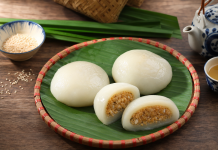
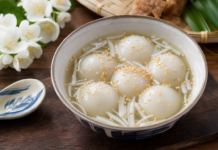
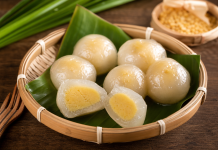


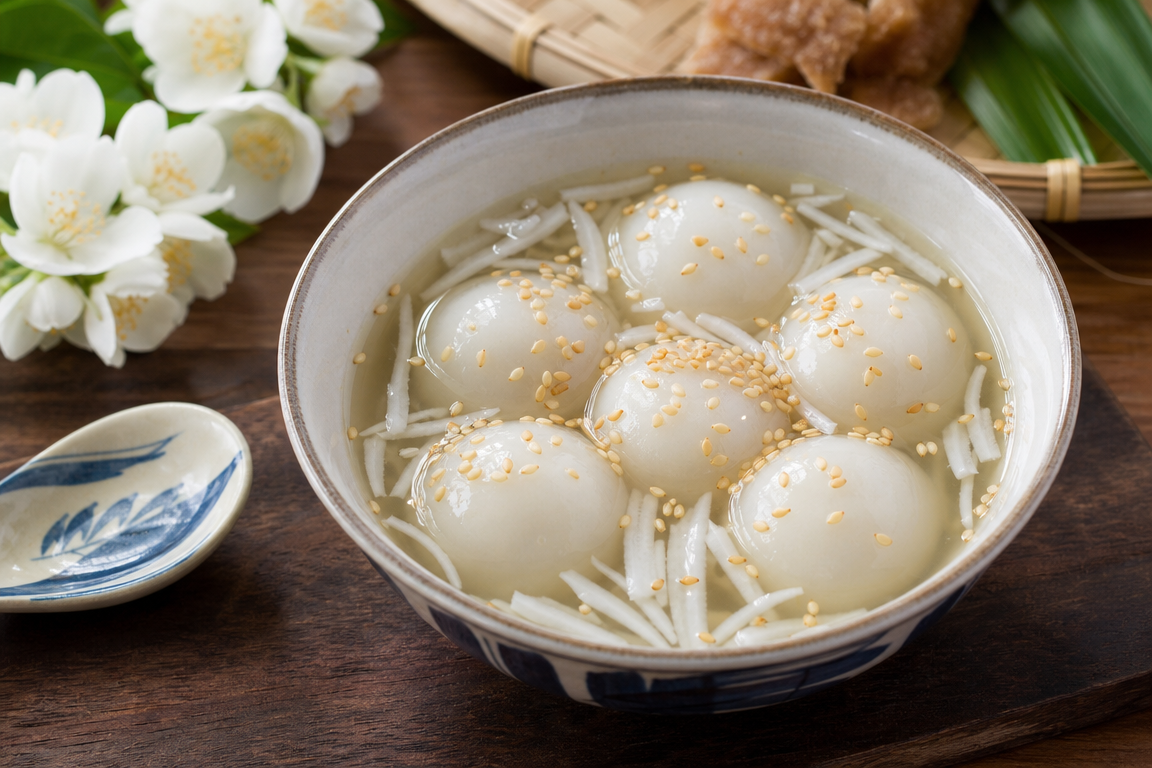
This floating rice cake recipe offers a practical way to make Vietnamese bánh trôi at home: small, rounded rice-flour cakes with a sweet sugar center. In this proposed version, the dough is made with glutinous rice flour and water, wrapped around small pieces of solid sugar, and gently cooked in boiling water.
The ingredient list is short, so the most useful details are about handling the dough. It should feel soft enough to seal without cracking but firm enough to hold its shape. Small fillings, even wrappers, and a gentle boil help keep the cakes intact. The quantities below are a suggested home-kitchen formula, not a claim of a historically authentic recipe.
Recipe Overview
- Yield: About 24 small cakes, or 4–6 dessert servings
- Preparation: About 30 minutes, including a 10-minute dough rest
- Cooking: About 15 minutes, including heating the water and cooking two batches
- Before serving: Allow about 5 minutes of cooling; this is separate from cooking time
Ingredients
- 200 g glutinous rice flour, plus up to 1 tablespoon extra for adjusting the dough
- 150–180 ml warm water, added gradually
- 1 small pinch fine salt, optional
- 60 g solid brown cane sugar, cut into 24 small pieces
- 2 teaspoons toasted sesame seeds, optional, for finishing
- About 2 liters water, for boiling
- 1 bowl cool drinking water, for briefly cooling the cooked cakes
Choose glutinous rice flour, sometimes labeled sweet rice flour, rather than regular rice flour. They do not behave interchangeably in this dough. Use warm water that is comfortable to touch, not boiling water.
For the filling, select solid sugar that can be cut into small pieces. Aim for roughly equal portions of about 2.5 g each. Avoid large or sharply pointed chunks, which are harder to enclose without tearing the wrapper.
How to Make Floating Rice Cakes
- Mix the dough, about 5 minutes. Put 200 g glutinous rice flour and the optional salt in a mixing bowl. Add 150 ml warm water gradually while stirring. Gather the mixture and knead gently until it becomes a soft, cohesive dough. If it crumbles or cracks when pressed, add more water 1 teaspoon at a time, using only as much of the remaining 30 ml as needed. If it feels sticky and slumps, knead in a little of the extra flour.
- Rest for 10 minutes and prepare the filling. Cover the dough with a slightly damp kitchen towel or an inverted bowl. During this rest, cut the sugar into 24 small pieces. Keep the pieces as even as practical, trimming any sharp corners. Preparing the sugar during the rest keeps the preparation time to about 30 minutes.
- Fill and shape, about 15 minutes. Divide the dough into 24 portions, keeping unworked portions covered. Roll one portion into a ball, then press it into a small disk with a slightly thicker center. Place a sugar piece in the middle, bring the edges together, and pinch firmly to seal. Roll gently between your palms until smooth. Repeat with the remaining dough and sugar. Arrange the cakes separately on a plate so they do not stick together.
- Heat the cooking water, about 5 minutes. Bring about 2 liters of water to a boil in a medium pot. Set the bowl of cool drinking water nearby and have a slotted spoon ready. Reduce the boiling water to a steady, gentle boil before adding the cakes.
- Cook in two batches, about 4–5 minutes each. Lower half the cakes into the water individually. After several seconds, gently nudge any that are sticking to the bottom. Once the cakes rise to the surface, continue cooking for another 1–2 minutes. They should look slightly swollen, with no dry or chalky dough when a sample is cut open. Repeat with the second batch, allowing the water to return to a gentle boil first.
- Cool briefly and plate. Lift the cooked cakes into the cool water for about 30 seconds to stop them sticking together immediately. Drain well and transfer to a serving plate in a single layer. Add the optional toasted sesame seeds. Let the cakes cool for about 5 minutes before serving, and check one carefully: the sugar center can remain hotter than the outside.
Tips for Soft, Neatly Sealed Cakes
Adjust by feel, not water volume alone
Start with the smaller water amount and make gradual adjustments. A small ball of dough should flatten without developing deep cracks around its edges. If it sticks heavily to your palms, add a little flour rather than coating the outside with a thick layer of dry flour.
Keep the dough covered
Exposed dough can dry while you shape the rest of the batch. Work with one portion at a time and cover the others. If a portion develops a dry surface, knead it briefly with lightly dampened fingers before filling.
Seal before smoothing
Rolling a cake into a neat ball does not necessarily close an open seam. Pinch the edges together first, checking that no sugar is visible, then smooth the surface. If a sugar corner pokes through, reshape the filling or patch the hole with a small piece of dough.
Do not rely on floating alone
Floating is a helpful cooking cue, but it should not be the only check. Give the cakes the additional cooking time described above and inspect a sample if needed. Larger cakes or thicker wrappers may require longer, so keeping all 24 portions similar in size makes cooking more predictable.
Serving Suggestions
Serve the cakes warm, after the hot centers have cooled enough to eat comfortably, or at room temperature. A shallow plate makes them easy to arrange without piling them together. The optional sesame topping adds a little texture without requiring a separate sauce.
For modest dessert portions, allow four to six cakes per person. These cakes are best served soon after cooking, while the wrappers are soft. Avoid leaving them submerged in the cooling water, which is intended only as a brief handling step.
Suitable Variations
- Sesame-free: Leave off the sesame seeds and serve the cakes plain.
- Different solid sugar: Try a firm palm sugar that can be cut into small pieces, using the same filling weight. This is an optional adaptation; its flavor and melting behavior may differ.
- Smaller batch: Halve every ingredient to make about 12 cakes. Keep the same dough-resting time, and cook them in one uncrowded batch. Heating the water and cooking should take about 10 minutes rather than 15.
Frequently Asked Questions
Can I use regular rice flour?
Not as a direct replacement in this formula. Glutinous rice flour provides the sticky, cohesive dough needed to wrap the sugar. Regular rice flour would require a different recipe and handling method.
Why does my dough crack when I wrap the filling?
It may be too dry, or the portion may have dried while sitting uncovered. Knead in water a few drops at a time and keep the remaining dough covered. Also check that the sugar pieces are not too large.
Why did sugar leak into the cooking water?
A thin spot, an incompletely closed seam, or a sharp filling edge can let the sugar escape. Seal each cake carefully and avoid a vigorous boil that knocks the cakes against one another.
Can I save leftovers?
Refrigerate leftovers promptly in a covered container rather than leaving them out for extended periods. The wrappers may firm up when chilled. Reheat gently by steaming until softened and heated through, then let the centers cool to a comfortable eating temperature.