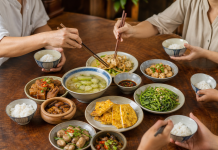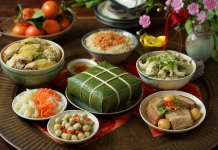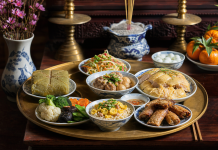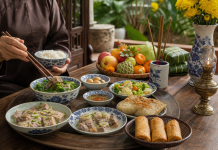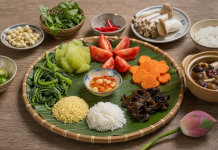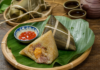

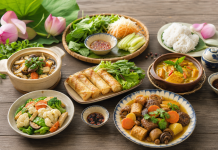
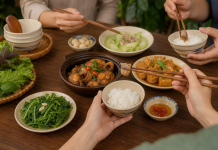
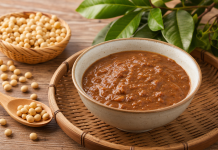
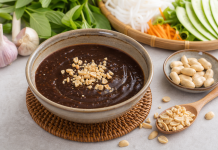
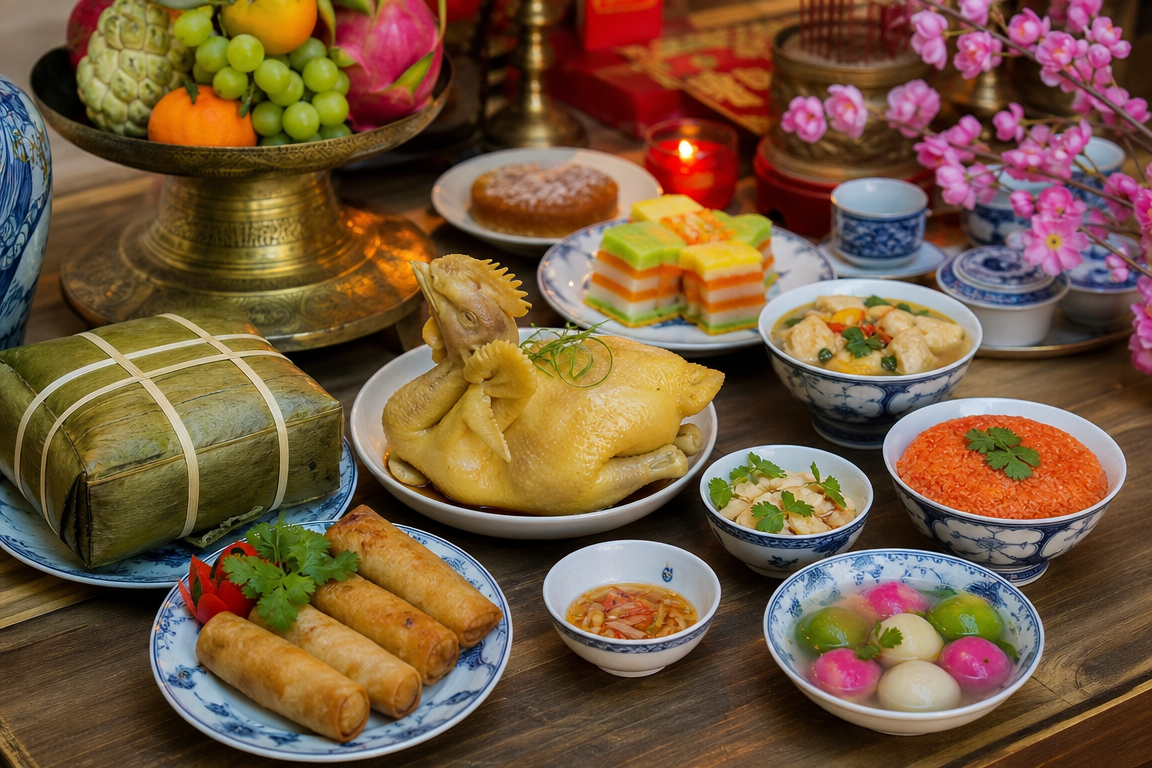
Vietnamese festival foods and offerings belong to the broader subject of Món ăn dâng lễ và lễ hội Việt Nam: food considered in relation to an offering, a celebration, or both. For someone preparing a meal or attending an event, the important questions go beyond what tastes good. What is the food intended for? Who decides how it should be presented? When is it available to eat?
This guide focuses on those practical distinctions rather than assigning particular dishes to festivals without supporting details. It provides a framework for understanding the table, planning a suitable menu, and participating respectfully without treating one household’s instructions as a rule for every Vietnamese celebration.
Start With the Purpose of the Food
The topic brings together two related but distinct ideas: food designated for an offering and food prepared for a festival meal. A useful first step is to identify which purpose applies to each dish rather than assuming everything on display is ready for guests.
Food designated for an offering
When food has been set aside for an offering, its presentation and timing should follow the person responsible for that part of the occasion. Do not infer permission to move, taste, portion, or serve it simply because it appears ready to eat.
For planning purposes, clarify which dishes are reserved, where they should be placed, and who will decide what happens to them afterward. These are questions for the particular event, not details that can be settled by a universal menu.
Food intended for the shared meal
Food prepared for guests needs a separate serving plan. Consider portions, dietary requirements, serving utensils, and the time between cooking and eating. If the same proposed dish is intended for both an offering and the meal, separate portions can make its intended use easier to understand, provided that arrangement is acceptable to the organizer.
Establish the Occasion Before Choosing Dishes
A dish list alone cannot explain an offering or a celebration. Before planning Vietnamese festival foods, establish the name and purpose of the occasion and identify who can answer questions about its food requirements.
The most useful planning questions are specific:
- Which foods, if any, have already been requested?
- Are particular ingredients or preparations unsuitable for this event?
- Does presentation require whole items, individual portions, or shared platters?
- Which dishes are reserved, and which are available to guests?
- Who is responsible for arranging the food and beginning service?
- Are there dietary needs that require separate dishes or utensils?
Answers should guide the menu more than a generalized idea of what a Vietnamese festival table ought to contain. A clear instruction from the organizer is more useful than an unsupported claim that a particular food is always required.
How to Evaluate a Suggested Festival Menu
Online menus and informal recommendations can be starting points, but they should not automatically become cultural instructions. Separate the proposed food from any claim attached to it.
Distinguish a menu suggestion from a requirement
“This dish could work for a shared meal” is a culinary suggestion. “This dish must be offered at this festival” is a claim about the occasion. The second statement needs information specific to that celebration.
The same distinction applies to substitutions. An ingredient replacement may solve a cooking problem, but that does not establish whether it is appropriate for an offering. Confirm those decisions before purchasing or preparing the food.
Avoid unsupported regional labels
If a menu is described as belonging to a particular Vietnamese region, ask what supports that description. Without reliable context, it is more accurate to describe what is actually being served than to attach a regional identity to the entire table.
Likewise, avoid presenting a family’s preferred arrangement as the only correct version. Record the instruction at the level at which it is known: for this household, this organizer, or this event.
A Practical Framework for the Shared Meal
Once any offering requirements have been established, the guest menu can be planned around how the meal will work. The framework below is a proposed planning tool, not a traditional Vietnamese festival formula or a list of required offerings.
| Menu element | Planning purpose | Question to resolve |
|---|---|---|
| A staple component | Provides a base around which to portion the meal | How much is needed for the expected guests? |
| A main savory dish | Gives the shared meal a clear centerpiece | Can it be served conveniently at the planned time? |
| A vegetable dish | Adds another texture and preparation to the menu | Does it meet any stated dietary requirements? |
| A broth or soup, if wanted | Adds a separate course or shared component | Are bowls, ladles, and suitable serving space available? |
| Fruit or a sweet dish, if wanted | Provides an optional finish to the meal | Is it intended for guests, an offering, or separate portions of each? |
There is no need to turn every possible category into another dish. A shorter menu with clear portions and manageable service may be more practical than a larger one that exceeds the available kitchen space.
An illustrative menu, not a ceremonial prescription
For a hypothetical shared meal, a planner might propose steamed rice, tofu with mushrooms, cooked vegetables, a light vegetable broth, and cut fruit. These are suggested meal components only. They are not presented here as the customary foods of a named Vietnamese festival or as suitable offerings without further guidance.
The example demonstrates a planning method: choose components that can be portioned and served together, then check the entire proposal against the occasion’s actual requirements. If requested dishes are already established, build the service plan around those instead.
Presentation, Serving, and Food Handling
Keep the presentation plan separate from the cooking schedule. A dish may be finished in the kitchen before it is meant to be placed on a table or made available to guests.
- Assign responsibility: Identify who arranges reserved food and who manages guest service.
- Separate utensils: Provide appropriate serving tools rather than relying on guests’ eating utensils.
- Clarify ingredients: Make dietary information available without guessing about sauces, fillings, or garnishes.
- Plan temperature control: Follow applicable food-safety guidance for holding and serving prepared food.
- Decide how to handle remaining food: Do not assume that every displayed item can be packed, moved, or distributed without checking.
These arrangements help distinguish food’s intended role without requiring guests to interpret the table on their own.
Frequently Asked Questions
Are Vietnamese festival foods and offerings the same thing?
Not necessarily. In planning terms, distinguish food designated for an offering from food designated for guests. Whether a particular dish serves one purpose or both should be clarified for the event.
Is there one menu to follow?
This guide does not establish a universal menu. A suitable list depends on the occasion’s stated requirements. Without those details, a proposed meal should be labeled as a suggestion rather than a customary or required arrangement.
Can a guest begin eating food that is already displayed?
Do not use display alone as permission. Ask whether the food is available to guests, especially when some items have been designated for an offering.
Can a menu be adapted for dietary needs?
Dietary needs should be discussed during planning. For the shared meal, identify suitable dishes and check their ingredients. For food intended as an offering, confirm whether the proposed adaptation is acceptable rather than assuming a culinary substitution resolves every requirement.
The clearest approach to Vietnamese festival foods is to keep purpose, preparation, and service connected. Describe dishes accurately, reserve cultural claims for details that are actually known, and let the specific occasion determine how the food is presented and shared.