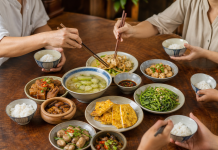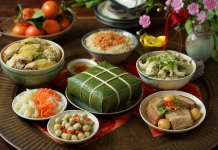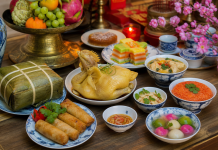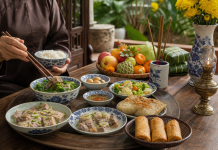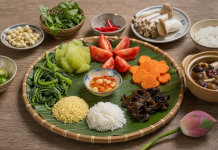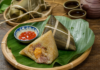

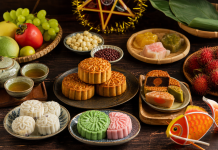
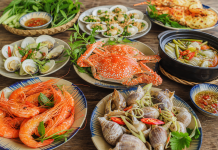
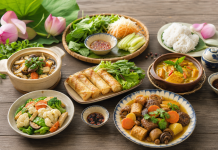
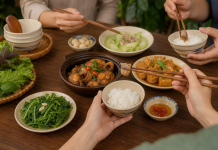
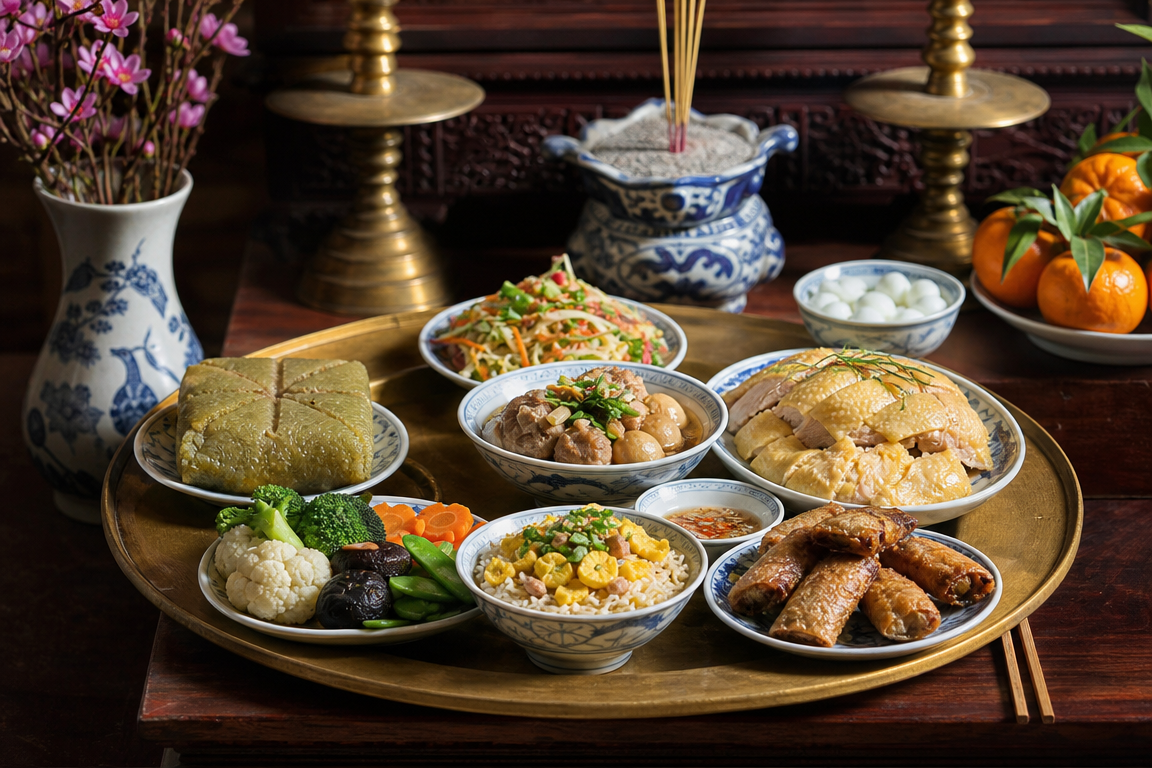
Food gives remembrance a tangible form: something prepared with care, arranged thoughtfully, and associated with the people being honored. In Vietnam, the topic of ancestor worship foods is expressed here as mâm cúng tổ tiên của người Việt, referring to a food offering for Vietnamese ancestors. Understanding it requires looking beyond the dishes to the purpose of the meal.
This guide approaches Vietnamese ancestor worship food through that relationship between food, family, and remembrance. It does not prescribe a universal ceremonial menu. Instead, it explains how to think about the offering, distinguish family practice from general meal planning, and consider a practical menu without presenting suggested dishes as required traditions.
Understanding the Food Offering
An ancestor offering is not simply a collection of Vietnamese dishes. Its defining feature is its purpose: the food is prepared or presented in connection with honoring ancestors. A dish name alone cannot explain that relationship. The same food can have a different meaning when served as an everyday meal rather than included in an offering.
For an unfamiliar reader, the most useful question is therefore not only “What is on the tray?” but also “Why has this food been chosen?” That question leaves room for family memory, household expectations, and the particular occasion without assigning an unsupported meaning to every ingredient.
A food offering is not a universal checklist
It would be misleading to turn this subject into a list of dishes that every Vietnamese family must prepare. Without details about a particular household or observance, there is no basis here for declaring a specific meat, soup, fruit, or sweet essential.
A more careful description separates three things: the purpose of honoring ancestors, the choices made for a particular offering, and the practical work of preparing the food. Keeping those separate makes the culture easier to discuss without turning one possible arrangement into a nationwide rule.
Choosing Foods With Meaning and Restraint
For someone planning an offering, family guidance is more relevant than a generic menu assembled from recognizable Vietnamese foods. The useful starting point is what the people responsible for the observance consider appropriate, rather than what looks most elaborate in a photograph.
Begin with household expectations
Before choosing dishes, clarify whether there are expectations about ingredients, preparation, presentation, or the order of events. These are questions to ask, not rules to assume. If a particular food has been requested, understanding that request is more useful than replacing it with something selected merely for visual effect.
Likewise, an ingredient should not be assigned ceremonial significance simply because it appears on the table. Unless its meaning is known in that setting, describing its flavor, preparation, and place in the meal is more accurate than supplying an invented symbolic explanation.
Consider personal associations without assuming them
A food connected with a remembered person could be meaningful when that connection is known and the family considers it appropriate. That is different from claiming that favorite dishes are always included or that every offering follows the same reasoning.
Where those associations are unknown, there is no need to manufacture a story. Careful preparation and a clear understanding of the occasion provide a better foundation than an appealing but unsupported account of a dish’s significance.
A Proposed Menu Framework
The following is a practical menu-planning example, not a documented ceremonial standard, a regional tradition, or a claim of authenticity. It illustrates how a modest collection of foods could be organized if the household has not specified a different arrangement.
- A staple: Plain cooked rice could provide the base of a proposed meal.
- A main dish: One simply prepared meat, fish, or tofu dish could keep the cooking manageable, subject to the household’s expectations.
- A vegetable dish: A cooked vegetable preparation could add another texture without requiring a large menu.
- A soup: A light vegetable soup could be included if a liquid dish suits the planned meal and presentation space.
- A separate fruit component: Fruit could be considered if appropriate to the offering being planned, rather than treated as an automatic requirement.
These categories are organizational suggestions, not statements about what Vietnamese ancestor offerings must contain. They also should not be treated as interchangeable where a family has specific expectations. A manageable menu that follows known guidance is preferable to a complicated one based on assumptions.
Keep the menu coherent
From a cooking perspective, choose dishes that can be prepared within the available time and served in suitable vessels. Several labor-intensive dishes may compete for the same burner, pot, or preparation space. A simpler plan can reduce that pressure.
Quantity should follow the actual plans for the food. If a meal will be shared afterward, account for the people expected to eat it. If those plans are unclear, settle them before scaling up the cooking. This is practical kitchen planning, not a ceremonial rule.
Presentation Without Invented Symbolism
A food offering deserves a clear, orderly arrangement, but a guide should not invent a required layout. Exact placement, serving vessels, or quantities should come from guidance for the particular observance rather than a generalized diagram.
For the practical side of presentation, clean serving dishes, enough space between vessels, and stable placement help prevent spills and awkward handling. Keep wet dishes contained and avoid crowding a serving area beyond what it can comfortably hold.
There is also no reason to assign a universal meaning to a color, shape, or number without reliable information. An arrangement can be described plainly: what foods are present, how they are prepared, and how they are placed. Plain description is more respectful than decorative speculation.
Preparing and Handling the Food
A preparation plan should distinguish cooking tasks from any ceremonial instructions. The cooking plan concerns shopping, equipment, timing, cleanliness, and storage. Instructions about the observance itself should come from the people responsible for it.
- Confirm the menu. Resolve ingredient restrictions and requested dishes before shopping.
- Check equipment. Make sure cooking pots, serving bowls, and the presentation area can accommodate the planned food.
- Arrange the cooking order. Account for dishes that need longer preparation and those best finished closer to serving.
- Keep handling hygienic. Separate raw ingredients from cooked food and use clean utensils and surfaces.
- Plan what happens afterward. Clarify whether the food will be shared, stored, or handled in another way according to household guidance.
Do not assume that cooked food remains suitable to eat indefinitely because it has been used as an offering. Presentation and food handling are separate considerations. Perishable dishes still need appropriate temperature control, and uncertainty about how food has been held should not be ignored.
Understanding Differences Without Regional Shortcuts
A national topic does not justify inventing a regional map of dishes. Without specific information, labeling one menu “northern,” another “central,” and another “southern” would suggest knowledge this guide does not establish.
The same care applies to claims that a food is mandatory, forbidden, especially auspicious, or uniquely authentic. Such descriptions need a clearly identified context. When that context is missing, it is better to leave the claim out than to turn a possibility into a tradition.
Frequently Asked Questions
What does mâm cúng tổ tiên của người Việt refer to?
In this guide, it refers to a food offering for Vietnamese ancestors. The phrase identifies the cultural subject; it does not, by itself, specify a complete menu or set of preparation instructions.
Is there one required Vietnamese ancestor worship menu?
No single required menu can be established from the information available here. Specific choices should follow guidance for the household and observance, rather than an assumed national checklist.
Does a larger offering show more respect?
There is no basis here for measuring respect by the number of dishes or the expense of the ingredients. Menu size is better treated as a practical decision guided by expectations, available resources, and plans for the food.
Can a suggested menu be called traditional?
Not simply because it contains Vietnamese foods. A proposed menu is a planning aid. Calling it traditional would require information connecting those choices to a particular practice.
The clearest way to understand ancestor worship foods is to keep purpose and preparation together without confusing them. The food matters as an offering of remembrance; the details deserve careful description, household guidance, and restraint where their meaning is not known.