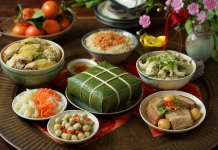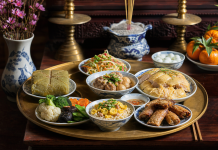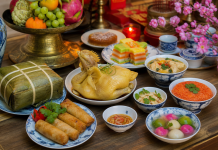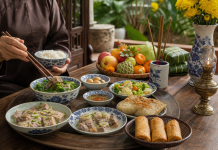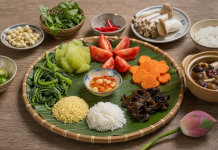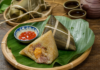
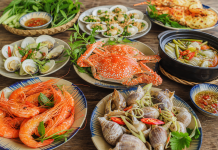
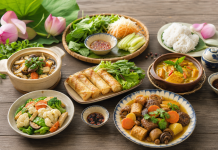
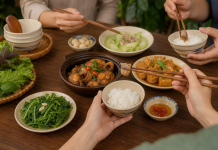
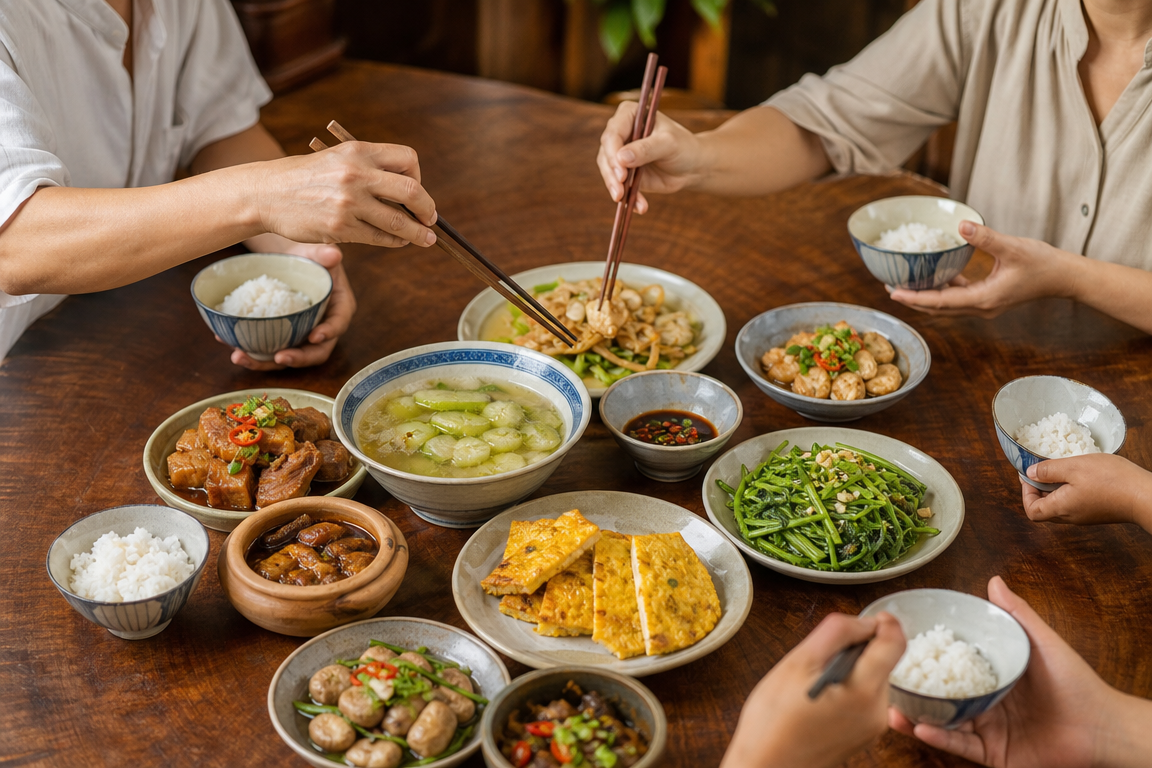
Understanding how food is shared at Vietnamese meals starts with a practical distinction: a dish placed on the table may be for several people, while the bowl or plate in front of you may be for your own portion. When a meal is arranged this way, eating involves more than choosing what you want. It also means noticing what others need, recognizing which utensils belong with each dish, and leaving room for everyone to participate.
The Vietnamese topic, Cách người Việt chia sẻ món ăn trong bữa cơm, concerns sharing food during a meal. It is best approached as a question of how a particular table works, rather than as a fixed set of rules for every Vietnamese household. The guidance below explains how to navigate shared dishes thoughtfully without treating one serving arrangement as a universal custom.
Recognizing Shared Dishes and Individual Portions
At a shared meal, distinguish between the food available to the table and the portion you are eating from. A serving dish can remain communal even after you have taken some food from it. Your own bowl or plate gives you a place to combine, separate, or eat that portion without changing the dish for everyone else.
Do not rely on position alone. A small bowl near your seat could be yours, or it could hold something intended for several diners. Likewise, a larger plate might be a shared dish or an individual order. If the arrangement is unclear, a brief question is more useful than guessing.
- Ask which dishes are for everyone before taking food from an unfamiliar place setting.
- Notice whether a spoon or other serving utensil has been left with a dish.
- Check whether sauces and accompaniments are shared or individually portioned.
- Keep track of which bowl or plate is yours once eating begins.
How to Take Food Without Taking Over the Table
Begin with a manageable portion
A small first portion makes a shared meal easier to navigate. You can find out whether you enjoy a dish without committing to more than you want, and other diners have a chance to take some before you return for another serving. This is practical advice for sharing, not a prescribed Vietnamese portion size.
For a dish containing a limited number of distinct pieces, consider how many people are sharing it. Taking several pieces at once can leave the next person with fewer choices. If you are unsure how the dish should be divided, ask before serving yourself.
Select rather than search
Choose an accessible portion instead of moving several pieces around to find a preferred one. Repeatedly turning or sorting food in a communal dish can disturb what others will eat. If a piece needs separating, use the serving utensil provided or ask how the table is handling it.
Once food is in your personal bowl or plate, keep it there rather than returning it to the shared dish. Taking a little at a time reduces the chance of having an unwanted portion in the first place.
Make another serving a fresh decision
Before taking more, look at what remains and whether everyone has had access. You do not need to monitor every bite. A quick check is enough to avoid finishing a dish that someone else has not yet tried.
Using Serving Utensils and Personal Utensils
A utensil left with a shared dish provides a straightforward way to transfer food into your own bowl or plate. Where separate serving utensils are available, use them for that purpose and leave them accessible to the next diner.
If chopsticks, spoons, or other utensils are on the table, their presence alone does not tell you how the host wants communal food handled. Rather than assuming that one practice applies everywhere, ask which utensil to use. If you would prefer a separate serving spoon, request one plainly and politely.
Keep personal tasting separate from communal serving. For example, transfer a little sauce to your own dish before tasting it instead of tasting directly from the shared container. This keeps an individual choice from affecting the food available to others.
Sharing Sauces, Broth, and Accompaniments
Check before dipping
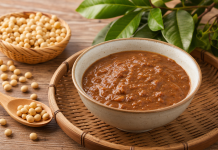
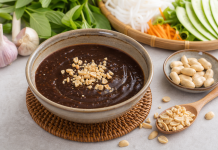
A sauce bowl can be easy to misread because it may be small enough to look individual. Before dipping food into it, establish whether it belongs to you or to the table. If it is shared, use the serving method provided or ask whether you can take a little into your own dish.
When there is a choice, putting a modest amount of sauce in your own bowl lets you adjust your portion without changing the shared supply. Keep any extra seasoning in your own serving unless the group has agreed otherwise.
Keep liquid dishes easy to serve
If soup or broth is being shared, a serving spoon or ladle helps separate serving from eating. Place your bowl securely before transferring hot liquid, and avoid passing a full bowl across several people when a closer handoff is possible.
If a liquid dish contains both broth and solid ingredients, consider both when taking a portion. Removing most of one component may leave an uneven share for those who follow. There is no need for exact measurement; the aim is simply to notice what remains.
Take accompaniments in stages
If vegetables, herbs, or other accompaniments are offered for the table, take a small amount first. You can add more as you eat. Keeping unused accompaniments on their serving dish, rather than gathering a large supply at your place, leaves them available to others.
Passing Food and Keeping Dishes Within Reach
Sharing works better when a dish is accessible, not merely present. If someone cannot reach it comfortably, offer to pass it or move it closer when there is space. Avoid reaching across another person’s eating area, especially when carrying hot food or sauce.
Before moving a dish, make sure the receiving person is ready and that there is a stable place to put it. Set the dish down rather than holding it while someone tries to serve themselves. Return its serving utensil with it so the next person does not have to search.
If one dish stays near you throughout the meal, remember that its location does not necessarily make it yours. An occasional offer to pass it can keep the arrangement comfortable without interrupting conversation.
Following the Host Without Inventing Rules
When eating in someone’s home or joining an unfamiliar table, observation can answer many questions: where people place serving utensils, which bowls they use, and how they pass food. Still, observation is not a substitute for asking when something matters.
Questions such as “Is this for everyone?” or “Which spoon should I use?” are specific and easy to answer. They are more helpful than trying to apply a broad rule about Vietnamese etiquette to a meal whose arrangements you do not yet understand.
You can also decline food clearly without making a judgment about the dish. If an ingredient is unsuitable for you, explain your limit before accepting a portion. For an allergy or another firm dietary restriction, ask directly about ingredients and shared utensils rather than assuming that taking only one part of a dish resolves the issue.
Frequently Asked Questions
Is every dish at a Vietnamese meal shared?
Do not assume that every dish is communal. Establish which items belong to the table and which are individual portions. The actual arrangement matters more than the size or location of a dish.
Should I put shared food into my own bowl first?
Transferring a portion into your own bowl or plate is a practical way to distinguish your food from the communal supply. If you are unsure how a particular dish is intended to be eaten, ask before serving yourself.
Can I take the last piece?
Check whether anyone else wants it before taking it. A simple offer gives others a chance to respond without turning the last piece into a formal negotiation.
What matters most when sharing a Vietnamese meal?
Pay attention to the table in front of you: clarify what is shared, take reasonable portions, keep serving utensils available, and make food accessible to others. These habits provide a useful approach without claiming that every Vietnamese meal follows the same script.