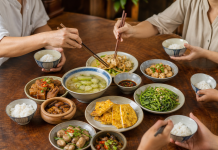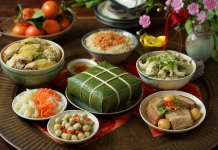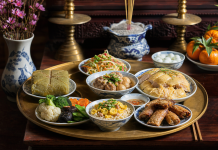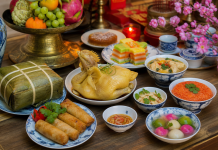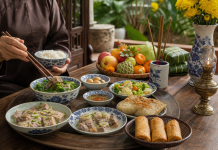
Vietnamese dining etiquette is best approached with attention to the people at the table rather than a rigid checklist. As a guest, your most useful habits are simple: follow the host’s lead, handle shared food thoughtfully, and make room for other people’s preferences.
This guide offers practical ways to navigate invitations, seating, shared dishes, chopsticks, and unfamiliar foods. Treat it as considerate guest guidance, not a fixed code followed by every Vietnamese household. When someone explains how their table works, that guidance matters more than a general etiquette list.
Start With the Host’s Lead
Before sitting down or reaching for food, take a moment to see how the meal is being organized. Has someone indicated a seat? Are dishes still arriving? Is everyone ready to begin? A brief pause can prevent you from taking someone’s place or starting before the table is settled.
If the arrangement is unclear, ask, “Where would you like me to sit?” That is more useful than assuming a seating rule based on age, gender, or your relationship to the host.
Make a courteous beginning
Acknowledge the host and the other diners before focusing on your bowl or plate. At a family meal, include older relatives in your greeting rather than speaking only to the person who invited you. This is a respectful approach without requiring you to know an elaborate set of formal expressions.
Wait for an invitation to begin or a clear indication that others are starting. If you are unsure, a simple “Shall we start?” is enough. You do not need to imitate words or gestures you do not understand.
Share Dishes Without Taking Over the Table
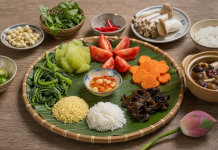
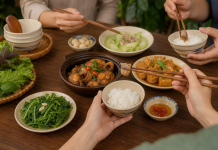
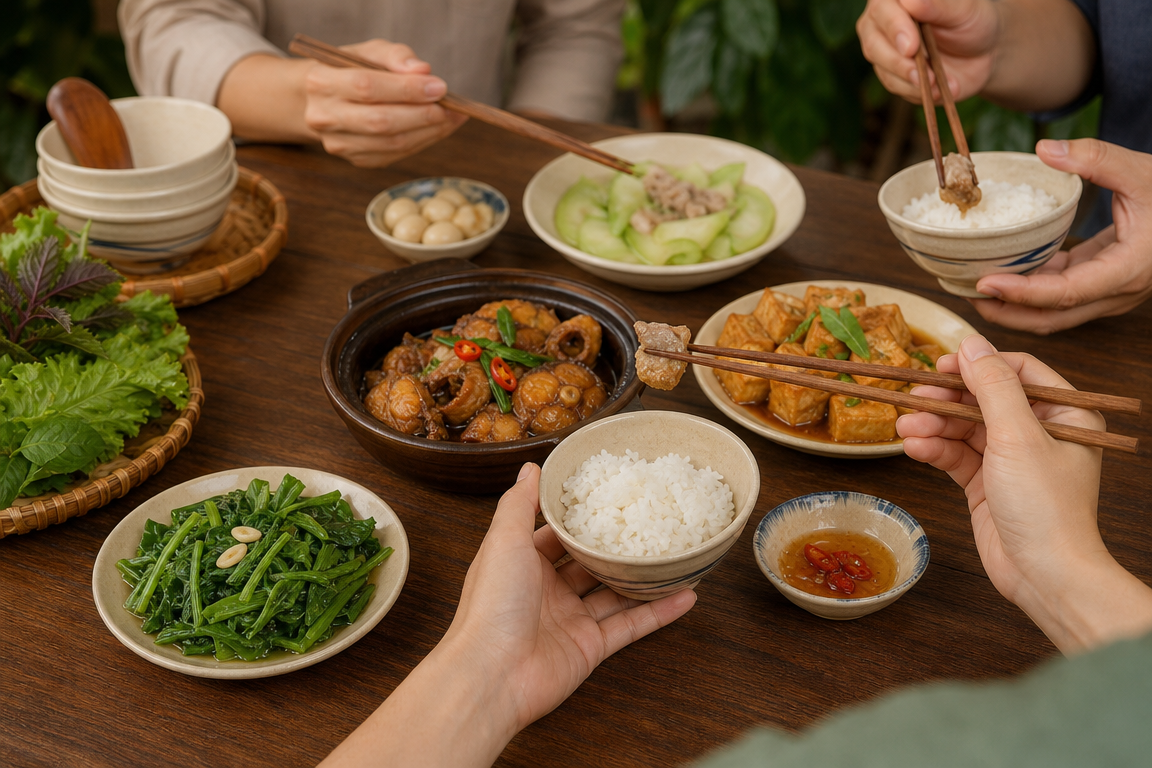
When a Vietnamese meal includes dishes for everyone to share, think about access as well as appetite. Take a manageable portion, leave enough for others, and avoid keeping a shared platter beside your own bowl.
Let the actual setup guide you. Some meals may be served in individual portions; others may combine personal bowls with shared dishes. Do not assume that everything on the table is communal.
Use the serving utensils provided
If a platter has its own spoon, chopsticks, or tongs, use them to transfer food to your bowl or plate. Keep those utensils with the dish so the next person can find them easily.
If no serving utensil is available, ask how the host would like you to serve yourself. Requesting a clean spoon or another pair of chopsticks is a straightforward option. Avoid assuming that turning your personal chopsticks around resolves everyone’s concerns about shared food.
Choose without sorting through the dish
Look before reaching, select a piece, and lift it out without moving several others aside. If you need to avoid an ingredient, ask about it rather than searching through the platter.
For something beyond comfortable reach, ask someone to pass it. Reaching across another diner’s bowl can interrupt their meal and increase the chance of a spill.
Handle Chopsticks Considerately
You do not need expert chopstick skills to be a thoughtful guest. Focus on keeping food and utensils under control. If chopsticks make eating difficult, asking for a spoon or fork is more practical than struggling in silence.
- Keep gestures separate from eating. Put chopsticks down before pointing something out or making broad hand movements.
- Give them a stable resting place. Use a chopstick rest if one is provided, or ask where to place them between bites.
- Avoid standing them upright in food. Rest them securely instead, without needing to attach an explanation or symbolic meaning to the choice.
- Transfer food onto a dish. If offering someone a piece, use an appropriate serving utensil and place it on their plate rather than attempting a chopstick-to-chopstick handoff.
- Do not use them to rummage. Choose a piece before reaching into a shared dish.
These are useful handling habits, not a reason to scrutinize every movement. If you drop food or misjudge a grip, correct it calmly and continue.
Follow the Meal’s Setup for Bowls, Noodles, and Sauces
Vietnamese dining etiquette becomes easier when you pay attention to what belongs to you and what is meant for everyone. A personal noodle bowl, a shared soup pot, and a dipping bowl call for different handling.
Personal noodle bowls
If you are served phở or another noodle dish in an individual bowl, keep your utensils and any additions within your own eating space. Taste before adding condiments, then adjust according to your preference and any ingredient restrictions.
For long noodles, take a manageable amount rather than lifting a large tangle. Use a spoon alongside chopsticks if that helps. You do not need to copy another diner’s eating speed, sounds, or technique to show appreciation.
Shared soup and other communal dishes
When soup is for the whole table, use the ladle or serving spoon to portion it into your own bowl. Keep a utensil you have eaten from out of the shared pot. If you are unsure whether a bowl is communal, ask before using it.
Dipping sauces and condiments
Check whether a sauce bowl is personal or shared. With a shared dipping bowl, avoid dipping a bitten piece back into it. If you would prefer your own portion, ask whether a small dish is available.
Do not assume a sauce’s ingredients from its appearance. If fish sauce, shellfish, peanuts, or another ingredient matters to you, ask specifically before eating it. The same care applies to garnishes and condiments.
Communicate Dietary Needs Before Eating
Clear communication is more considerate than accepting food you cannot safely eat. If possible, explain an allergy or dietary restriction before the meal. Be specific about the ingredient and whether utensils or shared cooking equipment are a concern.
For example, “I cannot eat peanuts, including peanut garnishes or sauces” is clearer than “I need something light.” Do not describe a serious allergy as a simple preference.
If the ingredients cannot be confirmed, decline the uncertain dish politely. Appreciation for a host’s effort does not require taking a health risk. Equally, avoid making broad claims about what a Vietnamese dish must contain; ask about the particular food being served.
Accept or Decline Food Without Pressure
When offered another helping, answer warmly and clearly. “Thank you, I would love a little more” or “That was lovely, but I’m full” communicates your preference without turning the exchange into a negotiation.
If an unfamiliar dish is offered, you can ask what it is before deciding. Trying a small portion is an option, not an obligation. Avoid describing someone else’s food as strange, dirty, or disgusting, even when it is not something you want to eat.
Offer the same consideration to others. Do not insist that another diner taste something, finish a serving, or explain a private dietary choice.
Finish With the Same Consideration
Take portions that match your appetite, especially when food is shared. If you are still hungry, ask for more rather than taking a large first serving simply to avoid another request.
When you finish, leave your bowl, plate, and utensils stable and tidy. Thank the host or the person who arranged the meal. If you are in someone’s home, offer help with clearing, but wait for direction before stacking dishes or carrying items into the kitchen.
For a restaurant meal, clarify payment rather than assuming that either the inviter or every individual will pay. A quiet question to the person who organized the gathering can prevent an awkward discussion when the bill arrives.
Frequently Asked Questions
Should I wait for the oldest person to start eating?
Rather than treating age as an automatic rule, wait for the host’s invitation or observe how the table begins. Include older diners respectfully, but follow the expectations of the people present.
Is it rude to ask for a fork?
Ask politely if you need one. Using an utensil you can handle comfortably is better than risking spills or being unable to enjoy the meal. There is no need for a lengthy apology.
What if I accidentally break a table rule?
Acknowledge the correction, make the adjustment, and continue. A brief “Thank you for letting me know” is usually more constructive than repeatedly apologizing or defending the mistake.
What is the most useful etiquette principle to remember?
Be attentive without becoming anxious. Notice how food is shared, ask when something is unclear, and respect both the host’s arrangements and your fellow diners’ boundaries. Those habits provide a practical foundation for a comfortable Vietnamese meal.