
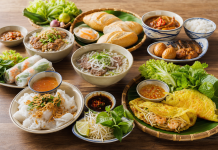
Thai basil, known in Vietnamese as húng quế, brings a sweet, anise-like fragrance and a lightly peppery edge to Vietnamese food. Its pointed green leaves are especially familiar on herb plates served with phở, but its usefulness extends to fresh rolls, savory pancakes, noodle bowls, and grilled dishes. Often eaten raw or added just before serving, it provides an aromatic contrast to rich broth, smoky meat, and savory dipping sauces.
What Is Thai Basil?
Thai basil is a type of basil within the species Ocimum basilicum. Despite its English name, it is not exclusive to Thai cooking. It is also an important fresh herb in Vietnamese cuisine, where diners may tear the leaves into soup, tuck them into rice paper rolls, or combine them with other herbs in a lettuce wrap.
At Vietnamese markets, look for the name húng quế. English-language packages may say “Thai basil” or “Thai sweet basil.” Labels that simply say “basil” can be less precise, so checking the leaves and aroma is helpful.
Thai Basil Flavor and Appearance
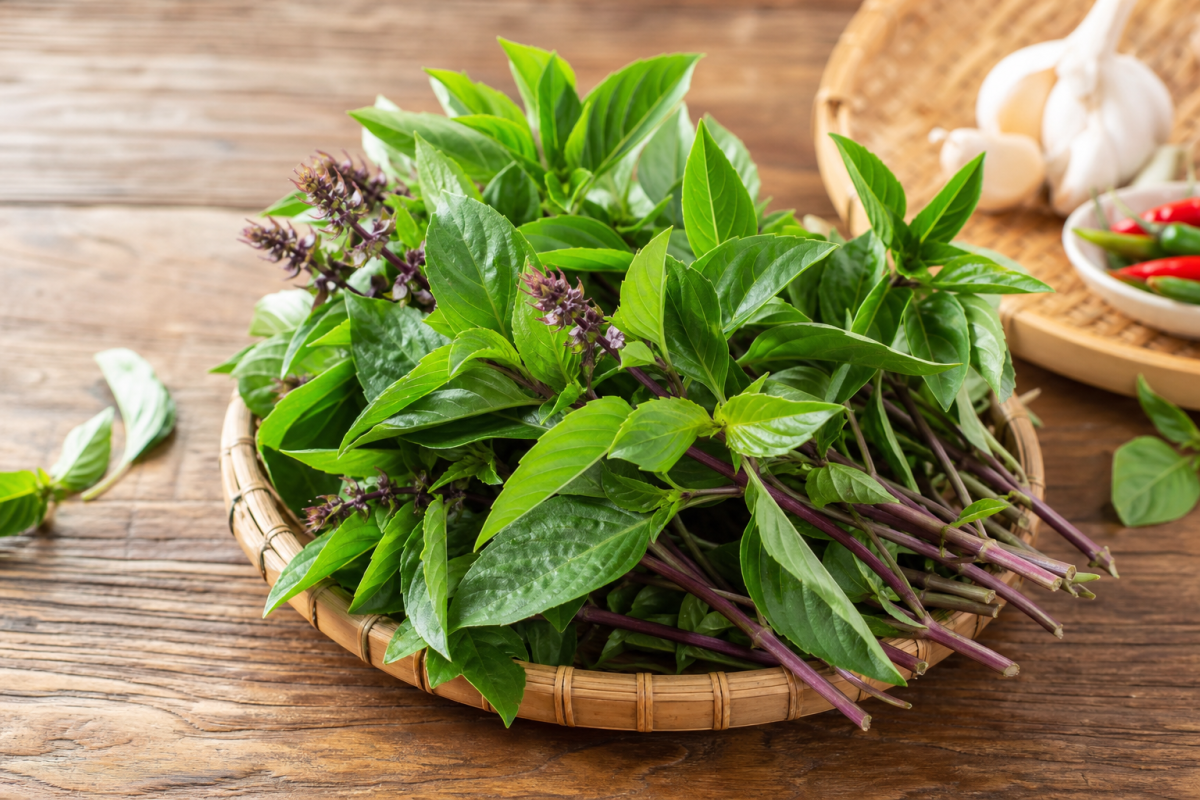
Thai basil typically has narrow, pointed leaves with lightly toothed edges. The leaves are usually green, while the stems and flower clusters often have purple coloring. Color varies with growing conditions and variety, so purple stems alone are not a reliable identification method.
Its defining characteristic is its aroma: sweet, licorice-like, and reminiscent of anise, with a peppery herbal finish. Compared with common Italian-style sweet basil, Thai basil generally has firmer leaves and a more pronounced anise note. Tearing a leaf releases its fragrance quickly, which explains why even a small amount can noticeably change a bowl or wrap.
How Thai Basil Is Used in Vietnamese Cooking
With Phở and Other Noodle Bowls
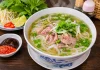
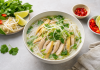
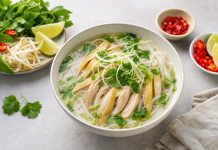
Thai basil is a familiar accompaniment to many servings of phở, although the herb selection varies by restaurant, household, and style of service. Diners usually strip a few leaves from the stems, tear them if desired, and add them to the hot broth. The heat softens the leaves and releases their aroma without requiring prolonged cooking.
In other noodle bowls, it can join lettuce, bean sprouts, cucumber, and additional herbs. Its strong fragrance works particularly well alongside grilled meat and fish-sauce-based dressings. It should complement the dish rather than overwhelm the other ingredients.
In Fresh Rolls and Lettuce Wraps
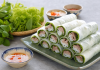
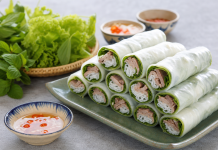
Thai basil can be tucked into gỏi cuốn, or fresh rice paper rolls, with ingredients such as rice vermicelli, shrimp, pork, and lettuce. Not every version includes it, but a few leaves add a distinct aromatic layer. Arrange the leaves among the filling so each bite contains a little rather than one concentrated cluster.
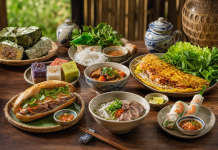
It also fits naturally into the fresh-herb assortment served with bánh xèo and bánh khọt. A leaf or two can go into a lettuce wrap with a piece of the pancake before dipping. These dishes are often served with several herbs, allowing diners to adjust the balance themselves.
With Grilled Foods and Mixed Salads
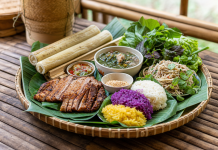
Served fresh alongside grilled meats or incorporated into a mixed salad, Thai basil provides a fragrant counterpoint to browned, savory flavors. Tear or roughly slice it shortly before serving. Very fine chopping is usually unnecessary and can bruise the leaves, especially if the knife is dull.
Thai Basil vs. Similar Vietnamese Herbs
Vietnamese herb names can be confusing because several unrelated plants appear together on the same platter. These are useful distinctions:
- Sweet basil: The broad-leaved basil commonly associated with Italian cooking belongs to the same species as Thai basil, but its flavor is generally less distinctly anise-like.
- Holy basil: Usually identified botanically as Ocimum tenuiflorum, holy basil is a different species. It tends to have a more pungent, clove-like character and should not be treated as another name for húng quế.
- Vietnamese coriander, or rau răm: This is not basil. It has elongated leaves and a peppery, assertive flavor.
- Vietnamese balm, or kinh giới: This is another distinct herb, generally recognized by its toothed leaves and citrusy, minty aroma.
- Perilla, or tía tô: Often identified by broad, serrated leaves that may show purple coloring, perilla has a different flavor from Thai basil.
The word húng appears in several Vietnamese herb names. For shopping purposes, use the full name húng quế rather than assuming all herbs labeled with húng are interchangeable.
Choosing, Preparing, and Storing Thai Basil
Choose bunches with fragrant, mostly firm leaves and stems that are not slimy. Avoid extensive blackening, mold, or a sour smell. A few small blemishes do not necessarily make a bunch unusable, but damaged leaves deteriorate quickly.
Before serving, rinse the herb gently under cool running water and drain it well. A salad spinner or clean towel can help remove excess moisture. Pick off the leaves and tender tips; thicker stems are usually too fibrous to enjoy raw.
For short-term storage, treat an intact bunch like cut flowers: trim the stem ends and stand them in a clean glass with a little water, keeping the leaves above the waterline. Place it away from direct sunlight and heat, change the water regularly, and use it promptly. Basil is sensitive to cold, so refrigerator storage can cause darkening.
Freezing is an option if the alternative is wasting a large bunch, but thawed leaves lose their crisp texture. Frozen Thai basil is better suited to cooked dishes than to fresh herb plates or rice paper rolls.
Best Substitutes for Thai Basil
Common sweet basil is a practical substitute when you want a fresh basil character, though it will not reproduce the same licorice-like intensity. Use it in a similar amount, then adjust to taste.
For rolls or lettuce wraps, mint, cilantro, or another herb already suited to the dish can provide freshness, but each changes the flavor. These are alternatives, not exact replacements. Dried basil is a poor substitute for raw Thai basil on an herb platter because it lacks the fresh texture and has a different aromatic balance.
Frequently Asked Questions
Can you eat Thai basil raw?
Yes. After washing, the leaves and tender tips can be eaten raw in rolls, wraps, salads, and alongside noodle dishes.
Should Thai basil be cooked in phở broth?
It is commonly added at the table rather than simmered in the broth. Add a few leaves to the hot bowl, taste, and add more if desired.
Are Thai basil stems edible?
Tender stem tips can be eaten, but thicker stems are often tough. For an herb platter, leave the sprigs intact so diners can pick off the leaves, or remove the coarse stems before serving.
Is húng quế the same as mint?
No. Thai basil belongs to the mint family, but it is not the culinary herb usually called mint. Its sweet anise aroma is a useful way to distinguish it from more cooling, minty herbs.