
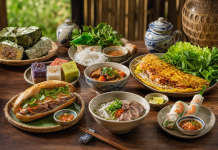
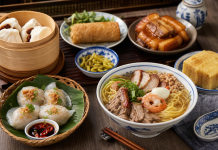
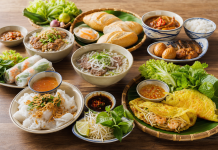
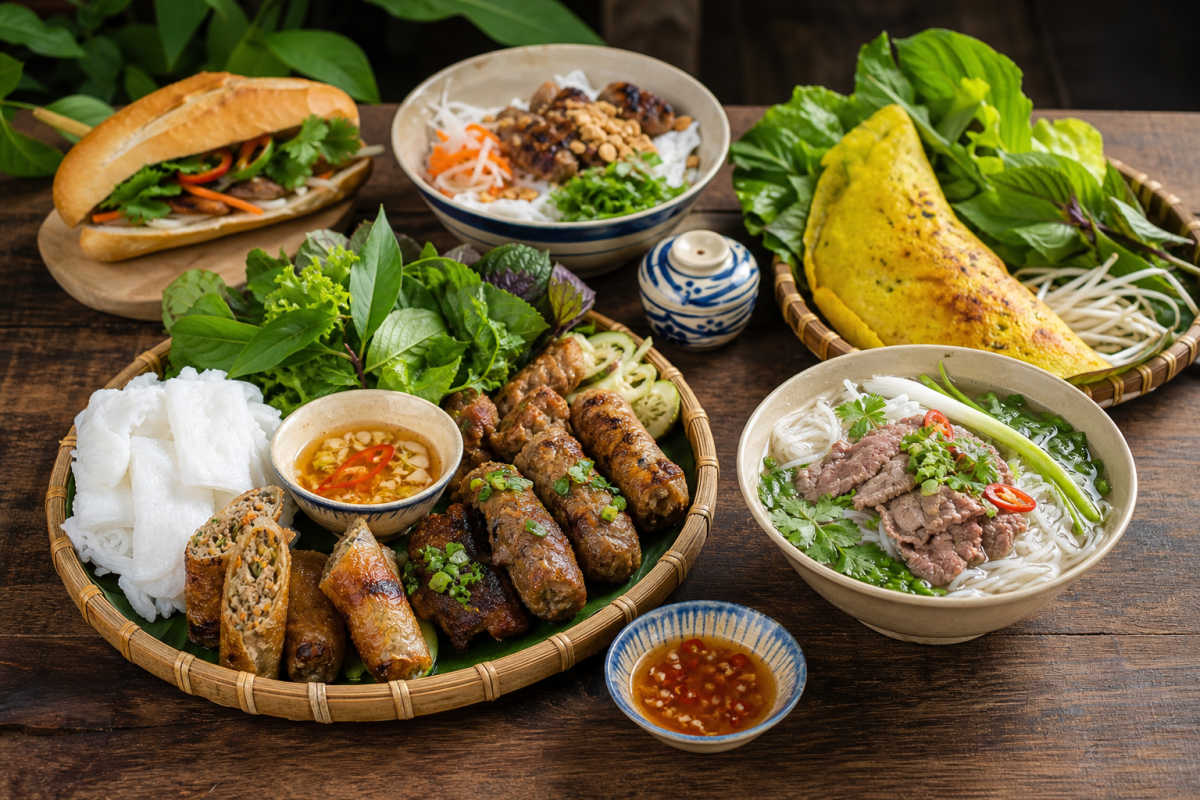
Vietnamese cuisine is built on contrast: fragrant herbs against savory broth, crisp vegetables beside tender meat, and bright citrus cutting through rich or salty flavors. Rice, noodles, fish sauce, fresh produce, and carefully balanced seasonings appear throughout the country, but there is no single template for a Vietnamese meal. Regional preferences, family traditions, religious practices, and the setting all shape what reaches the table.
This guide introduces the ingredients, famous dishes, regional differences, and everyday customs that make Vietnamese food distinctive. It also explains how to navigate a menu and use the herbs, sauces, and condiments that often accompany a meal.
What Defines Vietnamese Cuisine?
A useful starting point is balance, though that does not mean every dish contains every flavor. A bowl of noodle soup might emphasize a clear, savory broth, while a braised dish may be salty, sweet, and deeply concentrated. Pickles, herbs, dipping sauces, and plain rice let diners create contrast across the meal.
Texture matters just as much. Soft rice noodles may share a bowl with crunchy peanuts and raw vegetables. A crisp pancake can be wrapped in lettuce and herbs before dipping. Even a simple rice plate may combine grilled meat, a soft egg, and crisp pickled vegetables.
Vietnamese food is not uniformly spicy. Some dishes feature substantial chile heat, while others are mild, with fresh chiles or chile sauce offered separately. Likewise, not every meal is a soup or a pile of fresh herbs: braises, steamed dishes, fried foods, and fermented ingredients are important parts of the cuisine.
Essential Vietnamese Ingredients and Flavors
Rice and rice-based foods
Rice appears as steamed grains, noodles, wrappers, flour, and sticky rice preparations. Different forms serve different purposes. Bánh phở are flat rice noodles used in phở; bún are typically round rice noodles; and bánh tráng, often called rice paper in English, can be used for wrapping, grilling, or other preparations depending on the type.
Rice is central, but Vietnamese cooking also uses wheat, tapioca starch, mung beans, and other ingredients. Bánh mì bread is a familiar example of wheat’s place in everyday eating.
Fish sauce, fermented seasonings, and dipping sauces
Nước mắm, or fish sauce, contributes saltiness and savory depth to marinades, broths, braises, and dipping sauces. It is not the same thing as every prepared sauce served alongside a dish. Nước chấm refers broadly to dipping sauce; a familiar version combines fish sauce with water, sugar, citrus juice or vinegar, and often garlic and chile.
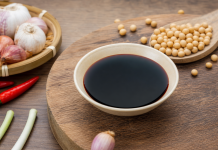
Other seasonings include soy sauce, shrimp paste, and fermented fish products. Their use depends on the dish and the cook. A dipping sauce that tastes strong on its own may make sense when paired with unseasoned noodles, vegetables, or rice paper.
Herbs, aromatics, and vegetables
Lemongrass, ginger, garlic, shallots, and scallions help build flavor during cooking. Fresh herbs such as cilantro, Thai basil, mint, Vietnamese coriander, and perilla may be served alongside food or incorporated into a dish.
Herb selections vary; not every plate includes all of them. Bean sprouts, cucumber, lettuce, pickled carrot and daikon, lime, and fresh chiles are also common accompaniments, each contributing a different texture or flavor.
Famous Vietnamese Foods to Know
Phở: fragrant rice noodle soup
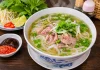
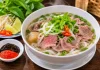
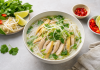
Phở combines flat rice noodles with broth and usually beef or chicken. Beef versions often feature warm spices such as star anise and cinnamon, while recipes and garnishes vary. Some bowls arrive with a restrained garnish; others come with a larger plate of herbs and vegetables.
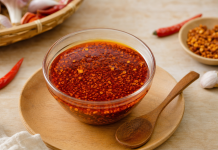
Taste the broth before adding condiments. Lime, chile, hoisin sauce, or chile sauce may be available, but none needs to be added automatically.
Bánh mì: a filled Vietnamese baguette
Bánh mì can refer to bread itself or, in a food-ordering context, a filled baguette. Common fillings include pork, pâté, Vietnamese sausage, chicken, eggs, or tofu, often paired with cucumber, pickled vegetables, herbs, and chile. The appeal lies in the contrast between crisp bread, savory fillings, and bright accompaniments.
Bún chả and other noodle bowls
Bún chả, closely associated with Hanoi, brings together grilled pork, rice noodles, herbs, and a fish-sauce-based dipping liquid. The components may arrive separately rather than as one assembled bowl.
Other bún dishes include bún thịt nướng, commonly served with grilled pork, vegetables, herbs, and dressing. Despite sharing noodles, bún dishes can differ substantially in preparation and serving style.
Gỏi cuốn and fried rolls
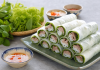
Gỏi cuốn are fresh rice-paper rolls often filled with rice noodles, herbs, shrimp, and pork, though many variations exist. Depending on the filling and establishment, they may come with a thick hoisin-based sauce, a peanut sauce, or another dip.
Fried rolls are commonly called chả giò in the south and nem rán in the north. Fillings and wrappers vary, and they may be served with herbs, lettuce, noodles, or dipping sauce.
Bánh xèo: a crisp, savory pancake
Bánh xèo is a savory pancake commonly made with a rice-flour-based batter colored with turmeric. Pork, shrimp, and bean sprouts are frequent fillings. Its yellow appearance does not necessarily indicate egg.
Depending on the style, pieces may be wrapped in leafy greens or rice paper with herbs before dipping. Pancake size, batter, fillings, and accompaniments vary by region and vendor.
Rice plates, braises, and sticky rice
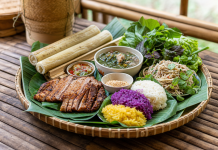
Cơm tấm, or broken rice, is especially associated with southern Vietnam and often comes with grilled pork and assorted accompaniments. Cá kho and thịt kho are fish and meat braises whose concentrated sauces pair well with plain rice.
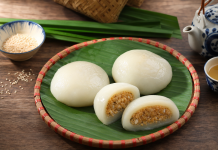
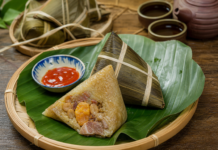
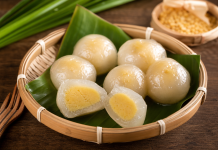
Xôi, sticky rice, can be savory or sweet. Toppings may include mung beans, fried shallots, meats, coconut, or other ingredients, depending on the preparation.
Regional Vietnamese Cuisine: Broad Patterns, Not Fixed Rules
Dividing Vietnamese food into northern, central, and southern styles is useful for orientation, but it cannot capture every locality, ethnic community, or household. Dishes also travel, and cooks adapt them.
Northern Vietnam
Northern cooking is often described as relatively restrained in sweetness, with many dishes emphasizing savory broths, fish sauce, and carefully chosen aromatics. Hanoi is particularly associated with foods such as bún chả and chả cá, a turmeric-seasoned fish dish commonly served with dill, noodles, and accompaniments. These examples are more informative than assuming all northern food tastes alike.
Central Vietnam
Central Vietnam includes notably different food traditions. Huế is known for bún bò Huế, a beef noodle soup commonly flavored with lemongrass and often chile, as well as small rice-based dishes such as bánh bèo. Mì Quảng, associated with Quảng Nam and Đà Nẵng, typically combines rice noodles, a modest amount of flavorful broth, toppings, herbs, and crisp rice crackers.
Some central dishes are assertively spicy or salty, but describing the entire region that way misses its range.
Southern Vietnam
Southern cooking often makes noticeable use of sweetness, fresh herbs, and, in certain dishes, coconut milk or coconut water. Cơm tấm and canh chua, a sour soup often made with fish, tamarind, and vegetables, are useful introductions. Southern-style phở is frequently served with an abundant herb plate, although individual shops differ.
How Vietnamese Meals Are Served and Eaten
A home-style meal commonly centers on rice with several shared dishes: perhaps a braise, vegetables, a soup, and a dipping sauce. Diners combine small portions in their own bowls rather than treating each shared dish as a separate course.
By contrast, a noodle soup, bánh mì, or rice plate may be a complete individual meal. Breakfast can be savory and substantial, including noodles, rice, bread, or sticky rice.
- Use the accompaniments thoughtfully. Add herbs, citrus, and sauces gradually rather than emptying everything into the dish.
- Follow the serving format. Separate noodles, greens, and sauce may be intended for dipping or wrapping, not necessarily mixing all at once.
- Observe the table. Chopsticks, spoons, and shared serving utensils have different roles depending on the meal.
- Ask when unsure. A brief question about how to assemble or eat a dish is more useful than relying on a rigid rule.
Vietnamese Drinks, Sweets, and Dietary Considerations
Vietnamese coffee is often brewed with a phin, a small metal filter, and can be served black or with sweetened condensed milk, hot or over ice. Tea, sugarcane juice, and fruit drinks are also familiar options.
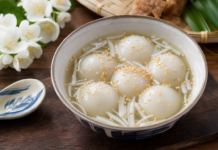
For dessert or a sweet snack, chè describes a broad family of preparations that may contain beans, jellies, fruit, coconut milk, or sticky rice. Chè can be served warm or cold and is not one standardized recipe.
For vegetarian eating, look for chay, but explain any specific restrictions. A vegetable dish may still contain fish sauce, shrimp paste, oyster sauce, or meat-based stock. People with allergies should also ask about peanuts, shellfish, soy, wheat, and shared preparation equipment. Rice-based food is not automatically gluten-free once sauces and other ingredients are included.
Frequently Asked Questions About Vietnamese Food
Is Vietnamese food always spicy?
No. Heat varies by dish and preparation, and chile is often served separately. Ask whether a spicy component is cooked into the food or added at the table.
What is a good first Vietnamese meal?
Phở, bánh mì, gỏi cuốn, or a grilled-meat rice plate offers an approachable introduction. For a broader view, try a shared rice meal with vegetables, soup, and a braised dish.
What is the difference between phở and bún?
Phở usually refers to a particular noodle soup made with flat rice noodles. Bún refers to a type of typically round rice noodle used in many dishes, including soups, dressed bowls, and meals with separate dipping components.
The best way to understand Vietnamese cuisine is to look beyond one signature dish. Noodle soups reveal one set of techniques; shared rice meals, crisp pancakes, braises, and herb-filled rolls reveal others. Together, they show a cuisine shaped as much by texture, assembly, and accompaniments as by the main ingredient.