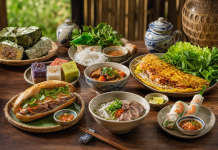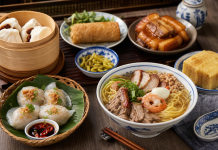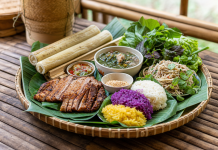


The five elements in Vietnamese cuisine invite a closer look at balance: not just how a dish tastes, but how its ingredients, textures, colors, and accompaniments work together. The Vietnamese topic name, Ngũ hành trong ẩm thực Việt Nam, places food within a broader five-element framework.
That framework is best approached as an interpretive lens, not a rule requiring every meal to contain five flavors or five colors. Understanding the idea can make a bowl of noodles, a plate of rice, or a shared meal more interesting without reducing Vietnamese cooking to a rigid formula.
What Are the Five Elements?
The five elements are wood, fire, earth, metal, and water. In this context, the word “element” should not be confused with a chemical element or a literal ingredient. A dish does not need wood or metal in it to be discussed through this framework.
The useful starting point is relationships. Instead of assessing each ingredient in isolation, consider what it contributes and how that contribution changes the whole meal. An ingredient can soften a strong flavor, sharpen a mild one, add moisture, or create contrast through texture.
Detailed charts may assign particular tastes, colors, or other qualities to individual elements. Without a specified source for those correspondences, however, there is no need to present one chart as the definitive explanation of Vietnamese food. The broader question of balance is useful on its own.
Balance Does Not Mean Equal Amounts
A balanced dish does not necessarily give every sensation equal weight. A sour preparation can remain distinctly sour. A chili-forward condiment can remain hot. A mild bowl of rice does not need to become intensely seasoned to make a useful contribution to a meal.
Think of balance as proportion and purpose. One component may lead, while another provides relief or contrast. The right question is not “Can I taste five things equally?” but “Does each part help the food work as a whole?”
This distinction also keeps the five-element idea from becoming a scoring system. A dish with only a few ingredients is not automatically incomplete, and a colorful plate is not automatically well balanced.
Five Flavor Questions to Ask About a Dish
One practical way to explore the topic is to pay attention to sourness, bitterness, sweetness, pungency, and saltiness. The questions below are tasting prompts, not a claim that every Vietnamese dish must contain all five or that these descriptions establish fixed element-to-flavor correspondences.
Sourness: Does the Food Need a Sharper Edge?
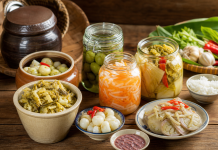
A sour ingredient can change the impression of a rich, salty, or sweet preparation. If lime is offered with a noodle bowl, for example, adding a small squeeze lets a diner adjust the relationship between acidity and the existing seasoning.
More is not always better. If acidity overwhelms the broth or sauce, it can obscure the qualities it was meant to complement. Taste the food first, then consider what the sour addition would change.
Bitterness: Is There Room for Contrast?
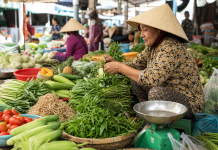
Bitterness does not have to be the dominant flavor to matter. A bitter vegetable or leafy ingredient can provide a different kind of contrast from sweetness or acidity.
For someone unfamiliar with that taste, the useful question is how it behaves alongside the other food. A small bite with rice or a savory accompaniment may create a different impression from tasting the bitter ingredient alone.
Sweetness: Is It Supporting or Taking Over?
Sweetness can be obvious, as in a sweetened sauce, or less prominent, as in a preparation containing naturally sweet vegetables. Its role depends on what surrounds it.
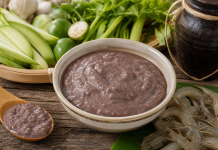
When evaluating a sauce, ask whether sweetness rounds out the seasoning or hides it. This is more informative than assuming that any sweetness is excessive or that every sauce needs sugar.
Pungency: What Kind of Intensity Is Present?
Chili heat is one form of intensity, but sharp aromatic ingredients can create other sensations. It helps to distinguish a burning heat from a peppery bite or a strong aroma rather than grouping them all under “spicy.”
Where a condiment is served separately, a small addition can show how that intensity changes the dish. The goal need not be maximum heat; it can simply be a more distinct contrast.
Saltiness: Does It Connect the Components?
Saltiness becomes easier to judge when the food is tasted as intended. A strongly seasoned sauce may seem excessive by itself but have a different effect when used sparingly with rice, noodles, or vegetables.
This is why tasting only one component can give an incomplete picture. Consider the size of the bite, the amount of sauce, and the foods eaten alongside it.
Look Beyond Flavor
A useful reading of the five elements in Vietnamese cuisine should leave room for more than seasoning. Texture, temperature, appearance, and the arrangement of a meal can all shape the eating experience. These are practical observations, not fixed assignments to particular elements.
Texture and Moisture
Imagine soft noodles with a crisp vegetable accompaniment. Their contrast matters even if their seasonings are similar. Likewise, a dry component may become more enjoyable with a little broth or sauce, while too much liquid may erase a texture meant to remain distinct.
Rather than adding ingredients simply to increase variety, ask what each texture contributes. Soft, crisp, tender, and chewy components do not all need to appear in the same bowl.
Temperature and Aroma
A steaming bowl and a cool accompaniment offer different sensations. Temperature can also change how noticeable an aroma seems while eating.
These sensory observations should not be confused with medical claims about foods being “heating” or “cooling.” Serving temperature is directly observable; claims about effects inside the body require a different kind of evidence.
Color and Presentation
Color can draw attention to different ingredients and make a meal easier to read visually. It does not prove that a dish follows a five-element system, nor does it establish nutritional completeness.
A restrained presentation can be effective. There is no need to add an unrelated garnish merely to reach a particular number of colors.
Reading a Vietnamese Meal as a Whole
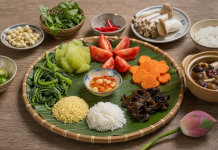
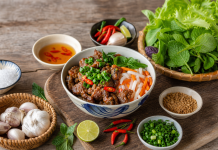
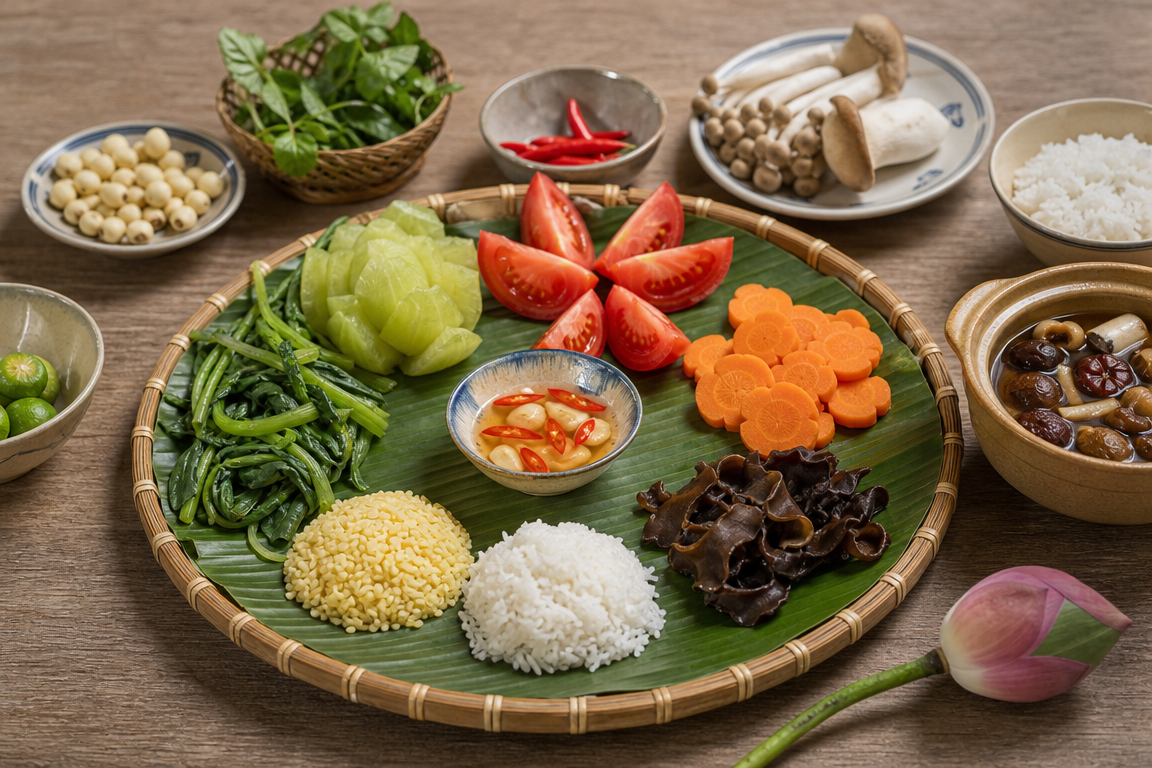
For a practical example, imagine a Vietnamese-style meal built around rice, a savory main dish, vegetables, and a bowl of soup. This is an illustrative arrangement, not a prescribed traditional menu.
The rice can provide a relatively mild bite between more strongly seasoned foods. The vegetables can introduce another texture, while the soup adds a liquid component. The main dish can remain the strongest flavor without requiring every other part of the meal to match its intensity.
A noodle bowl offers another way to think about relationships. If broth, herbs, citrus, or condiments are provided, compare a bite before and after one small adjustment. Adding everything at once makes it harder to understand which addition helped and which one overwhelmed the original preparation.
Neither example proves that a cook deliberately followed a five-element formula. Both simply show how attention to relationships can make the concept useful at the table.
What the Framework Cannot Tell You
The five-element idea should not be used to declare one recipe authentic and another incorrect. It also cannot, by itself, explain a particular family’s preferences, a cook’s choices, or differences between regional cuisines.
Specific claims about origins, local customs, or fixed correspondences need their own supporting sources. A general cultural framework is not a substitute for that detail. Nor does describing a meal as balanced establish a medical benefit or a complete nutritional profile.
Frequently Asked Questions
Does every Vietnamese dish contain all five elements?
It is not useful to treat the framework as a mandatory ingredient checklist. A single dish can have a focused character, while contrast may come from an accompaniment or another part of the meal.
Are the five elements the same as five flavors?
No. Wood, fire, earth, metal, and water name the elements. Flavor is one possible subject for discussing relationships within that broader framework, not a replacement for the elements themselves.
Can the idea guide home cooking?
Yes, as a flexible tasting exercise rather than an authenticity test. Identify the dominant quality, consider whether it needs contrast, and make one small adjustment at a time. Sometimes the most useful choice is to leave a dish alone and pair it with something simpler.
The lasting value of this approach is attention to the whole meal. Instead of counting ingredients or chasing perfect symmetry, it encourages a clearer understanding of how distinct parts can complement one another.