

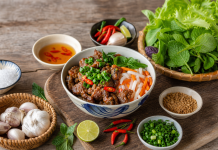
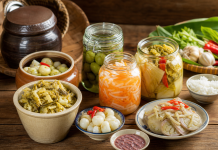

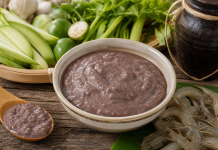
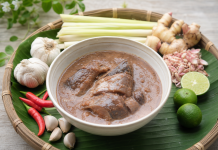
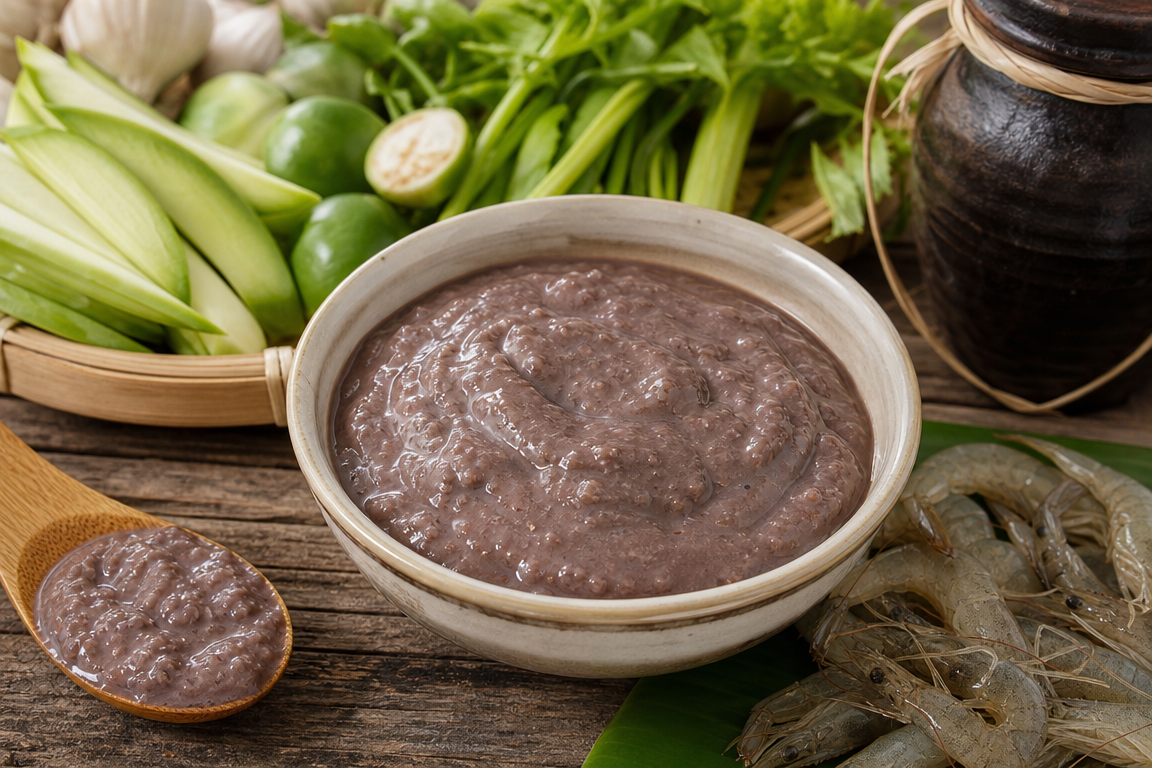
Mắm ruốc is a Vietnamese fermented shrimp seasoning used to bring a concentrated savory character to food. Its pronounced aroma makes it an ingredient to measure carefully: a small amount can add depth without becoming the dominant flavor.
For cooks unfamiliar with it, the most useful approach is to treat it as a seasoning rather than a ready-to-use sauce. Check the product label, loosen a small portion when necessary, and taste the finished dish before adding more salt or other salty ingredients.
What Is Mắm Ruốc?
Mắm ruốc belongs in the sauces and condiments category, but its role is often closer to a concentrated flavoring. Fermented shrimp gives it a distinctive savory identity, with an aroma that can seem much stronger on its own than after it has been incorporated into a dish.
The name alone does not establish a product’s exact ingredients, texture, salt level, or preparation requirements. Those details should come from the container. This matters especially when following a recipe written for a different brand or an unspecified shrimp seasoning.
Flavor and characteristics
The key characteristics to consider are fermented aroma, shrimp flavor, and saltiness. Rather than judging it by smell alone, assess a small amount in the food you are preparing. Dilution and the balance of the complete dish affect how prominent it tastes.
A useful goal is integration: the seasoning should support the dish unless a strong fermented-shrimp character is specifically what you want. Adding more is easy; removing an excessive amount is not.
How to Use Mắm Ruốc in Vietnamese Cooking
Mắm ruốc can serve as a savory foundation or a finishing adjustment in a cooked preparation. The following are practical ways to work with the ingredient, not claims about a particular regional recipe or traditional formula.
- In a broth or sauce: Loosen a small portion with some of the cooking liquid before stirring it into the pot. This helps distribute the seasoning instead of leaving concentrated pockets.
- With sautéed aromatics: Incorporate a diluted portion into a cooked mixture of ingredients such as garlic or shallot. Avoid leaving a thick dab directly against a hot, dry pan.
- As part of a cooked condiment: Combine a modest amount with water and other seasonings, then cook according to the product’s directions. Adjust the balance after cooking.
When using it in a recipe that also contains fish sauce, soy sauce, or salt, hold back some of those ingredients initially. Taste before adding the full amount. Sugar, acidity, and chile can change the overall balance, but they do not remove salt from an overly seasoned dish.
A proposed starter preparation
This small cooked seasoning mixture is a suggested starting point, not a historically authentic or tested recipe. Follow any preparation requirements on your product’s label; the brief method below is not a substitute for those instructions.
- ½ teaspoon mắm ruốc
- 2 tablespoons water, plus more as needed
- 1 teaspoon neutral cooking oil
- 1 small garlic clove, finely chopped
- A small pinch of sugar, optional
- Stir the mắm ruốc with the water in a small bowl to loosen it.
- Warm the oil in a small saucepan over medium-low heat. Add the garlic and stir until fragrant, without letting it burn.
- Add the diluted seasoning carefully; liquid may sputter when it meets hot oil. Stir and bring to a gentle simmer.
- Continue cooking as directed by the product label, adding water if the mixture becomes too thick.
- Let a spoonful cool before tasting. Add the optional sugar only if you prefer that balance, then incorporate the mixture into a cooked dish a little at a time.
Similar Names and Possible Substitutes
Mắm ruốc, mắm tôm, and mắm tép
These names should not be treated as interchangeable product specifications. If a recipe calls for mắm ruốc, a container labeled mắm tôm or mắm tép is not automatically an exact match. Compare the ingredient list, consistency, preparation directions, and intended use rather than relying on an English label such as “shrimp paste.”
Choosing a substitute
Another fermented shrimp seasoning may provide a related flavor, but differences in concentration and saltiness can change the result. Begin with less than the recipe’s stated amount and adjust gradually, following the substitute’s cooking instructions.
Fish sauce can supply saltiness and savory flavor when the fermented-shrimp character is not essential, but it is not a flavor-identical replacement. Soy sauce is also a different seasoning and will change the dish’s flavor. Neither should be presented as an equivalent simply because it adds savory depth.
Handling and Storage
Follow the container’s directions for unopened and opened storage, refrigeration, and use-by guidance. Fermentation alone is not a reason to assume that an opened product can stay at room temperature indefinitely.
Use a clean utensil each time, close the container promptly, and avoid returning diluted seasoning or cooking leftovers to the original package. Keep any prepared mixture separate from the undiluted product. If storage instructions are missing or unclear, ask the manufacturer rather than guessing at a shelf life.
Frequently Asked Questions
Can mắm ruốc be eaten without cooking?
Do not assume so from the name. Use it without cooking only when the product is clearly labeled for that use. Otherwise, follow its preparation instructions.
How much should I add?
Start with a small amount, especially when using an unfamiliar product. Dilute it for even distribution, incorporate it into the dish, and taste before increasing it.
Is it suitable for someone with a shrimp allergy?
No. Mắm ruốc is a shrimp seasoning. Someone avoiding shrimp should not use it, and should check substitute labels and relevant allergen information carefully.
What if the dish tastes too strong?
Increase the unseasoned portion of the dish when practical—for example, by adding more unsalted broth or other main ingredients. Extra sugar or lime may alter the balance, but neither removes excess seasoning.