
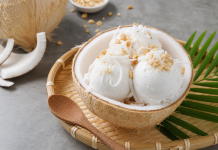


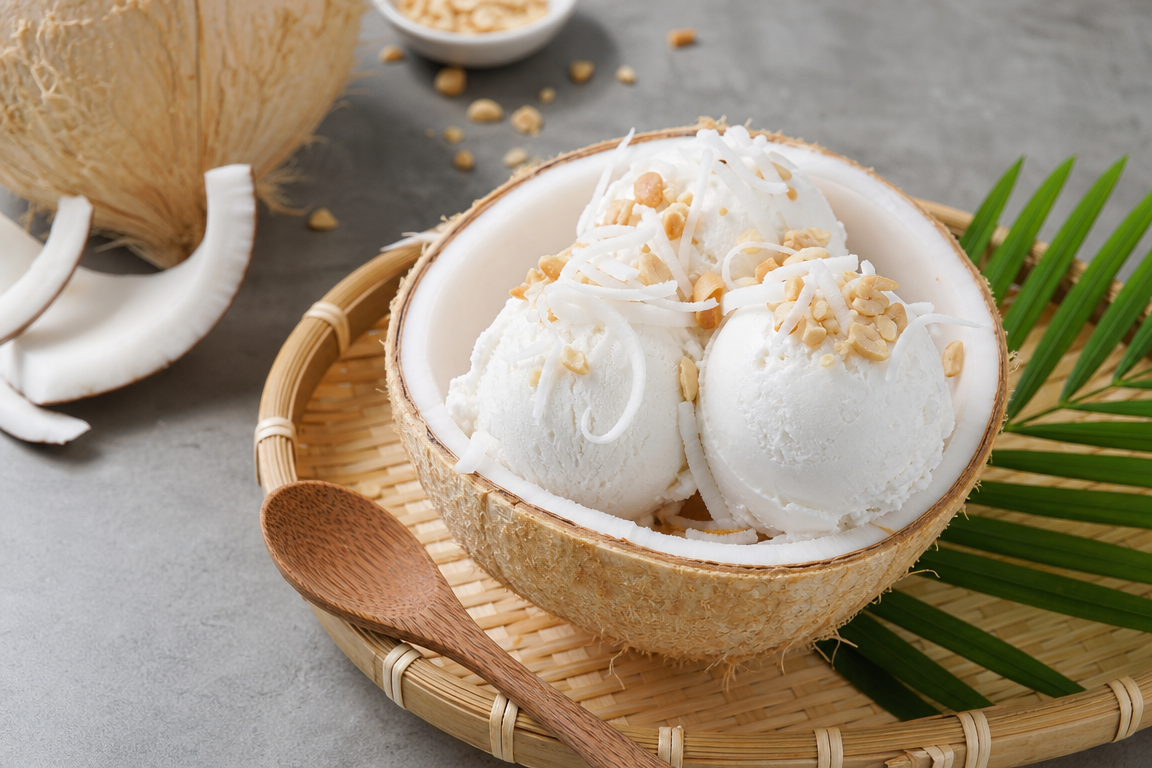
Vietnamese coconut ice cream, or kem dừa, puts coconut flavor at the center of a cold, creamy dessert. This proposed home recipe combines full-fat coconut milk with whipped cream for a no-churn version that does not require an ice cream machine. A small amount of cornstarch thickens the coconut base before freezing.
The result is a rich, scoopable dessert with a straightforward ingredient list. It will become firm in a home freezer, so a short softening period before serving makes a noticeable difference. Enjoy it plain, finish it with toasted coconut, or pair it with fresh fruit.
Recipe Overview
- Yield: About 1 quart, or 6 servings
- Active preparation: 20 minutes
- Cooking: 10 minutes
- Chilling: About 2–4 hours, until the cooked base is thoroughly cold
- Freezing: 6–8 hours, or until firm
- Equipment: Small saucepan, whisk, mixing bowls, electric mixer, flexible spatula, and a freezer-safe container
The preparation and cooking estimates do not include chilling, freezing, or softening before serving. Plan to make the ice cream well ahead of when you want to serve it.
Ingredients
- 1 can (13.5 ounces) unsweetened full-fat coconut milk, well stirred
- 1/2 cup granulated sugar
- 1 tablespoon cornstarch
- 1/4 teaspoon fine salt
- 1 cup heavy whipping cream, cold
- 1 teaspoon vanilla extract, optional
- 1/4 cup toasted unsweetened coconut flakes, optional, for serving
Choosing the coconut milk and cream
Use canned full-fat coconut milk rather than a refrigerated coconut beverage. The latter is usually much thinner and is not a direct substitute in this formula. Sweetened cream of coconut is also a different product and would change both the sweetness and consistency.
If the coconut milk has separated in the can, stir it thoroughly before measuring out the portion for the cornstarch slurry. Keep the heavy cream refrigerated until you are ready to whip it; cold cream is easier to whip into a stable foam.
How to Make Coconut Ice Cream
- Make a smooth slurry. Measure 2 tablespoons of the stirred coconut milk into a small bowl. Add the cornstarch and whisk until no dry pockets remain. Put the remaining coconut milk in a small saucepan with the sugar and salt.
- Cook the coconut base. Warm the saucepan over medium-low heat, whisking frequently, until the sugar dissolves and the mixture is steaming. Stir the slurry again, then whisk it into the saucepan. Bring to a gentle simmer and cook for about 1 minute, stirring continuously, until slightly thickened. Allow about 10 minutes for this cooking stage. Remove from the heat and stir in the vanilla, if using.
- Chill thoroughly. Transfer the base to a shallow heat-safe bowl. Cover its surface with food-safe wrap to limit skin formation, then refrigerate until completely cold, about 2–4 hours. Do not combine a warm base with whipped cream, because the warmth can collapse the foam.
- Whip the cream. Pour the cold heavy cream into a mixing bowl. Beat with an electric mixer until medium peaks form: the cream should hold its shape, with the tip of a lifted peak bending slightly. Stop before it becomes stiff or grainy.
- Combine gently. Whisk the chilled coconut base briefly to loosen it. Fold about one-third of the whipped cream into the base, then gently fold in the rest with a flexible spatula. Scrape along the bottom of the bowl so no dense streaks remain, while avoiding unnecessary stirring.
- Freeze. Transfer the mixture to a freezer-safe container with a tight-fitting lid. Smooth the top and press food-safe wrap directly against the surface before covering. Freeze for 6–8 hours, or until firm enough to scoop. Measuring, whipping, folding, and transferring take about 20 minutes of active preparation altogether.
- Soften and serve. Let the container stand at room temperature for about 10–15 minutes before scooping, adjusting as needed for your room temperature and freezer. Serve plain or sprinkle with the optional toasted coconut flakes.
Tips for a Creamier Texture
Cool the base completely
The coconut mixture needs to be cold throughout, not merely cool around the edges. A shallow bowl helps it chill more evenly. If it thickens noticeably in the refrigerator, a brief whisking will make it easier to fold into the cream.
Keep some air in the mixture
Whipped cream supplies the air that an ice cream machine would otherwise incorporate. Fold slowly and stop once the mixture looks uniform. Vigorous whisking after adding all the cream can knock out that air and produce a denser scoop.
Do not expect it to stay soft straight from the freezer
This no-churn formula can freeze quite firm. Letting it soften briefly is part of serving it, not a sign that the recipe has failed. Avoid repeatedly melting and refreezing the whole container, which can encourage a coarser texture.
Serving Suggestions
For a simple presentation, spoon the ice cream into small bowls and add toasted coconut just before serving. The flakes provide crunch without changing the ice cream base.
Fresh mango or sliced banana makes an easy accompaniment. Chopped roasted peanuts can also add contrast if nuts suit your guests. These are optional serving ideas for this recipe, not a claim about a required or traditional presentation.
Suitable Variations
- Coconut without vanilla: Omit the optional vanilla for a more focused coconut flavor.
- Coconut crunch: Fold 2 tablespoons of the optional toasted coconut flakes into the mixture before freezing, reserving the rest for serving. The flakes will become chewier in the ice cream.
- Fruit-topped bowls: Add fresh fruit at serving time rather than stirring large pieces into the base, where they can freeze hard.
Frequently Asked Questions
Do I need an ice cream maker?
No. This recipe uses whipped heavy cream to incorporate air before freezing. It is designed for a freezer-safe container rather than a churn.
Can I use light coconut milk?
It is not recommended as a direct swap here. Its lower fat content can produce a less creamy, icier result. Full-fat coconut milk is the better fit for these proposed quantities.
Is this coconut ice cream dairy-free?
No. Although coconut milk supplies the main flavor, this version also contains dairy cream. Replacing it would require a separate formula or adjustments rather than a guaranteed one-for-one substitution.
How should I store leftovers?
Keep the ice cream covered in the freezer, with food-safe wrap against the surface to reduce exposure to air. Use a clean scoop and return the container to the freezer promptly after serving. For the best texture, aim to enjoy it within about 2 weeks; that is a quality guideline, not a precise safety deadline.