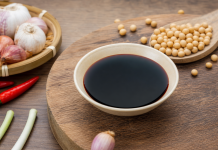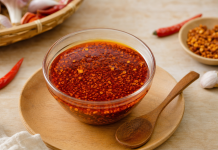



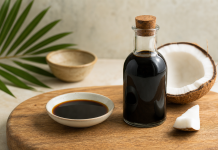
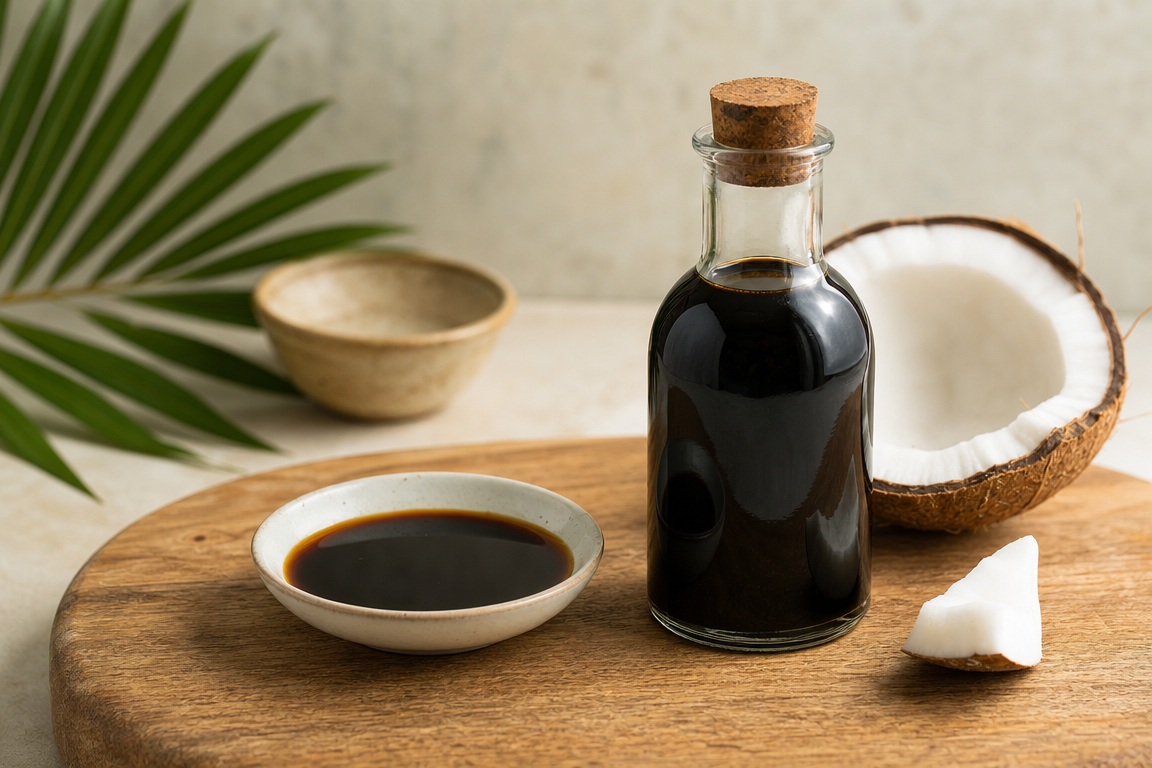
Coconut aminos is a liquid seasoning that can serve as an alternative to soy sauce in Vietnamese-style cooking. Its sweet-salty character makes it useful for dipping sauces, marinades, stir-fries, and simple vegetable dishes, although it is not a direct flavor match for either soy sauce or fish sauce.
Known here by the Vietnamese name nước tương dừa, coconut aminos is best understood as an ingredient option rather than a marker of traditional preparation. The most useful approach is to consider what a dish needs—saltiness, sweetness, savory depth, or acidity—and adjust the seasoning accordingly.
What Is Coconut Aminos?
Coconut aminos is a coconut-derived liquid seasoning commonly positioned as a soy sauce alternative. Products typically use coconut sap and salt, but ingredients and processing can vary. The label is the best guide to what a particular bottle contains.
Despite the coconut connection, it is not interchangeable with coconut milk, coconut cream, or coconut water. Those ingredients have different textures and culinary functions. Coconut aminos belongs in the seasoning category: it is added in relatively small amounts to influence a dish’s flavor.
Understanding Similar Names
The name nước tương dừa distinguishes this ingredient from ordinary soy sauce, but a name alone does not establish a product’s composition. A coconut-labeled seasoning might have a different formulation, so check the ingredient list rather than relying only on the front label.
Coconut aminos is also different from fish sauce, or nước mắm. Fish sauce contributes a distinctive fermented, savory character that coconut aminos does not reproduce. Likewise, “liquid aminos” is not necessarily another name for coconut aminos; products using that term may be soy-based.
Flavor and Cooking Characteristics
Coconut aminos generally tastes salty and sweet, with a mild savory quality. Its balance varies by brand, and some bottles taste noticeably sweeter than others. It should not be expected to add the richness or creamy coconut flavor associated with coconut milk.
Compared with many soy sauces, coconut aminos can taste gentler and sweeter. That difference matters when replacing a seasoning in a recipe: using the same volume may leave a dish sweeter or less assertively seasoned than intended. Compare the actual products rather than assuming they have equivalent saltiness.
In hot cooking, the liquid becomes more concentrated as moisture evaporates. Add it gradually, especially in a reduced sauce or glaze, so sweetness and saltiness do not become excessive.
Using Coconut Aminos in Vietnamese-Style Cooking
Dipping Sauces
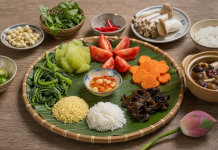
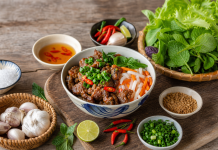
Coconut aminos can provide the sweet-salty base for a dipping sauce with lime juice, water, garlic, and chile. Such a sauce can accompany fresh rolls, tofu, or simply prepared vegetables. Because the seasoning already brings sweetness, taste the mixture before adding sugar.
This is an adaptation, not a claim that coconut aminos duplicates a fish-sauce-based dipping sauce. Replacing fish sauce changes the finished flavor, even when the sauce has a similar balance of sweet, sour, and salty elements.
Marinades and Pan Sauces
For a proposed marinade, combine coconut aminos with garlic or lemongrass and a little cooking oil. It can season tofu, mushrooms, or meat before cooking. Keep any portion intended for serving separate from a portion that touches raw meat.
For a quick pan sauce, add a small splash with water to loosen flavorful browned bits. Let the mixture reduce briefly, then taste before adding more seasoning. A squeeze of lime after cooking can provide contrast if the sauce tastes too sweet.
Stir-Fries and Noodle Dishes
Coconut aminos can season stir-fried vegetables, tofu, or noodles. Add a little at a time and toss thoroughly to distribute it. Avoid pouring in extra liquid simply to deepen the color; a darker appearance does not necessarily mean a better-balanced dish.
A Proposed Lime Dipping Sauce
This small-batch formula is a starting point, not a traditional or personally tested recipe. Adjust it to the sweetness and saltiness of your bottle.
- 2 tablespoons coconut aminos
- 1 tablespoon fresh lime juice
- 1 tablespoon water
- 1 small garlic clove, finely minced, optional
- Finely sliced fresh chile, to taste, optional
- Stir together the coconut aminos, lime juice, and water.
- Add the optional garlic and chile.
- Taste with the food the sauce will accompany. Add water if too concentrated, lime juice if too sweet, or a little more coconut aminos if too diluted.
Keep the finished sauce covered and refrigerated if it is not being served immediately, and use it promptly. Do not pour leftover dipping sauce back into the original bottle.
Storage and Handling
Follow the manufacturer’s storage instructions, including any requirement to refrigerate after opening. Shelf life varies with formulation and packaging, so there is no single reliable storage period for every coconut aminos product.
Close the cap securely and avoid touching the bottle opening with used utensils. A homemade sauce containing fresh lime juice, garlic, or other additions should be handled separately from the bottled seasoning; the bottle’s storage guidance does not automatically apply to that mixture.
Relevant Substitutes
- Soy sauce: Useful when the main goal is liquid savory seasoning. Start with less and adjust, since its saltiness and flavor may be stronger.
- Tamari: Another option for savory seasoning, but not necessarily an identical substitute. Check the label for ingredients and dietary requirements.
- Fish sauce: Appropriate only when its distinctive flavor suits the dish. It changes the character of a coconut-aminos-based preparation rather than closely matching it.
Frequently Asked Questions
Is coconut aminos the same as coconut milk?
No. Coconut aminos is a seasoning, while coconut milk contributes liquid, body, and richness. Substituting one for the other would substantially change a recipe.
Can it replace soy sauce one-for-one?
Sometimes that is a workable starting point, but it is not a dependable rule. Sweetness and saltiness differ, so gradual adjustment is more useful than a fixed conversion.
Is it automatically suitable for a soy-free or gluten-free diet?
Do not rely on the product name alone. Check the ingredient list, allergen information, and any relevant labeling on the specific bottle.
Does using it make a dish traditionally Vietnamese?
No single condiment establishes that. Coconut aminos can be used in Vietnamese-style preparations, but its inclusion should be described as an ingredient choice or substitution rather than proof of tradition.