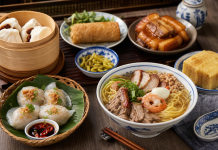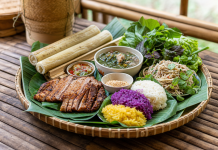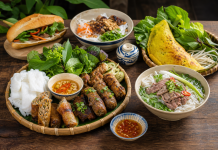

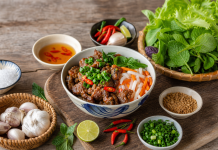
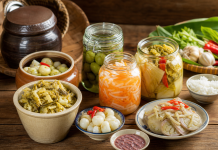
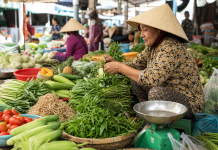
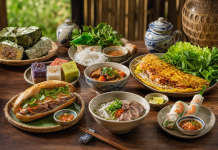
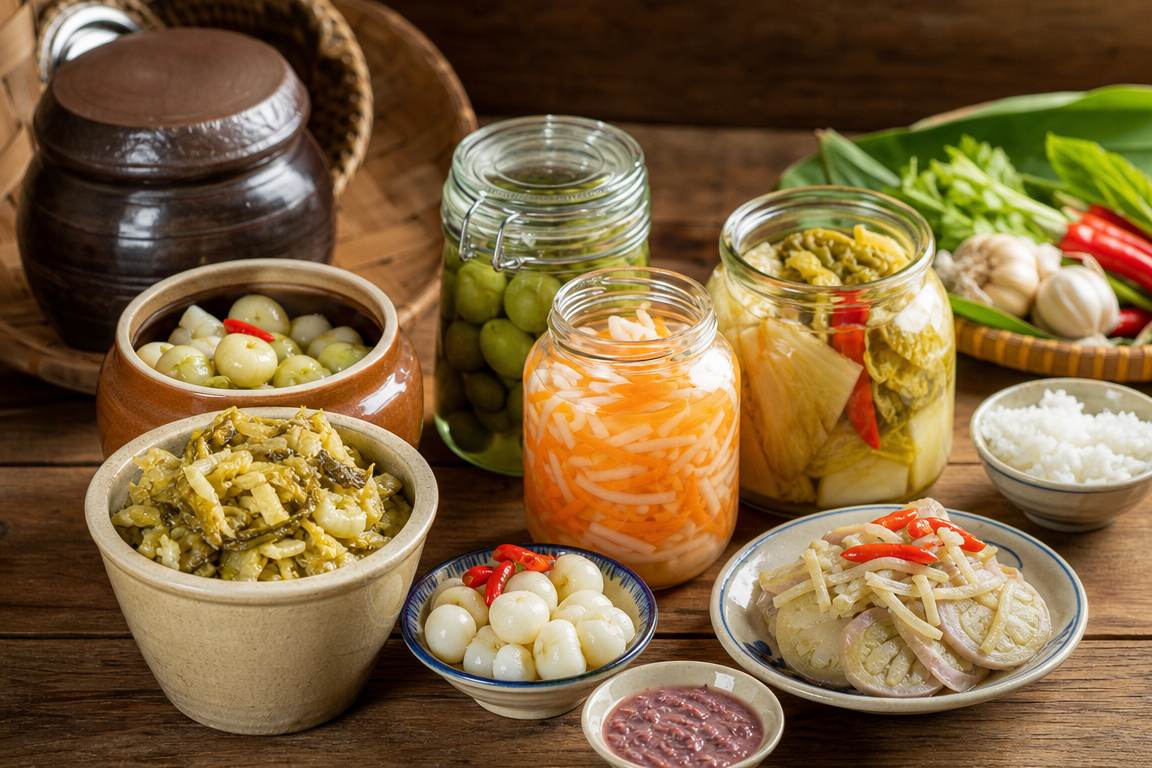
Vietnamese fermentation culture offers a way to understand food through transformation: ingredients change as microorganisms and enzymes act on them, developing new aromas, textures, and flavors. The Vietnamese phrase Văn hóa lên men trong ẩm thực Việt Nam names this broad subject, which connects food preparation with the ways fermented ingredients are served and appreciated.
A useful guide begins with distinctions rather than a single definition of “fermented food.” A salty condiment, a sour vegetable, and a fermented rice preparation do not follow the same process or play the same role at the table. Understanding those differences makes Vietnamese food easier to navigate without assuming that every household, producer, or region follows one formula.
What Fermentation Changes in Food
Fermentation involves microorganisms transforming components of food. Depending on the ingredients and process, those changes can produce acidity, alcohol, gas, and distinctive aromas. Enzymes can also break larger food molecules into smaller ones, contributing to changes in flavor and texture.
Not every transformation is obvious. A fermented vegetable may taste noticeably sour, while a fermented condiment may be recognized more for its savory depth. Strong aroma alone does not define fermentation, and neither does sourness: vinegar can make a food sour without that food undergoing fermentation itself.
For readers exploring Vietnamese foods, three questions provide a practical starting point:
- What is being transformed? Vegetables, seafood, and rice require different approaches.
- What controls the process? Salt, temperature, acidity, time, and starter cultures can matter in different combinations.
- How is the result used? A seasoning, dipping component, side dish, and standalone preparation have different culinary purposes.
Understanding Traditional Fermented Food Categories
Food names are helpful starting points, but they should not be treated as complete descriptions. Ingredients, production methods, and serving preparations can differ. The categories below offer a way to read menus and understand familiar terms without assigning a single recipe to Vietnamese food culture.
Fish Sauce and Seafood-Based Condiments
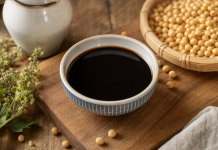
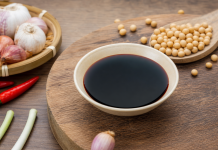
Nước mắm, or fish sauce, illustrates why fermentation is not simply another word for sourness. Its culinary importance is easier to understand through saltiness, savory flavor, and aroma. It can function as a seasoning, while a prepared dipping sauce may combine fish sauce with other ingredients.
That distinction matters when comparing tastes. Fish sauce directly from a bottle is not equivalent to a dipping mixture made with it. Added water, sugar, citrus, or other ingredients can change its intensity and balance.
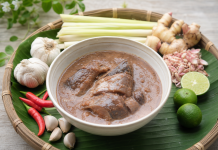
Seafood pastes, including products described as mắm tôm, belong in a separate discussion from bottled fish sauce. Texture, concentration, and preparation affect how they are used. Rather than treating all fermented seafood condiments as interchangeable, consider the specific product and the dish it accompanies.
Fermented Vegetables
Vegetable preparations bring another set of qualities into focus: acidity, moisture, and texture. Dưa cải is a useful term to recognize when exploring Vietnamese preserved vegetables, but a name alone does not establish exactly how a particular batch was made.
The important distinction is between fermentation and direct acidification. In vegetable fermentation, microorganisms can produce acids from available sugars. In a quick pickle, added vinegar supplies acidity directly. Both methods can produce a sour accompaniment, but they are not the same process.
When a preparation method is unknown, “pickled” or “sour” is not enough evidence to call the food fermented. This is especially useful when reading abbreviated menu descriptions or recipes that use the terms loosely.
Fermented Rice Preparations
Rice-based fermentation introduces a different transformation. Starch must first become available in forms that microorganisms can use, and some preparations involve starter cultures that support that process. Depending on the method, sweetness, acidity, and alcohol may all be relevant to the finished food.
The term cơm rượu provides an entry point into this category. It should not be used to assume a fixed sweetness, texture, or alcohol content. A particular preparation needs its own description, especially when alcohol avoidance matters.
Methods: Why One Fermentation Formula Does Not Fit All
Salt and Brine
Salt can influence which microorganisms grow, draw moisture from ingredients, and affect texture. In some preparations, a brine helps create the environment in which fermentation takes place. However, the presence of salt does not by itself prove that a food has fermented.
Salt quantities are also not interchangeable across categories. A vegetable brine cannot serve as a general model for seafood fermentation. Ingredient composition, handling, and the intended finished product all change the requirements.
Starter Cultures
A starter introduces microorganisms suited to a particular transformation. This differs from relying on microorganisms already present on ingredients or in the preparation environment. Neither approach should be described as a universal Vietnamese method.
For practical purposes, a recipe that calls for a specific starter should be understood on its own terms. Replacing it with an unrelated culture may change the process rather than merely adjusting the flavor.
Time and Temperature
Fermentation depends on conditions, not simply the number of days that pass. Temperature can affect microbial activity, while ingredient size, salt concentration, and acidity can influence how a preparation develops.
This is why instructions such as “leave until sour” are incomplete as general safety guidance. A reliable procedure needs defined ingredients, measurements, handling instructions, and storage conditions appropriate to that food.
Reading Fermented Flavors at the Table
Fermented foods are easier to understand when considered in relation to the rest of a meal. A concentrated condiment contributes differently from a spoonful of sour vegetables. One may season another food; another may provide a contrasting bite.
When tasting, separate the main sensations:
- Saltiness: How concentrated is the seasoning?
- Acidity: Does the food provide a sharp or rounded sour note?
- Aroma: Is it mild, pronounced, or especially noticeable before tasting?
- Texture: Is the food liquid, paste-like, crisp, soft, or grain-based?
This approach avoids reducing fermentation to “strong-smelling food.” It also explains why serving quantity and preparation matter: a concentrated ingredient can have a very different effect when diluted, mixed, or eaten alongside other foods.
Safety and Storage Deserve Their Own Attention
Fermentation is not an automatic guarantee of safety or shelf stability. A food’s aroma, sour taste, or traditional description cannot establish that it was prepared correctly. Storage requirements depend on the particular product and process.
For packaged foods, follow the label’s handling and refrigeration instructions. For home preparation, use a food-specific, safety-focused recipe rather than adapting a method from an unrelated fermented food. Do not taste a questionable batch to decide whether it is safe.
Fermented also does not automatically mean probiotic. Processing and storage can affect whether living microorganisms remain, and their presence alone does not establish a health benefit.
Frequently Asked Questions
Are all Vietnamese pickled vegetables fermented?
No. Vegetables can become sour through fermentation or through added acid, such as vinegar. The preparation method determines which description is accurate.
Is fish sauce the same as a prepared dipping sauce?
No. Fish sauce is an ingredient that may be used in a dipping sauce. Additional ingredients can change the finished sauce’s saltiness, sweetness, acidity, and strength.
Does every fermented food contain alcohol?
No. Different fermentation processes produce different results. For a rice-based preparation where alcohol may be relevant, consult the specific product or preparation details rather than assuming it is alcohol-free.
Is there one standard Vietnamese fermentation method?
No single method explains all the food categories discussed here. Vietnamese fermentation culture is better approached by distinguishing ingredients, processes, and culinary uses—not by treating every fermented food as a version of the same recipe.