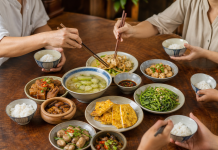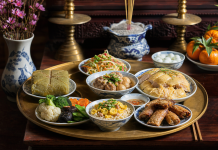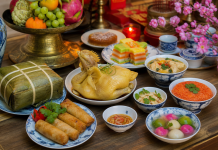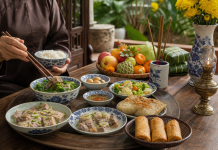


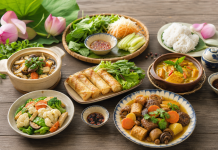
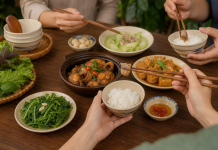
Food can give a calendar date meaning: a meal to prepare, someone to remember, or an occasion to share with family. Exploring Vietnamese food traditions through the lunar calendar means paying attention to those connections—not simply making a list of dishes assigned to particular days.
The Vietnamese name for this subject, Ẩm thực Việt Nam theo lịch âm, places food and the lunar calendar together. A useful guide should keep both in view while distinguishing a household’s practice from a broader cultural claim. The approach below offers a way to understand, record, and plan calendar-linked meals without treating one menu as a rule for everyone.
Start with the Occasion, Not a Fixed Menu
Before asking what to cook, establish what the date means to the people observing it. Is the meal intended as a family gathering, a quiet observance, a remembrance, or another kind of occasion? These are questions to ask, not purposes to assume.
The answer helps explain the role of the food. A dish chosen because someone loves it carries a different meaning from a dish that a family considers necessary for a particular observance. Both deserve attention, but they should not be described in the same way.
Separate three pieces of information:
- The calendar date: Which lunar month and day are being observed?
- The occasion: What does that date mean in this particular setting?
- The food practice: What is prepared, served, shared, or set aside, and why?
Keeping these details separate prevents a common misunderstanding: assuming that seeing a food at one calendar-linked meal proves it belongs to every observance on that date.
Read Calendar Dates Carefully
When planning a meal around the lunar calendar, record the lunar date explicitly rather than leaving an unlabeled number in a notebook or message. If a corresponding civil-calendar date is needed for shopping or invitations, keep it beside the lunar date and include the year.
For an actual gathering, confirm the intended date with the host or organizer. Do not calculate it from a remembered date in a previous year. Also clarify whether the preparation, observance, and shared meal are intended to happen on the same day. Those are practical scheduling questions, not details to infer from the menu.
A useful planning note might read: “Lunar date: to be confirmed. Meal date and time: to be confirmed with the host. Menu: based on the household’s preferences.” That is more reliable than assigning a traditional meaning to an unconfirmed date.
Understand What a Dish Means in Context
A food’s name alone does not explain its place in an occasion. To understand the meal, look at how the dish is used and how the people preparing it describe it.
Ask whether it is required, preferred, or convenient
These categories help clarify a menu without ranking its dishes. A household might describe one item as essential to its own observance, another as a favorite, and another as a practical addition for feeding guests. Record that distinction in the household’s terms rather than labeling everything “traditional.”
Separate ingredients from symbolism
An ingredient list explains what a dish contains. It does not, by itself, establish what that dish symbolizes. If someone gives a symbolic explanation, preserve who offered it and the context in which it applies. Without that explanation, describe the food plainly rather than supplying an appealing story.
Notice preparation and serving
Questions about who prepares a dish, when it is served, and how it is shared can reveal details that a recipe misses. Ask whether any sequence or arrangement matters for this occasion. If none is specified, there is no need to invent a ceremonial order.
Keep Household and Regional Descriptions Precise
Vietnamese food culture should not be reduced to a single calendar menu. When documenting a meal, the most useful description is often the narrowest one that the available information supports.
For example, “This family prepares this dish for this occasion” is a different claim from “This region prepares this dish” or “Vietnamese people eat this on this date.” Each broader statement requires more information. A family connection to a place does not automatically establish a regional rule.
The same care applies to the word authentic. Instead of using it as a blanket judgment, describe something concrete: the cook’s preferred ingredients, a preparation method explained by the family, or the reason a dish was selected. Specific descriptions are more informative than an unsupported label.
Plan a Calendar-Linked Meal Without Inventing a Tradition
The following is a proposed planning method, not a prescribed Vietnamese holiday menu. It is intended for a meal whose occasion and expectations have already been discussed with the people involved.
- Confirm the purpose and date. Establish what is being observed and when the meal should take place.
- Identify any requested dishes. Ask the host which foods matter to this particular gathering before adding your own choices.
- Check dietary needs. Clarify ingredient restrictions, allergies, and preferences rather than assuming the occasion determines them.
- Build the rest of the menu around practical needs. Consider the number of diners, cooking equipment, preparation time, and how the food will be served.
- Label adaptations honestly. If an ingredient or dish changes, explain the substitution without claiming that it preserves every original meaning.
For an informal meal with no specified dishes, one possible planning structure is a staple, a vegetable dish, a protein dish, and a soup. This is simply a suggested way to organize dinner, not a lunar-calendar custom. The people hosting the occasion should determine whether that structure fits.
Create a Useful Food Calendar
A personal food calendar can preserve practical knowledge without turning it into a universal rule. Keep entries short enough to reuse, but detailed enough to explain why a menu was chosen.
For each occasion, record:
- The lunar date and the confirmed meal date.
- The name or purpose of the occasion, as explained by the participants.
- The dishes requested and the person who requested them.
- Any preparation or serving details that were specifically explained.
- Substitutions, dietary adjustments, and unresolved questions.
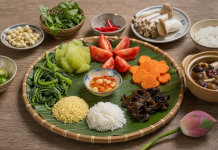
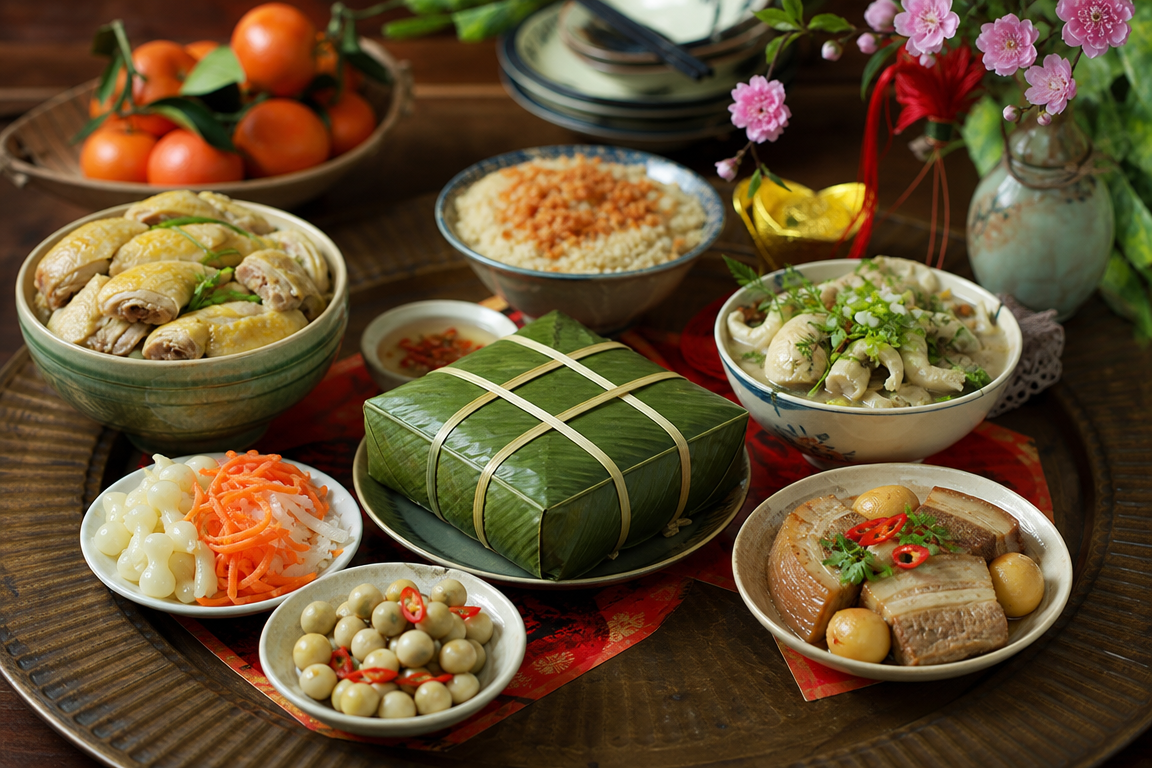
Avoid filling gaps with guesses. “Reason not recorded” is more useful than an invented explanation, because it leaves a clear question for a future conversation. Likewise, a photograph can document appearance, but it cannot establish a dish’s symbolism or cultural scope on its own.
Frequently Asked Questions
Does every lunar-calendar occasion have a set Vietnamese menu?
A fixed menu should not be assumed. For a specific occasion, ask the people observing it which dishes they consider important. Describe their answer at the level they support: personal, household, or something broader if there is a clear basis for that description.
Can a familiar dish become part of a family’s calendar-linked meal?
A family can choose a familiar dish for its own gathering. That choice can be described accurately as part of that family’s meal, without presenting it as a longstanding or nationwide tradition.
How should substitutions be described?
State what changed and why. An ingredient may have been unavailable, a guest may have had a dietary restriction, or the host may simply have preferred another option. Whether a substitution affects the meaning of the meal is a question for the people observing it, not something to decide from the recipe alone.
A Calendar of Meals, Not Just Dishes
The most informative way to approach Vietnamese food and the lunar calendar is to connect each meal with its date, participants, and stated purpose. Recipes show how food is prepared; conversations and careful notes explain why it belongs at a particular gathering. Keeping those kinds of knowledge distinct makes room for meaningful detail without turning one household’s table into a rule for everyone.