

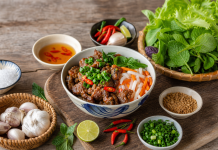
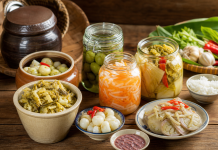

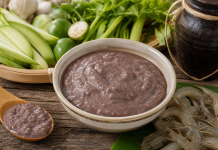
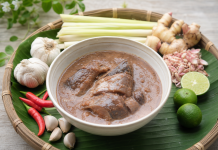
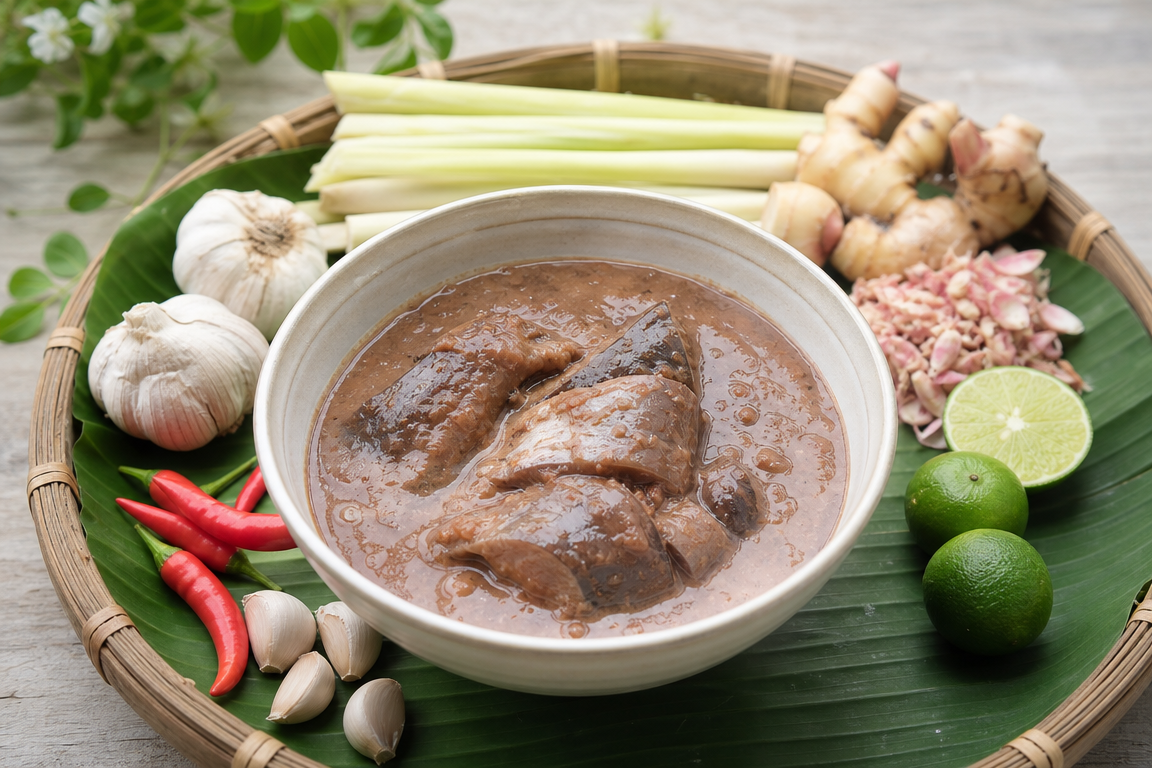
Mắm cá is a Vietnamese fermented fish condiment. Its Vietnamese description, cá lên men, means fermented fish, making the ingredient’s basic identity clear. What the name alone does not establish is the fish used, the finished texture, or how a particular product should be prepared.
Those distinctions matter in the kitchen. Rather than treating every container as interchangeable, consider its consistency, seasoning intensity, and preparation directions. A small amount may be enough to influence an entire dish, so measured additions are more useful than a fixed, universal quantity.
What Is Mắm Cá?
Mắm cá belongs in the sauces and condiments category, but “condiment” does not necessarily mean a smooth, pourable sauce. The term identifies fermented fish without specifying one standardized format. Check the product itself to see whether it contains recognizable fish pieces, a softer mixture, or a consistency suited to spooning.
The name also leaves several practical questions unanswered: whether bones are present, whether additional ingredients have been added, and whether the product requires cooking. These are product-specific details, not facts that can be settled from the words mắm cá alone.
Mắm cá versus fish sauce
Do not automatically read mắm cá as another name for bottled Vietnamese fish sauce, commonly called nước mắm. For recipe purposes, fermented fish and a pourable fish sauce are not necessarily interchangeable. Their texture, concentration, and contribution to a dish can differ.
Likewise, a similar-looking name on a label does not guarantee an equivalent ingredient. When following a recipe, match the ingredient description and physical form as well as the Vietnamese name.
Flavor and Characteristics
Fermented fish can bring a pronounced savory character and a distinctive aroma. The exact strength, saltiness, and texture of mắm cá depend on the product. Avoid assuming that one jar will taste or behave exactly like another.
A useful way to assess it is to separate three questions:
- Intensity: How much does a small quantity affect the aroma and flavor of the food?
- Seasoning: How much additional salt or other salty seasoning does the dish still need?
- Texture: Will fish pieces remain noticeable, or will the condiment disperse into the cooking liquid?
Follow any cooking instructions before tasting. Aroma alone cannot establish whether a fermented food is safe, and a strong smell is not, by itself, a reliable way to distinguish normal fermentation from spoilage.
Using Mắm Cá in Vietnamese Cooking
When a Vietnamese recipe specifies mắm cá, treat it as a defining ingredient rather than an incidental seasoning. Substituting a different fish condiment may change both the texture and the balance of the finished dish.
The most practical approach is to identify what the recipe expects the fermented fish to do. Is it meant to disperse through a cooking liquid, remain in pieces, or become part of a prepared condiment? That function helps determine how to incorporate the product without assuming that every variety needs the same treatment.
Adding it to a cooked dish
If the product directions permit this use, mixing a small portion with some of the dish’s cooking liquid can make it easier to distribute. Add it gradually and delay other salty seasonings until the mixture has been cooked as directed and can be tasted safely.
Ingredients already present in the dish should guide further adjustments. More liquid can reduce concentration; an acidic ingredient can shift the balance toward brightness; sweetness can soften the perception of an assertive flavor. None of these adjustments removes excess salt, so restraint at the beginning remains important.
A proposed small-batch starting point
For a cooked vegetable dish, a cautious starting experiment is to combine ¼ teaspoon of mắm cá with 2 tablespoons of the dish’s cooking liquid, then stir that mixture into the pan. Follow the product’s heating directions before tasting, and increase only in small increments.
This is a proposed kitchen starting point, not a traditional formula or a tested recipe. It may be too little or too much for a particular product, and it is not a substitute for package instructions.
Preparation and Storage
Before opening, read the ingredient list, storage directions, and any preparation warnings. Check specifically whether the product contains bones or requires cooking. Do not assume fermentation makes every product ready to eat or suitable for room-temperature storage.
- Follow the manufacturer’s instructions for storage before and after opening.
- Use a clean utensil each time, and avoid returning unused portions to the original container.
- Keep the container closed between uses.
- Do not assign a universal refrigerated shelf life to all mắm cá products.
If storage or cooking directions are missing, seek product-specific guidance rather than guessing. Do not taste a questionable product to determine whether it is safe.
Relevant Substitutes
There is no guaranteed one-for-one substitute. The best alternative depends on whether the dish needs fish flavor, savory seasoning, texture, or all three.
Fish sauce may serve as a partial seasoning substitute when texture is unimportant, but it will not reproduce fish pieces or necessarily provide the same fermented character. Begin with a small amount rather than replacing spoonful for spoonful.
A non-fish savory condiment may help season a dish that must avoid fish, but it creates a different result. Check its ingredients and salt level, and do not describe the finished dish as having an equivalent mắm cá flavor.
Frequently Asked Questions
Does mắm cá identify a particular fish?
No particular species is specified by the supplied name. Check the ingredient list for that information.
Can mắm cá be eaten without cooking?
That cannot be determined from the name alone. Follow the specific product’s preparation directions; do not assume it is ready to eat.
Should I add salt when cooking with it?
Wait until the condiment has been incorporated and prepared as directed before deciding. Its seasoning contribution can affect how much additional salt the dish needs.
Is mắm cá suitable for someone avoiding fish?
No. Its defining ingredient is fish. A fish-free replacement changes the ingredient and should be chosen with the person’s dietary requirements in mind.